
First, Judge Your Symptom and Situation
Not every travel-day ailment needs a doctor. Colds, mild stomach upset, headaches, minor cuts, and allergy flare-ups are the kind of thing a pharmacist can usually help with directly, without an appointment or a formal diagnosis.
Before deciding where to go, have your passport, any travel insurance details, and a list of medication you're currently taking ready — not because you'll need all of it for a simple pharmacy stop, but because having it on hand saves a scramble if the pharmacist suggests you actually need a clinic visit instead.
Spotting a Pharmacy and Finding One Open Late or on Holidays
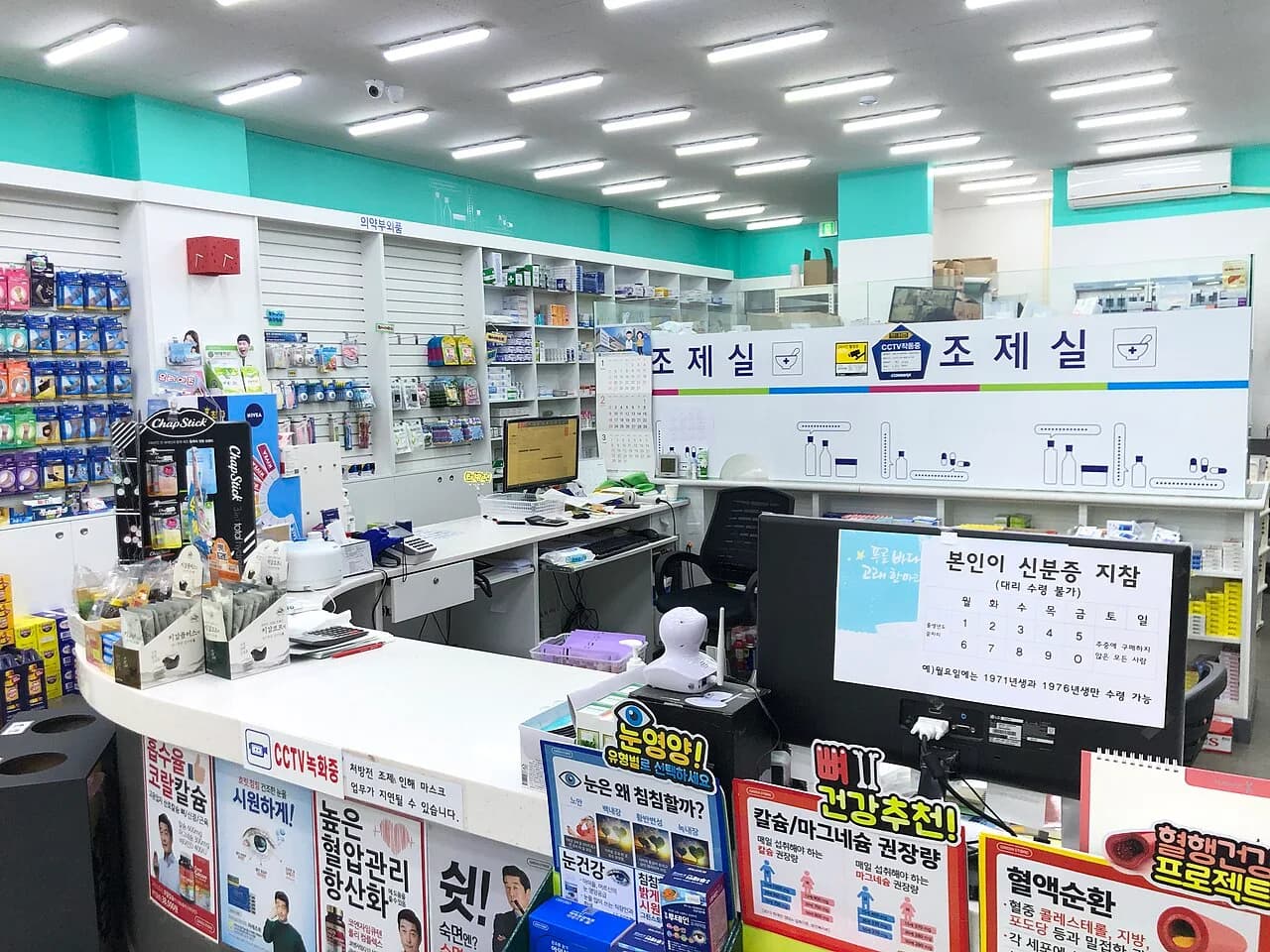
Pharmacies are marked with a recognizable sign, often paired with a green cross, and they're common enough in most neighborhoods that you're rarely far from one during normal hours.
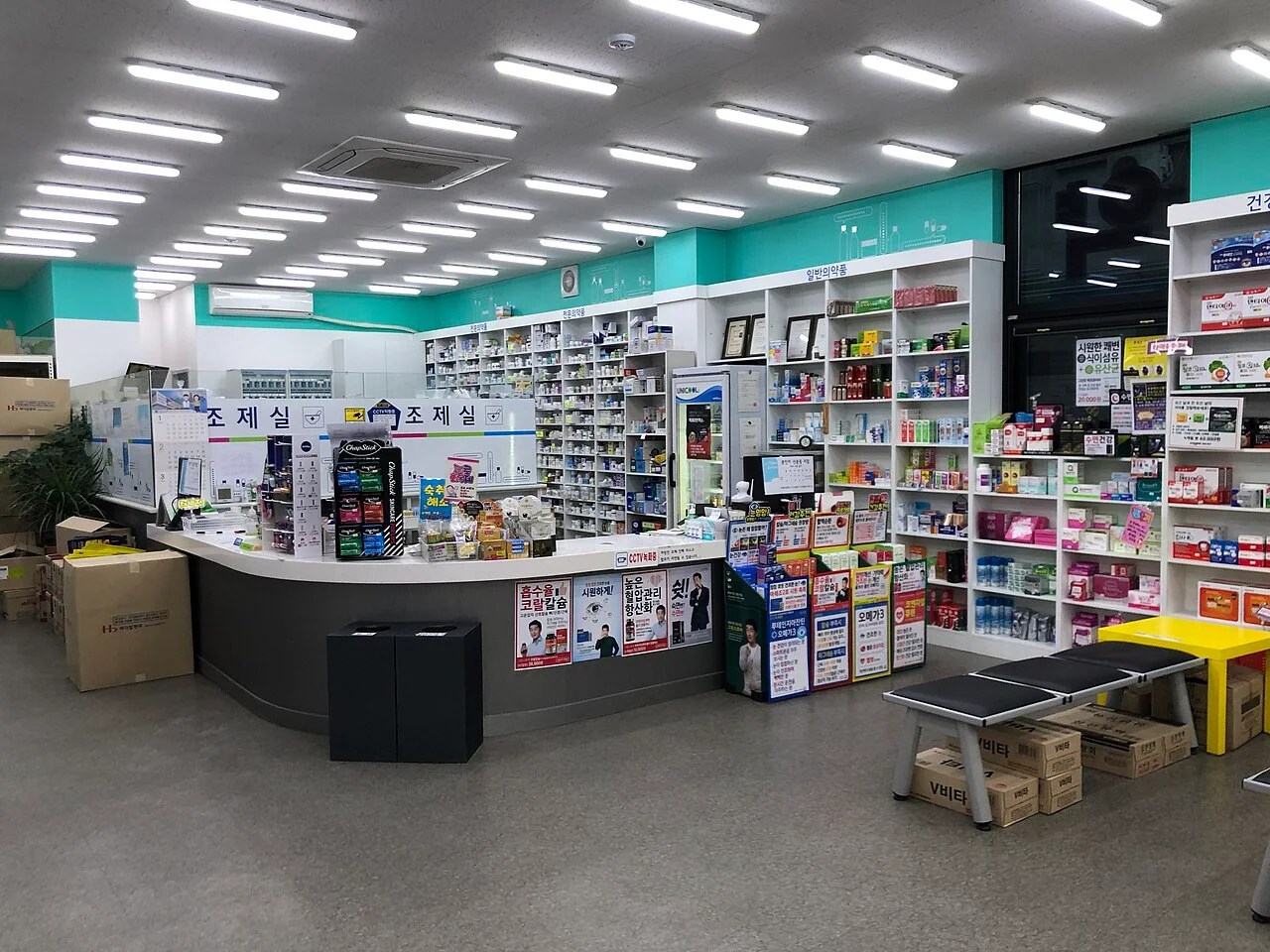
Outside normal hours — late at night or on a public holiday — most individual pharmacies close, but a duty pharmacy (당번약국) system keeps a rotating set open specifically to cover those gaps. Search for the current duty pharmacy near you online, or call for guidance, rather than assuming nothing is open. Walking from shop to shop hoping to find one lit up is a much less reliable method than checking the duty system directly.
What You Can Buy Without a Prescription, and What You Can't
Pharmacists can recommend and sell common over-the-counter categories — pain relief, fever reducers, basic cold and digestive remedies — directly across the counter, similar to how it works in many other countries.
Antibiotics are the clear exception: prescription-only, no exceptions at the pharmacy counter. This surprises visitors from countries where certain antibiotic creams or basic antibiotics are sold over-the-counter. If a pharmacist tells you something needs a prescription, that means a clinic visit comes first — they won't be able to sell it to you directly regardless of what you're used to at home.
Checking In at a Local Clinic
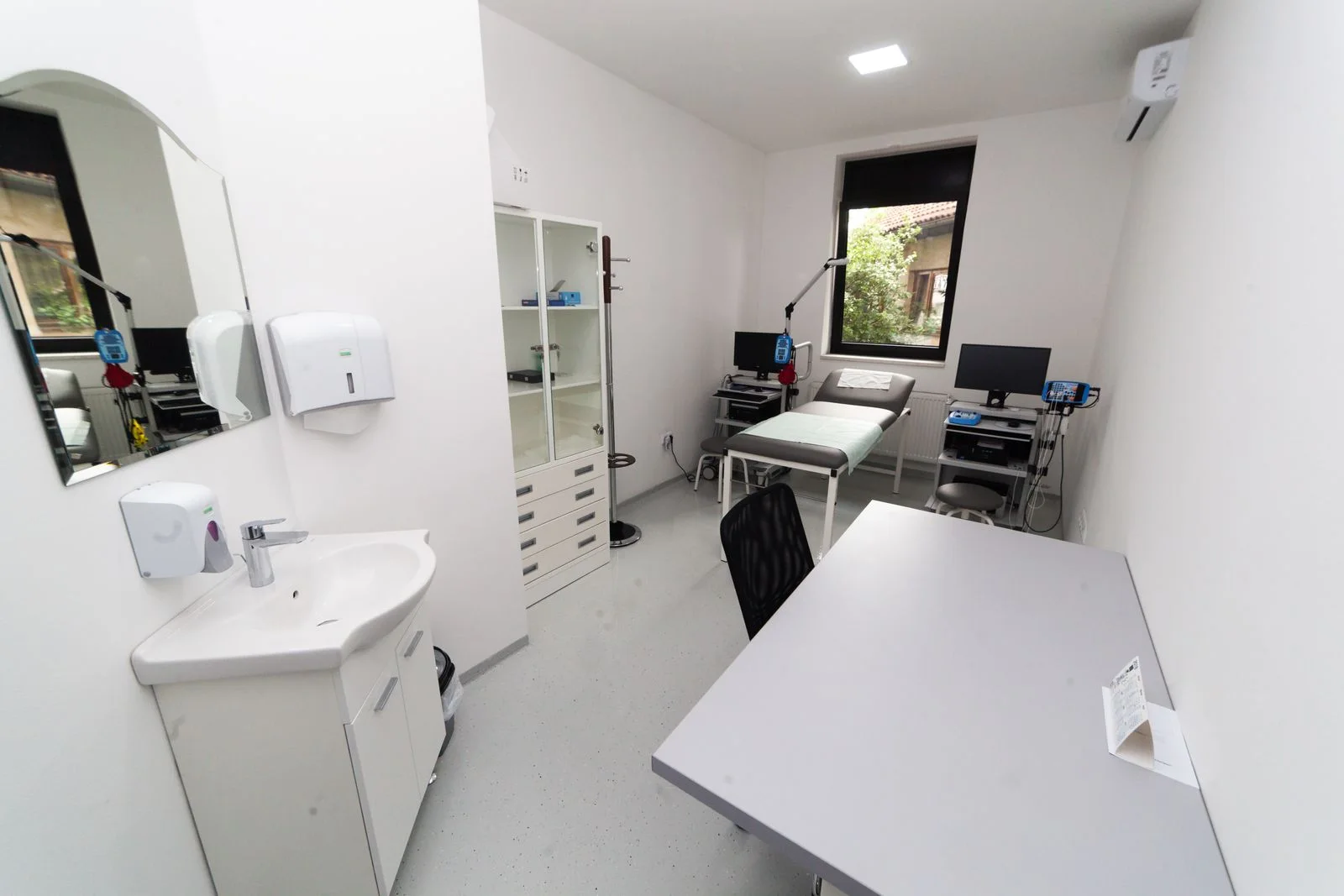
Walk-in clinics across Korea generally accept foreign patients without requiring local health insurance registration. At reception, you'll typically hand over your passport and fill out a basic intake form describing your symptoms.
After you're seen, the clinic issues a prescription — a document, not the medicine itself. Take that prescription to a nearby pharmacy to actually have it filled; walking out of the clinic assuming you've already got everything you need is a common mix-up for visitors used to hospital pharmacies dispensing directly on-site.
1339, 1330, 119: Three Numbers That Aren't Interchangeable
Three different hotlines cover three different needs, and mixing them up wastes time in a moment when time might matter:
| Number | What it's for |
|---|---|
| 1339 | Medical information and guidance — describing symptoms, getting pointed to a pharmacy or clinic |
| 1330 | Korea Tourism Organization's tourist help line — non-medical travel questions |
| 119 | Emergency services — genuine emergencies only |
If you're unsure whether something is serious, 1339 is the number built for exactly that judgment call. Reserve 119 for situations that are unambiguously urgent — a serious injury, a life-threatening symptom — since routing a minor concern through the emergency line pulls resources away from people who need it more urgently.
What It Actually Costs
Without Korean national health insurance, foreign visitors generally pay clinic and pharmacy costs out of pocket at the full rate, and the total depends heavily on the symptom, any tests ordered, and the specific clinic. Ask for a cost estimate before treatment begins whenever that's practical, and confirm current typical ranges with your accommodation or directly with the clinic, since costs are not standardized nationally and shift over time.
Beyond the consultation fee itself, expect separate charges for any tests and for the medication once you fill the prescription at a pharmacy — a short visit can still involve two or three separate line items rather than one flat number.
Getting the Paperwork Your Travel Insurance Will Ask For
Before you leave the clinic or pharmacy, ask specifically for an itemized receipt and a medical certificate. Most travel insurance claims require both, and getting them at the time of your visit is dramatically easier than trying to request them later, especially once you're back home and the clinic is a phone call across time zones instead of a walk down the street.
Some clinics charge a small additional fee for English-language documents specifically — worth asking about upfront rather than being surprised by it at checkout. Keep both documents together with your original receipt until your insurance claim is fully resolved.
Explaining Your Medication and Allergies in English
Brand names for medication vary significantly by country, and a drug name you know well at home may mean nothing to medical staff in Korea. Noting the generic or ingredient name instead — the active compound, not the brand — communicates far more clearly than a brand name a local pharmacist or doctor has never encountered.
The same logic applies to allergies: naming the specific trigger clearly, ideally written down or saved on your phone in advance, removes ambiguity that a rushed conversation in a second language can otherwise introduce. Preparing this note before you ever feel unwell means you're not trying to translate it accurately while also not feeling well.