

Why Seasonal Packing Actually Matters Here
A temperature chart tells you the outdoor number, not what you'll actually feel. Korea's indoor climate control runs harder than most visitors expect in both directions — summer air conditioning in subways, cafes, and department stores is strong enough that a T-shirt alone leaves you cold indoors, and winter heating does the same in reverse. Packing around the outdoor forecast alone gets the first day of every season wrong.
Spring and autumn add a second variable: daily temperature swings large enough that a single outfit rarely works from morning to evening. The seasonal checklists below split what to bring from what to buy after you land, because a chunk of the standard "Korea packing list" is genuinely cheaper and easier to grab from a convenience store than to carry through airport security.
Summer Checklist: Monsoon Rain and Humidity
Korean summer combines high humidity with a defined monsoon stretch, so plan around rain and sweat, not just heat.
- A compact, sturdy umbrella — one that resists flipping inside out in gusty wind matters more than a large golf umbrella
- Breathable fabric over cotton — technical or linen-blend clothing handles humidity noticeably better than cotton, which stays damp against skin
- One thin layer for indoor cold — a light cardigan or shirt jacket for aggressively air-conditioned subway cars and restaurants
Skip packing the umbrella from home if you're tight on space. Convenience stores sell them inexpensively, and buying one after you check the actual week's forecast avoids carrying dead weight through a dry stretch.
Winter Checklist: Indoor-Outdoor Temperature Gap and Ice
Winter in Korea is dry and can turn genuinely cold, but the bigger packing puzzle is the swing between frozen sidewalks and overheated interiors.
- Layering over one heavy coat — several thin layers you can shed indoors beat a single thick parka you're stuck wearing everywhere
- Shoes with real tread — icy sidewalks and stairs are common enough in January and February that smooth-soled boots become a hazard, not just a style choice
- A thin base layer, even indoors — subways and cafes run warm enough that short sleeves underneath a coat are often more comfortable than a sweater
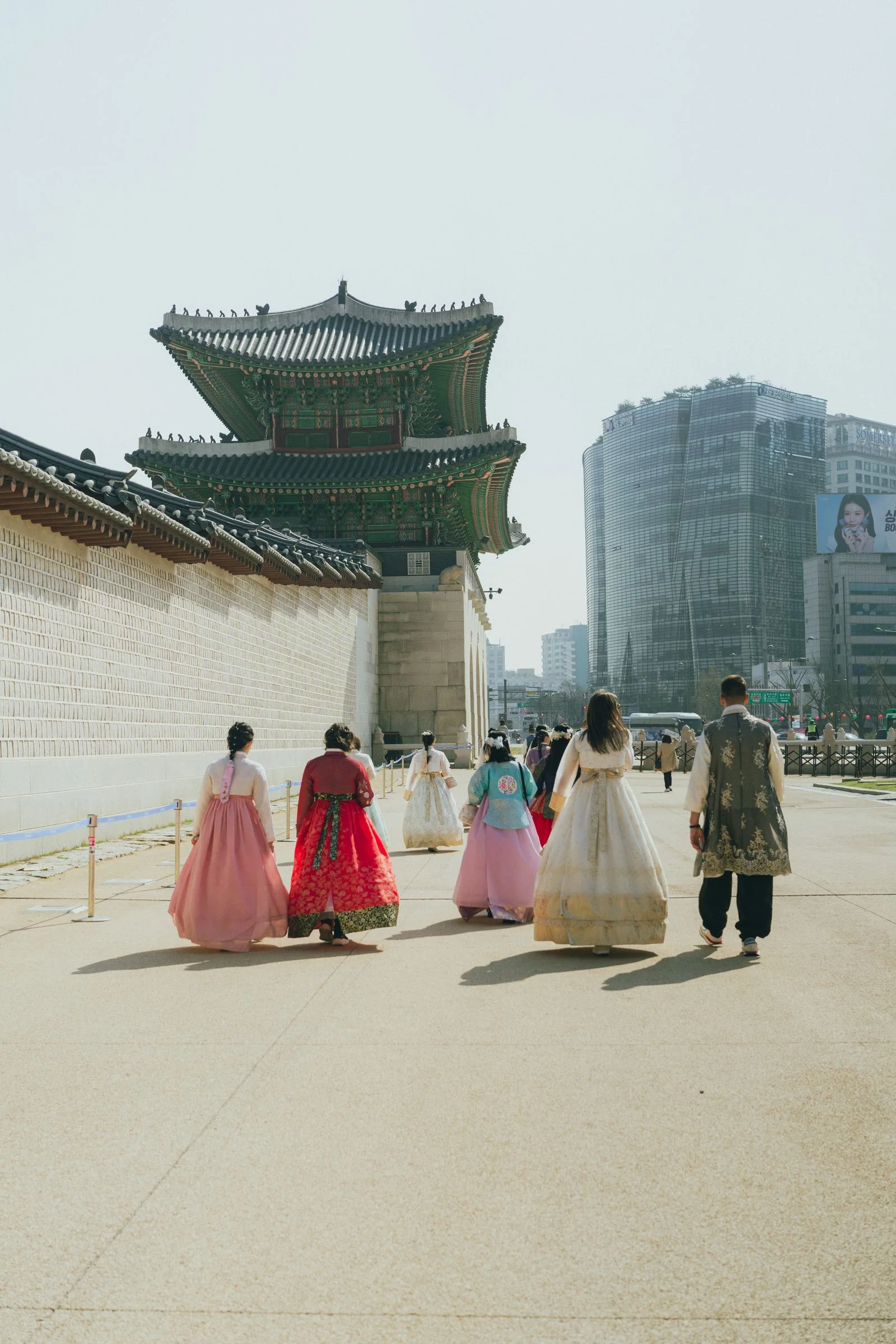
Hand warmers, heavy gloves, and thick scarves are all worth buying after arrival rather than before — Korean stores carry a wider and often cheaper range of winter accessories than most visitors pack from home, precisely because local demand for them is high.
Spring and Autumn Checklist: Big Swings and Fine Dust
Cherry blossom season and autumn foliage season both bring a specific packing challenge: mornings and evenings run cool while midday can feel like a different season entirely.
- A removable outer layer — a light jacket over a T-shirt handles the swing better than any single mid-weight garment
- A few disposable or reusable masks — fine dust days spike periodically in spring, and having one on hand beats hunting for a pharmacy mid-trip
- Comfortable walking shoes — both seasons tend to mean more outdoor time at parks and palace grounds, which makes footwear the piece worth prioritizing over an extra outfit
A jacket you can stuff into a day bag once the afternoon warms up is worth more than a heavier layer you have to carry back to the hotel.
Outlets and Electronics
Korea runs on 220V with round two-pin outlets (Type C/F). If your devices were built for 100–120V and flat-pin plugs — common across North America — you need more than a shape adapter for anything high-power.
Check the fine print on the device itself, usually printed near the plug: if it lists something like "100–240V," it's dual-voltage and only needs a physical adapter. If it lists a single fixed voltage, plugging it into 220V without a proper converter risks damaging it — hair straighteners and dryers are the most common casualties, since many are built for one voltage only. A single small adapter or power strip covers most trips; save the bulkier voltage converter for genuinely fixed-voltage appliances.
Socks, for the Places You'll Take Your Shoes Off
Korea has more shoes-off moments built into a typical itinerary than visitors expect: certain palace rooms with wooden floors, hanok stays, floor-seating sections in traditional restaurants, and jjimjilbang all require it.
Packing a few extra pairs of clean socks solves a problem that otherwise turns into an awkward pause at the entrance while you decide whether to go barefoot. Shoes that slip on and off easily — rather than ones with laces to untie every time — make these moments faster and keep you from holding up whoever's behind you.
Buy It There vs. Bring It From Home
The fastest way to lighten a carry-on is separating what's genuinely easy to buy in Korea from what isn't.
| Easy to buy locally | Harder to find locally |
|---|---|
| Umbrellas, rain ponchos | Shoe sizes above roughly 270–280mm (men's) or larger women's sizes |
| Hand warmers, winter accessories | Clothing above roughly XL in mainstream stores |
| Face masks | Specific prescription medication |
| Basic skincare and toiletries | Specialty over-the-counter medication you rely on |
| Extra socks, phone chargers, power banks | — |
If your shoe or clothing size runs larger than average, that's the one category worth packing fully rather than hoping to find it after landing — mainstream Korean retailers skew toward a narrower size range, and larger sizes concentrate in a smaller number of specialty stores. Also confirm airline carry-on liquid limits (commonly 100ml per container) before packing skincare, and note that duty-free liquids bought before a connecting flight may need to stay sealed in their tamper-evident bag until your final destination.