
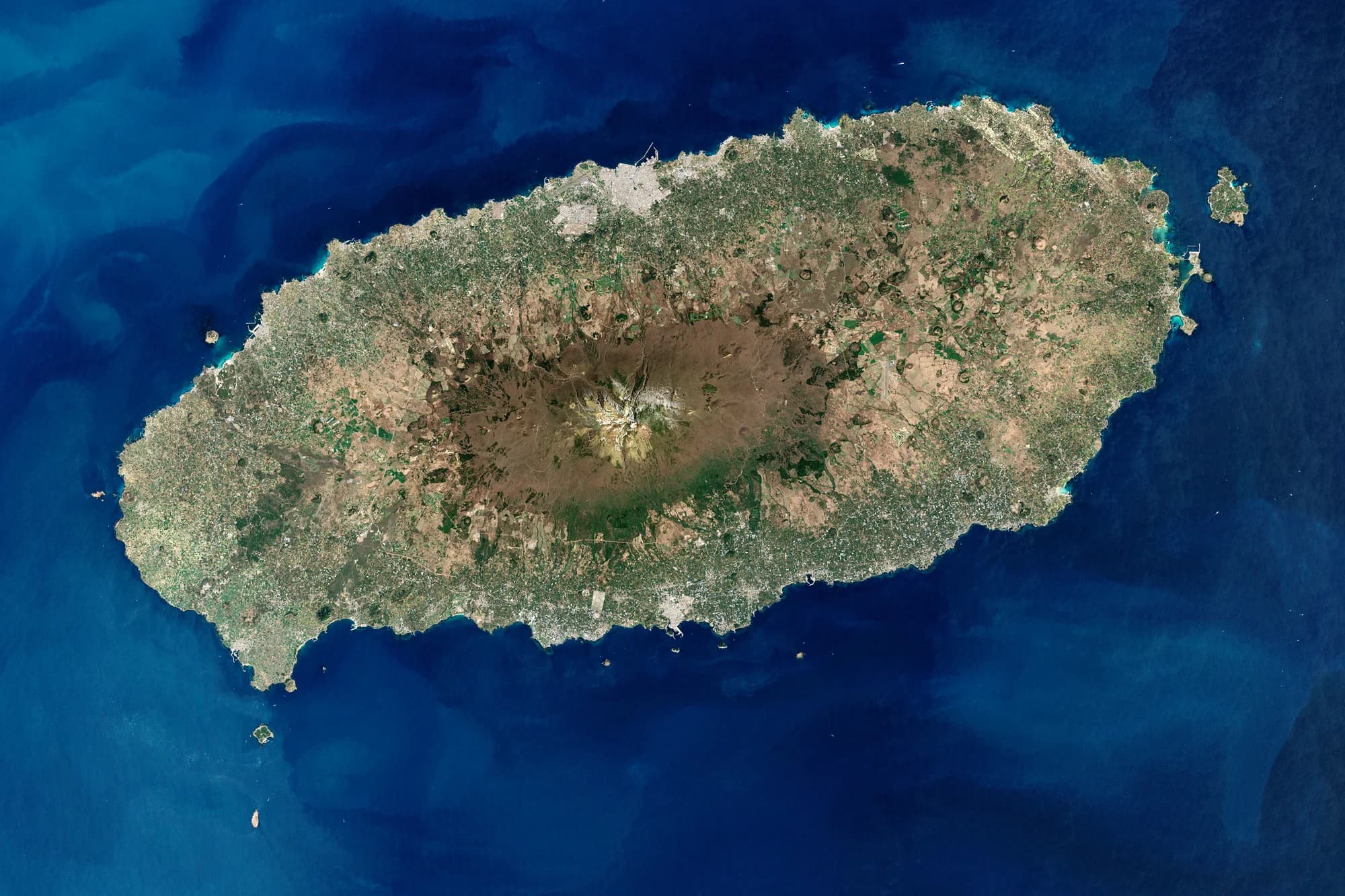
Jeju's Layout: Jeju City in the North, Seogwipo in the South
Jeju Island divides into two halves along a rough north-south line: Jeju City in the north, home to the airport and the island's largest urban center, and Seogwipo in the south, closer to much of the coastal scenery visitors come for. Most of the island's attractions string out along the east and west coastal roads that ring the shoreline, rather than clustering near either city.
Hallasan, the volcanic peak at the island's center, isn't just scenery — it's a routing obstacle. Roads connecting the north and south largely curve around the mountain's base instead of cutting straight across it, so two points that look close together on a map, one north and one south, often sit 45 minutes to an hour apart by road. Checking a straight-line distance on a map app and assuming that reflects actual drive time is a mistake specific to Jeju's geography, and it's worth correcting before anything else on this list.
That layout is also why most Jeju itineraries end up organized as a loop rather than a back-and-forth. Attractions along the east and west coastal roads sit in a rough ring around the island, so a plan that works through one direction — say, clockwise from Jeju City down the east coast, across the south, and back up the west — tends to cost far less driving or bus time than one that zigzags inland and back out toward the coast repeatedly.
The International Driving Permit Jeju Actually Accepts
South Korea recognizes international driving permits issued under the Geneva Convention format. Some countries — depending on where a traveler is from — issue permits under the Vienna Convention instead, and that version isn't guaranteed acceptance at a Korean rental counter. Before applying for an IDP at home, it's worth confirming which convention your home country's permit follows, since the two aren't interchangeable here even though both are commonly called an "international driving permit."
Bringing the IDP alone isn't enough, either. Rental counters expect three documents together: the international permit itself, your original home driving license (not a photo of it), and your passport. Missing any one of the three is grounds for a counter to turn a booking away entirely, even with a valid reservation already paid for.
It's also worth checking that the permit's validity window covers your entire stay, not just your arrival date, and that the name on it matches your passport exactly — a mismatch from a maiden name, a middle name left off, or a transliteration difference has been enough to cause trouble at a counter before. None of this is unique to Jeju, but a rental car here carries more weight in the itinerary than it would in a city with a subway to fall back on, so a rejected rental changes the whole trip plan rather than just one day of it.
Getting Around Without a Car: Express, Trunk, and Branch Buses, Plus the 600 Airport Limousine
Jeju's public bus network splits into a few tiers: express buses that skip most stops between major towns, trunk (main) routes that run along the coastal ring roads, and branch routes that reach into smaller towns and villages off the main line. A rechargeable transit card works across all of them, the same as on the mainland, so there's no separate island-only card to buy.
The 600 airport limousine connects the airport to towns along the southern coast, including Seogwipo, but it isn't an express service despite the name — it stops at intermediate points along the way, similar to a regular city bus route. Budget over an hour for the ride to Seogwipo rather than assuming "limousine" means a direct, non-stop trip; the name describes the bus type, not the route pattern.
Fare payment works the same way it does on the mainland: tap a rechargeable card on boarding and again when you get off, since Jeju's bus fares are distance-based and the exit tap is what calculates the correct amount. Cards can be topped up at convenience stores near most bus stops, so carrying extra cash for the bus specifically isn't necessary as long as the card has a working balance.
Why Bus Intervals Shrink How Much You Can Fit Into a Day
Bus intervals in the 30-minute to one-hour range are common on Jeju's routes, and that changes the math on how many stops a day can realistically hold. Two connections with waiting time built into each one can consume most of a morning before you've reached a second destination — a pattern that doesn't show up if you're estimating a day the way you would in a city with subway trains arriving every few minutes.
Visitors used to Seoul's transit rhythm tend to plan a Jeju day the same way: bus to the first stop, bus to the second, bus to the third. On the island, that same plan often produces two stops instead of three, once transfer waits are added honestly rather than assumed away. Building slack into a bus-based day, and treating two or three stops as a full day's plan rather than a light one, keeps the schedule realistic.
Taxi Tours and Charter Vans: Hourly Rates and How to Book
For travelers without a valid IDP, or who'd rather not navigate unfamiliar coastal roads themselves, taxi tours and charter vans cover much of the same ground a rental car would. Pricing on these typically runs by the hour rather than a flat per-destination rate, and it's often negotiated directly with the driver or booked through a platform rather than posted as a fixed menu.
Because the rate is time-based, confirming the total hours and the planned stops before the day starts — by message or through a booking platform — avoids a negotiation over pricing once you're already out on the road. Treat the itinerary as fixed once it's agreed, the same way you'd treat a reservation, rather than adjusting it loosely as the day unfolds.
Where to Base Yourself: Jeju City's Airport Access vs Seogwipo's Southern Reach
Basing yourself in Jeju City keeps airport transfers simple on both ends of the trip, which matters most if your stay is short or your flight times are inconvenient. The tradeoff shows up daily once you're exploring: attractions around Seongsan and the southern coast can add an hour or more of round-trip driving or bus time from a Jeju City base.
Seogwipo flips that tradeoff. Staying there adds a longer transfer on arrival and departure days, but it cuts daily travel time substantially if the bulk of your itinerary sits in the south. As a rough rule: if more than half of your planned stops are south of Hallasan, the shorter daily commute from Seogwipo tends to outweigh the airport-day convenience of Jeju City.
Hallasan's Reservation System, and Other Time-Locked Destinations
Reaching Hallasan's summit and Baekrokdam crater lake now requires booking a trail reservation in advance — walk-up access isn't available on the reservation-controlled route. Openings follow a monthly pattern: slots for a given month typically become available on the 1st of the prior month, so a firm hiking date needs to be locked in and booked as soon as that window opens, not the week before your trip.

Other Jeju destinations run on their own fixed schedules rather than a reservation system: Udo Island requires a timed ferry crossing, and Seongsan Ilchulbong has set entry and closing hours tied to daylight. None of these operate on the flexible "arrive whenever" model that works for a beach or a coastal drive — check current hours and reservation windows for each on the relevant official site before building a day around them.
Jeju Has No Railway: Getting There, and Weather Cancellations
Jeju has no rail connection to the mainland — flights and ferries are the only ways on or off the island, unlike Seoul-Busan travel, which runs on KTX. That absence of a rail backup matters most on the way out: a cancelled flight has no train alternative to fall back on, only a later flight or a ferry, both subject to the same weather that grounded the original plan.
Typhoon and strong-wind season brings a real risk of cancellations to both flights and ferries, more so than on most mainland routes. Leaving slack in your final day or two — rather than a same-day connection to an onward flight — reduces the damage if a weather delay does hit. Check official advisories for your travel window before finalizing any tightly-timed departure.