

Why Busan Isn't One Center: Haeundae, Seomyeon, Nampo-dong, and Gwangalli
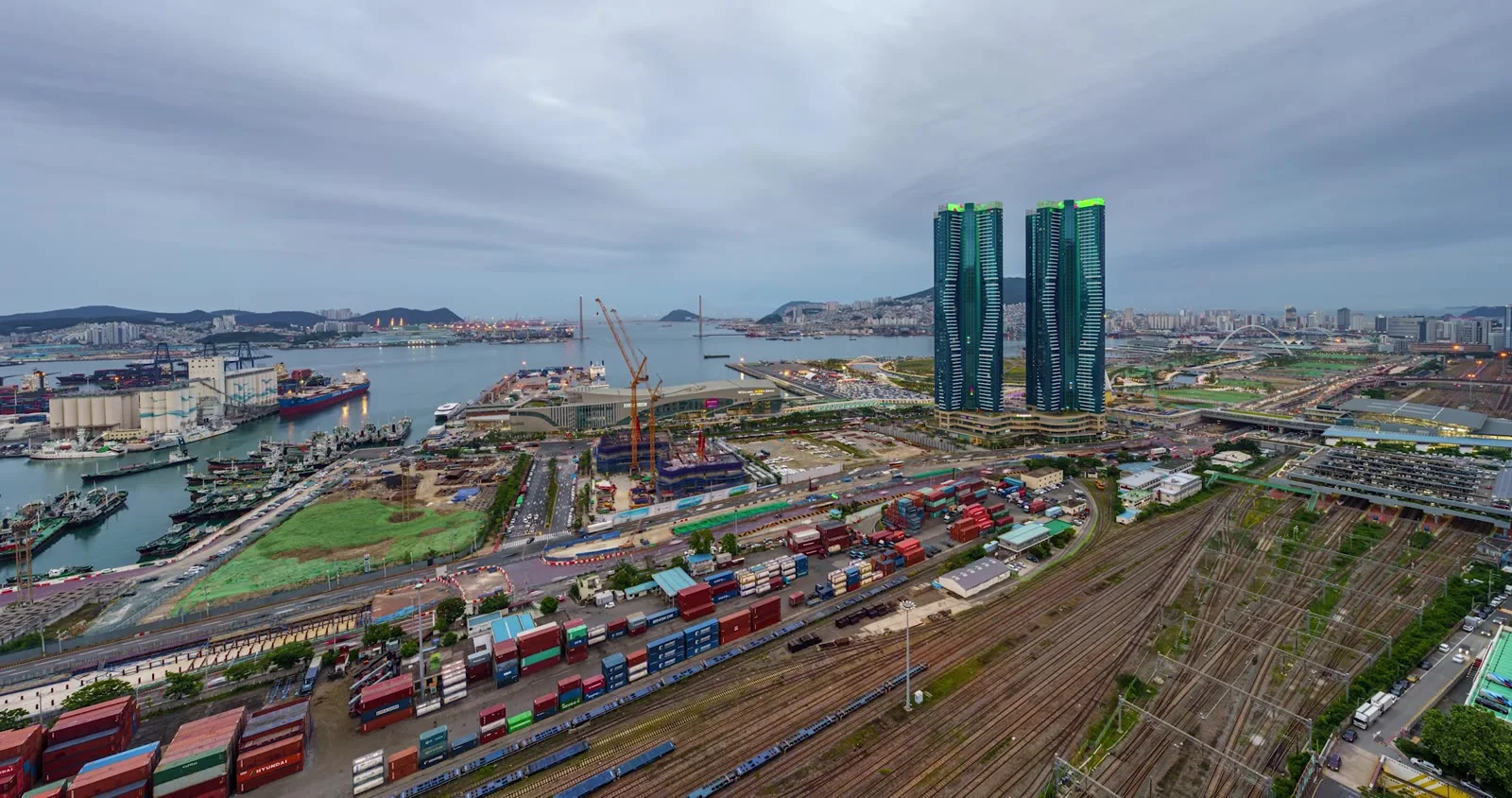
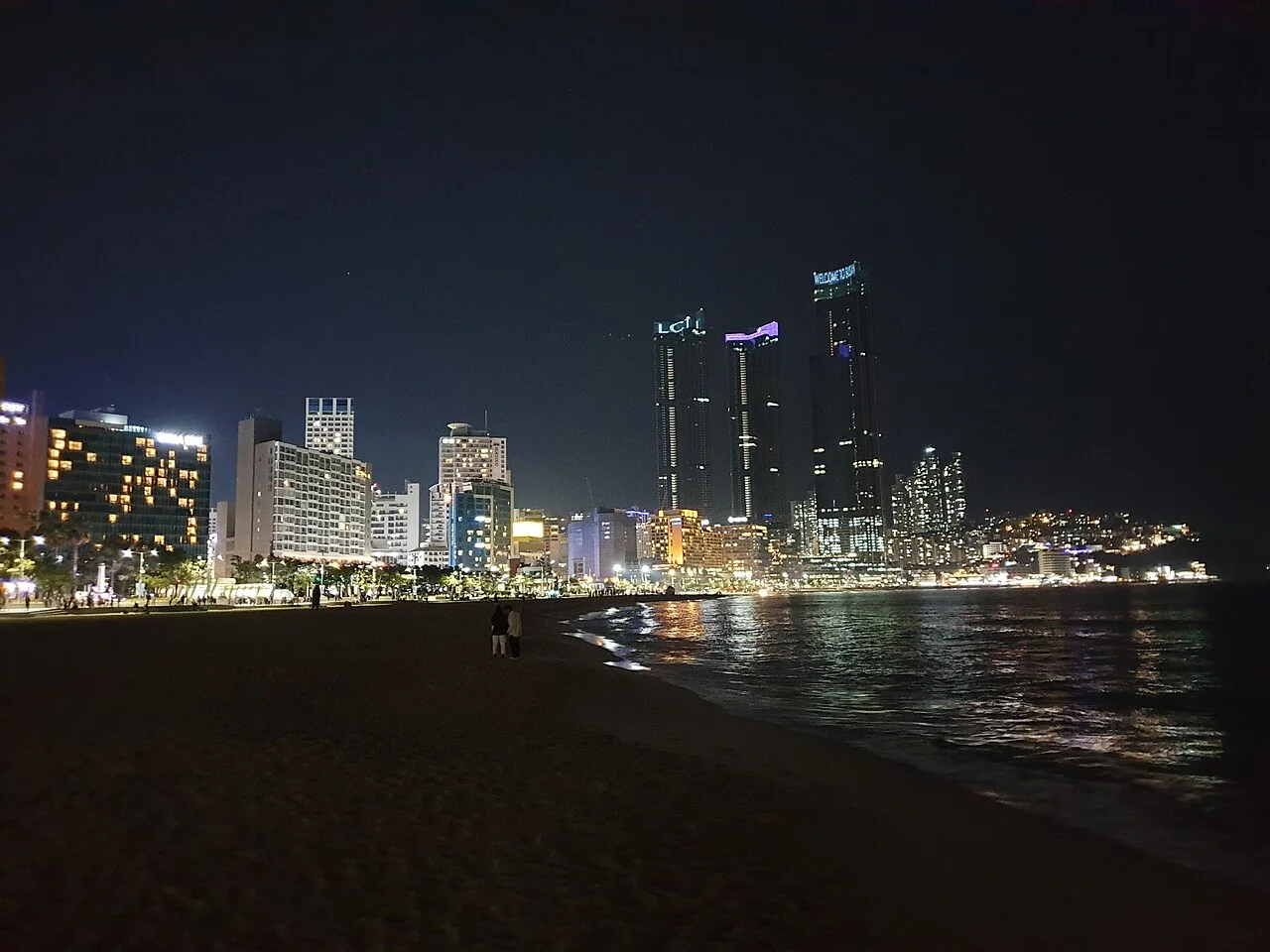
Busan doesn't organize around a single downtown the way Seoul does. Four districts split the city's attention, and each one does a different job. Haeundae is the beach — high-rise hotels, resort towers, and the stretch of sand that shows up in every postcard of the city. Seomyeon is the district where Busan's subway Line 1 and Line 2 cross, and after dark it fills with restaurants, bars, and shopping arcades rather than sights to photograph. Nampo-dong holds the old port core: Jagalchi Fish Market, the narrow lanes of Gukje Market, and the harbor itself. Gwangalli is a beach in its own right, but the real draw is the night view of Gwangan Bridge lit up over the water — more of an evening stop than a place to base yourself for several nights.
Unlike Seoul, where a river cuts the city cleanly in two, Busan's four districts trail along a curving coastline and a few inland valleys, with hills breaking up the straight lines a map suggests. That shape is part of why a trip between two districts often takes longer in practice than it looks on screen — the subway follows the coast and the valleys, not a straight line between two pins.
The detail that catches first-time visitors off guard: arriving on the KTX from Seoul puts you at Busan Station, which sits in Nampo-dong's old downtown, nowhere near Haeundae Beach. Most travel writing about Busan centers on Haeundae, so it's an easy assumption that Busan Station drops you somewhere close to it. It doesn't — Haeundae is a separate subway trip of close to 40 minutes from there. Treating "I've reached Busan Station" as "I've reached the part of Busan I came for" is the single most common first-day mix-up, and it's the reason choosing a district before booking a hotel matters more here than in most Korean cities.
Getting From Busan Station and Gimhae Airport to Each District
From Busan Station, Nampo-dong itself is a short walk or a single subway stop. Reaching Haeundae from the station means riding Line 1 to Seomyeon and transferring onto Line 2, or catching a direct bus — either way, budget close to 40 minutes door to door rather than expecting a quick hop.
Gimhae International Airport works differently. A limousine bus runs directly to Haeundae, which sounds like the obvious choice, but departures are spaced out enough that if your landing time doesn't line up with the timetable, you can end up waiting at the airport longer than the ride itself takes. When your arrival time is uncertain, the more predictable route is the Busan-Gimhae Light Rail Transit into the city subway network, then a transfer onto Line 2 toward Haeundae or Line 1 toward Nampo-dong and Seomyeon — more changes, but no gambling on a bus timetable. Confirm the current limousine bus schedule and fare against your actual flight time on the Visit Busan portal before you decide which way to go, since both shift periodically.
A Seoul transit card (T-money or a similar rechargeable card bought at a convenience store) works on Busan's subway and city buses too, so there's no separate local card to track down — just make sure it still has enough balance loaded before you tap in. On the day you fly out of Gimhae, work backward from your flight the same way you would in Seoul: the airport sits closer to the city center than Incheon does, but rush-hour traffic on the connecting roads can still eat more of your buffer than the light rail's schedule alone would suggest.
What Each District Is Actually For
Haeundae rewards a slower pace — a morning walk on the sand, an afternoon at Blue Line Park, dinner facing the water, and a quieter loop around Dongbaek Island's coastal walking path if the main beach feels too full. It's also the district that gets genuinely crowded in peak summer, when the beach itself and the promenade behind it fill shoulder to shoulder by afternoon.
Seomyeon isn't a sightseeing district in daylight; most of what it offers opens after the sun goes down, including an underground shopping arcade that runs beneath the main intersection and stays busy well past what a smaller city's shops would keep open. What it does offer around the clock is location — because Line 1 and Line 2 meet only here, basing yourself in Seomyeon shortens nearly every other trip on this list, whichever direction you're headed.
Nampo-dong works best paired with a Busan Station arrival or departure: a stroll through Jagalchi Market, a look at Gukje Market's stalls, the BIFF Square area tied to the city's film festival history, and easy proximity to the harbor without needing the subway at all for a first afternoon.
Gwangalli earns its spot on a one- or two-night stay as an evening add-on rather than a base — walk the promenade after dinner elsewhere, watch the bridge lights, and head back to wherever you're actually staying.
Book Ahead: Haeundae Blue Line Park's Beach Train and Sky Capsule
Blue Line Park's beach train and Sky Capsule are popular enough that online booking is effectively required, not just recommended. Same-day tickets are sold at the gate, but the line for them can eat a real chunk of a morning, and on busy days specific time slots sell out before walk-up visitors reach the counter.
Some sections of the coastal walking path near the line are open without a ticket, so a car-free stroll along part of the route is possible without booking anything — but the ride itself, in either the open-air train or the enclosed capsule, needs a reservation confirmed ahead of time on the operator's official booking page.
2 Days vs 3 Days, and the Bus Transfer to Gamcheon and Taejongdae
Two days in Busan realistically covers one beach district plus Nampo-dong's market core — Haeundae or Gwangalli, not both, alongside a Nampo-dong afternoon. Three days makes room for one more stop, and that's usually where Gamcheon Culture Village or Taejongdae enters the plan.
Both of those spots share a catch: neither sits within walking distance of its nearest subway station. Reaching either one means a transfer onto a local village bus, and some map apps display that final stretch as a walking route when it's actually a bus segment — following the app's directions on foot can turn a planned 15-minute connection into a much longer, uphill walk. Build the bus wait and the ride itself into your time estimate, not just the subway portion of the trip.
Hotel Prices by District, and the Summer Beach Season Spike
| District | General price pattern |
|---|---|
| Haeundae | Highest overall, and rises sharply once the beach officially opens for the season |
| Gwangalli | Mid-to-high, with smaller seasonal swings than Haeundae |
| Seomyeon | Generally the most budget-friendly, with modest seasonal movement |
| Nampo-dong | Similar to Seomyeon — comparatively stable across the year |
Treat the table above as a pattern, not a quote — actual nightly rates swing with weekday versus weekend, how far out you book, and citywide events, so look up your specific dates on a booking platform rather than budgeting off a remembered number. The clearest seasonal effect sits in Haeundae: once the official beach season opens for summer, nightly rates there climb noticeably above the rest of the year, while Seomyeon and Nampo-dong tend to move far less over the same stretch — worth knowing if your dates are flexible and your budget isn't.
Sea Fog and Typhoons: The Seasonal Variables
Summer brings its own wildcard along the coast: haemu, a thick sea fog that can roll in and sit for hours. When it does, anything built around a view — the Sky Capsule ride, a lookout point, a rooftop dinner — can run with little to no visibility, even though the ride or reservation itself proceeds as scheduled. It's worth having one indoor backup in your back pocket for a foggy morning rather than assuming the haze will clear by the time you arrive.
Typhoon season carries a firmer risk: outdoor itineraries and anything involving boats or cable-style rides can be cancelled outright on short notice. Check official weather advisories for your travel dates before you lock in time-sensitive bookings, and build a day of slack into a longer Busan stay if your trip falls within typhoon season — a plan with zero flexibility is the one most likely to lose a full day to weather it can't control.