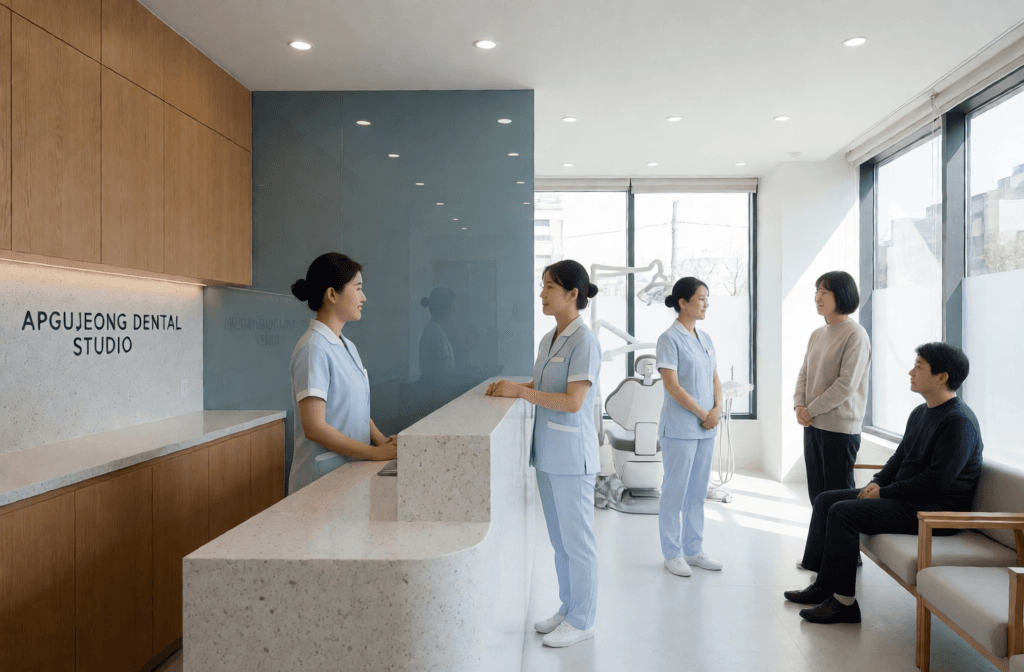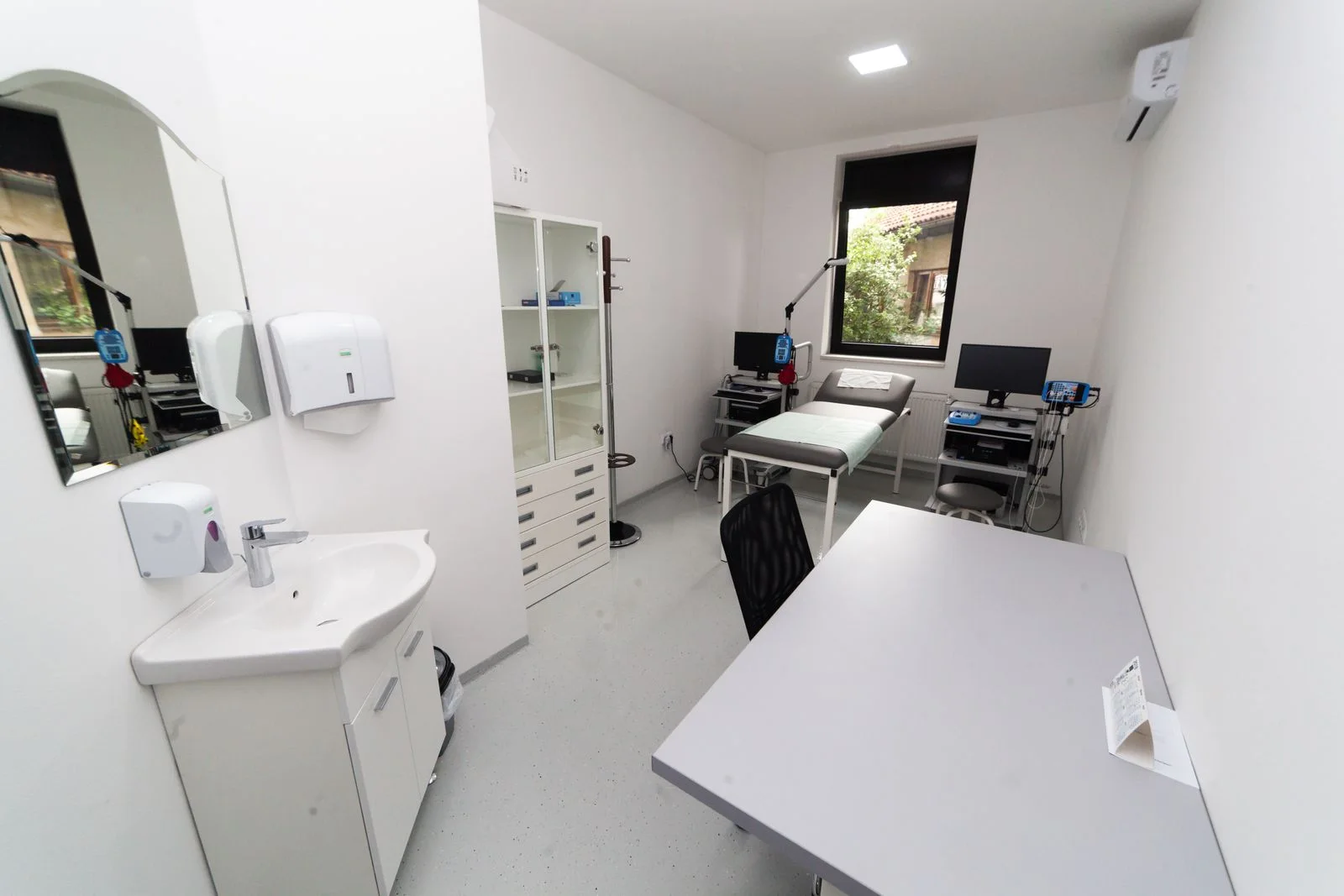
A "병원" on a sign could be a small local practice or a hospital many times that size — the two syllables alone don't tell you which. Sorting out what actually separates Korea's facility tiers keeps you from reading too much, or too little, into a name before you book.
The four tiers, and the one number that separates them
Korea classifies medical institutions into four tiers, ordered roughly by size: 의원 (clinic), 병원 (hospital), 종합병원 (general hospital), and 상급종합병원 (tertiary or advanced general hospital — a separate designation layered on top of general-hospital status). This sits one level below the broader question of why visitors choose Korea for care at all; here the focus narrows to what the tier labels themselves actually mean.
The classification runs mainly on bed count plus a minimum number of required medical departments, and the thresholds sit in the Medical Service Act itself rather than in any clinic's marketing. A 병원 must have at least 30 beds (Article 3-2). A 종합병원 must have at least 100 (Article 3-3), and the department requirement steps up with size: 100 to 300 beds means at least seven specialist departments, each with a dedicated medical specialist, while more than 300 beds means at least nine. 상급종합병원 status is a separate designation the Minister of Health and Welfare grants to general hospitals handling serious disease, and it requires at least 20 specialist departments. A 의원 sits below all of this — outpatient-focused, with no bed minimum to clear.
Those numbers are the floor, not the actual size of any given facility, and statutory thresholds do get revised. Check the current text against the Act itself, linked in the sources below, rather than trusting a figure quoted second-hand.
What trips up first-time visitors is assuming "병원" signals one consistent size. It doesn't. A facility can register at the smaller end of that tier or well past it, and the two characters on a sign look identical either way. The tier name marks a regulatory bracket; it doesn't hand you a bed count without checking further.
Why most cosmetic, dermatology, and dental procedures happen at 의원-level clinics, not big hospitals
Outpatient dermatology, plastic surgery, dentistry, and ophthalmology in Korea run, as a matter of course, out of 의원-level clinics — not because these fields rank lower, but because that's structurally where this kind of outpatient care sits in the system. What actually distinguishes Korean clinics from one another tends to come down to specialization, not the tier printed on the door.
A clinic built around one field — rhinoplasty, or laser dermatology, say — often works through more of that specific case type in a month than a general hospital's mixed plastic surgery department sees across its whole caseload. That's worth sitting against a common instinct: spotting a large 종합병원 or 상급종합병원 sign and assuming it must be the safer pick for an elective cosmetic procedure. Size and case concentration are different things, and for a single-field elective procedure, concentration tends to matter more.
What actually governs quality of care here isn't the tier — it's whether the specific doctor treating you holds board certification in that field, a question this article deliberately leaves to its own dedicated check.
The referral letter (진료의뢰서) system, and why it mostly doesn't apply to you
Korean nationals covered by national health insurance generally need a 진료의뢰서 — a referral letter — from a lower-tier clinic before insurance coverage applies to treatment at a 상급종합병원. Skip that step and care still happens; it's the insurance subsidy that doesn't. The rule exists to manage how national insurance funds move between tiers, not to decide who's allowed through the door.
As a foreign patient, you're almost always paying 비급여 — non-insurance-covered — rates directly, which places you outside that insurance mechanism almost entirely. This referral requirement, built to control insurance spending, generally isn't a gate you need to clear. For a sense of how this looks day-to-day for routine, non-elective care, getting sick in Korea as a visitor covers that separate everyday scenario.
What does apply to you at larger hospitals is unrelated to referrals: many run a dedicated international or foreign-patient center with its own intake process and multilingual staff — a service convenience built for exactly this situation, not a hurdle standing in front of it.
A department name on a sign doesn't confirm who's treating you
A clinic's sign or business card reading "피부과" or "성형외과" states a declared specialty — the department the clinic is registered to operate under — not documentation that the doctor seeing you today holds board certification in that field. Korea does run a formal board-certification system for medical specialties, and confirming a doctor holds it is its own dedicated step, walked through elsewhere in detail rather than repeated here.
Tier only ever describes the institution: its size bracket, and which departments it's required to staff. It was never built to answer a question about one individual's qualification, and reading it that way is exactly where the confusion starts.

What the tier tells you about backup if something goes wrong
There's exactly one place tier information earns its keep before you book: ask a 의원-level clinic which higher-tier hospital it refers complications or emergencies to, and how that referral gets arranged in practice. A legitimate clinic gives a specific, named answer — not a shrug.
If a complication ever needed higher-level care, it's also worth asking whether that referral hospital runs an international clinic with multilingual staff, since handling an emergency in a second language adds a difficulty nobody needs on top of everything else. Keep this one question narrow rather than turning it into a general emergency checklist — it belongs at the consultation stage, alongside the wider institution checks in choosing where to book.
If you're choosing your first Korean clinic: match the tier to your reason for going
For a single elective or cosmetic procedure, a specialized 의원 is the expected, standard setting — not a downgrade from a hospital. A comprehensive health checkup, or a condition that genuinely spans several departments, is where a 종합병원 or 상급종합병원's broader department range starts to matter on its own terms.
Either way, institution size was never a stand-in for one doctor's qualification in the field you actually need. That question gets answered by verifying the treating doctor's specialist credential, and by the wider pre-booking checks in checking a Korean clinic before you book — not by which of the four tiers happens to be printed on the sign outside.
Sources
- Korean Law Information Center — Medical Service Act (official English text)
- HIRA — hospital and pharmacy finder
- Medical Korea (KHIDI) — official medical tourism portal
This article explains the classification system only; it isn't a ranking of any facility and doesn't substitute for asking a clinic directly about its own referral arrangements. Reviewed 28 July 2026 — confirm current thresholds and designations against the official source, since they can change.