

What You Need: A Loaded Card, Not Necessarily Cash
A T-money or Climate Card with a loaded balance is the only thing this guide assumes you're carrying. Some routes still accept cash, but drivers commonly can't make change, so a cash fare only works cleanly if you happen to have the exact amount in coins and small bills. More routes are moving to card-only over time.
If you're standing at a stop with nothing but a large bill, don't count on boarding smoothly — walk into a nearby convenience store first and either buy something small to break the bill or top up a transit card there instead. It's a five-minute detour that avoids an awkward standoff with the driver over change neither of you has.
What Bus Color Tells You Before You Even Read the Number
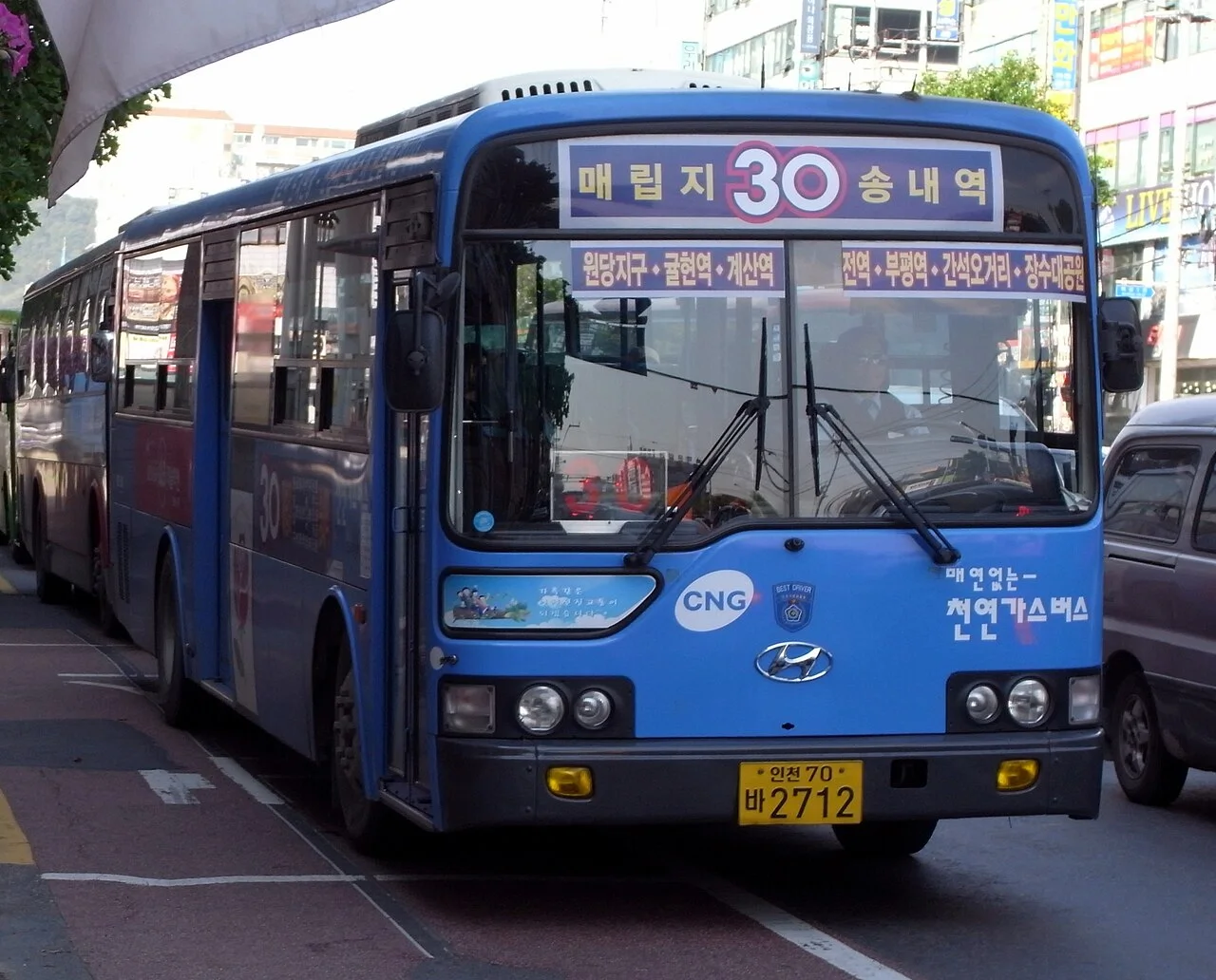
Korean city buses are color-coded by route type, and the color alone tells you roughly what kind of trip you're boarding before you even check the number. Blue buses run trunk routes linking the city center to outer districts. Green buses cover branch routes that feed passengers into those trunk lines and the subway, plus smaller village routes through residential neighborhoods. Red buses run wide-area routes connecting the city center to satellite cities and commuter towns, at a noticeably higher fare than the other colors. Yellow buses circle a short, fixed loop inside a single district.
The color that trips visitors up most is yellow. A yellow bus looks enough like a shuttle or sightseeing vehicle that people board it expecting to be dropped near a landmark, when it's actually a small neighborhood loop threading through narrow back streets with no tourist stop on its route at all. Check the route map before boarding a yellow bus expecting it to function like a shuttle.
Reading the Bus Stop: Its Own Number, and the Arrival Board
Every bus stop post carries its own identifying number, usually five digits, printed near the top of the sign. Entering that number into a transit app pulls up real-time arrival estimates for every route serving that specific stop — a more reliable method than searching by the stop's name.
Searching by name instead of number is where people get confused, because a single stop name often applies to two physical stops on opposite sides of the street, serving opposite directions. An app search by name can return both without making clear which one you're standing at. Reading the stop number off the actual post in front of you avoids second-guessing which side of the road you need.
Boarding: Tag at the Front Door, Then Grab Something
Board through the front door only — back-door boarding isn't how the system works, even when the bus looks empty and the rear door happens to be open for someone else's exit. The card reader sits on a post right beside the driver; hold your card flat against it until it beeps and the display shows a fare confirmation.
Don't start walking toward a seat the instant the reader beeps. Drivers often pull away from the curb again within a second or two of the doors closing, and a passenger still mid-aisle without a handhold is the most common reason people stumble on a moving bus. Tap, get a hand on a rail or seat back, then move.
Getting Off: When to Press the Bell, and the Back-Door Tag
Stops are announced twice — once as an upcoming heads-up, then again right as the bus approaches the stop itself. Press the bell after that second, closer announcement, not during the first one. Pressing too early is sometimes logged as a request for the stop after the one you actually want, since the system reads it as "next stop" rather than "this specific one."
Exit through the back door, and tap your card on the reader mounted there before stepping down. The door itself won't stop you from leaving without tapping out, which is exactly why people forget it — nothing about the exit physically demands it. Skipping that tap can leave your fare calculated incorrectly on your next boarding, the same consequence as missing an exit tag on the subway.
Where People Get Stuck: No English, Reversed Routes, Skipped Stops
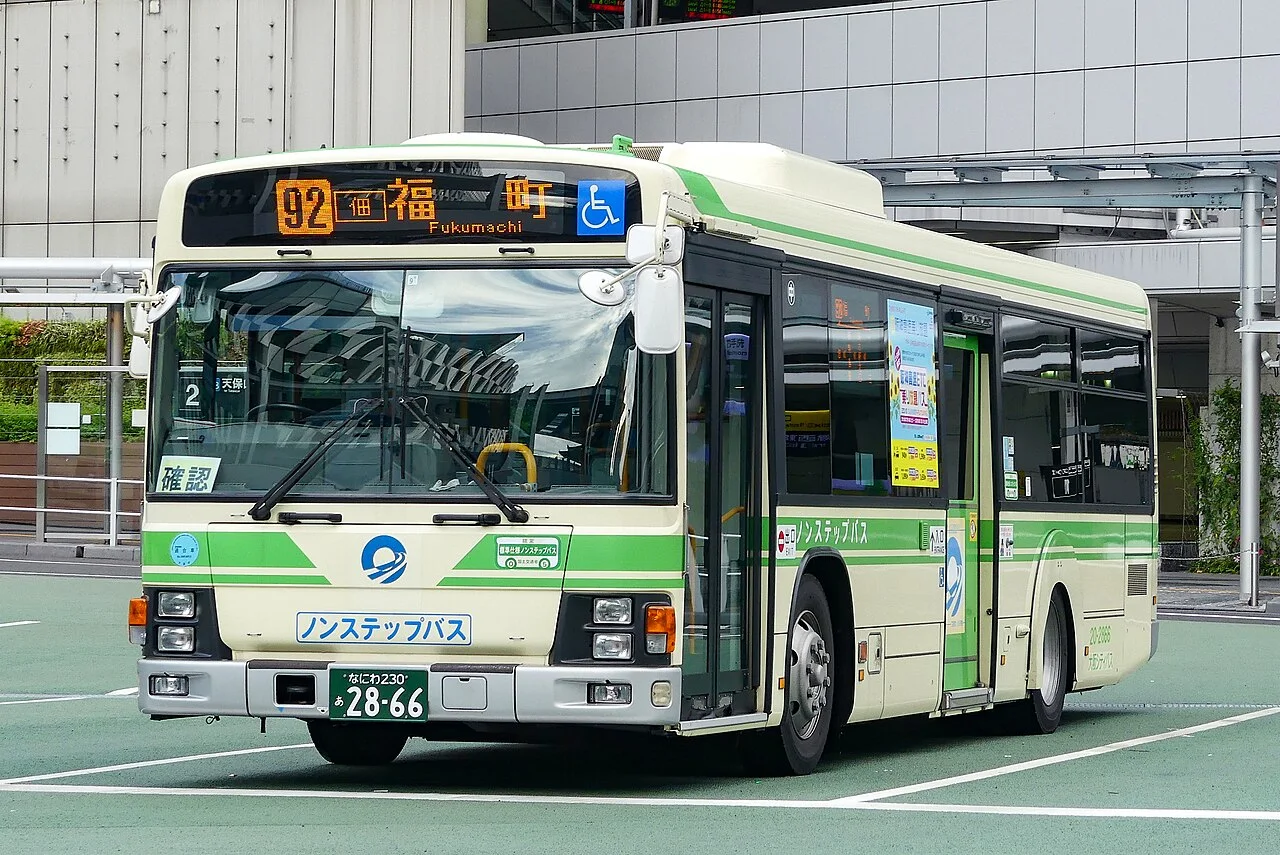
Three things catch first-time riders more than anything else on the network. Some routes, especially ones running through less-touristed neighborhoods, have no English-language stop announcements at all — a transit app tracking your live position is the more reliable backup in that case, not the recorded voice. Second, the same route number frequently operates in both directions along a loop or an out-and-back line, so a bus showing "102" isn't automatically the "102" going where you want; check the terminus name on the front display or the stop's arrival board before boarding. Third, some routes run an express pattern that skips a portion of stops along the corridor, meaning the bus that just passed a stop full of waiting passengers without opening its doors wasn't malfunctioning — check whether your route is marked express before assuming every bus with your number will stop for you.
Village Buses and Wide-Area Buses: Different Fares, Different Rules
Village buses (a smaller vehicle class, typically green) run short neighborhood loops at the lowest fare tier — as of the Seoul Metropolitan Government's current published rates, ₩900 with a card versus ₩1,200 cash, compared with ₩1,200/₩1,500 for standard trunk and branch routes. Wide-area (red) buses, built for longer commuter-style trips between the city center and outlying cities, sit at the top of the fare table — ₩2,300 card versus ₩3,000 cash — and confirming current numbers before you travel is worth it, since rates are adjusted periodically.
Wide-area buses also run a rule city buses generally don't: once every seat fills, some routes stop accepting standing passengers entirely. A full red bus can drive straight past a stop with people waiting, doors staying shut, because the vehicle is genuinely at capacity by rule rather than by driver discretion.
Airport and Intercity Buses Work Differently — Book First
Everything above describes city buses. Airport buses and intercity coaches are a separate system with their own procedure, and treating them like a city route is the mistake that catches people off guard at the boarding gate. Most of these routes expect a ticket bought in advance — at a counter, a machine, or online — rather than a simple card tap as you step on, and a driver will commonly stop someone who tries to board with just a tapped card and no ticket.
Luggage goes in an under-bus storage bay rather than riding with you in the cabin, which means arriving a few minutes early to load bags matters more than it does for a five-minute city hop. If your trip includes an airport or long-distance bus leg, plan on buying that ticket before you're standing at the curb watching your bus pull in.