
What You Need: A Small Bag You'll Actually Carry
Finishing a coffee or a snack and then walking three or four blocks with the empty cup because there's simply nowhere to put it down happens often enough to plan around. The fix is unglamorous but reliable: tuck a small plastic or fabric bag into your daypack before you head out. It costs you nothing until the exact moment you need it, and that moment comes up more than you'd expect in a city built around this particular system.
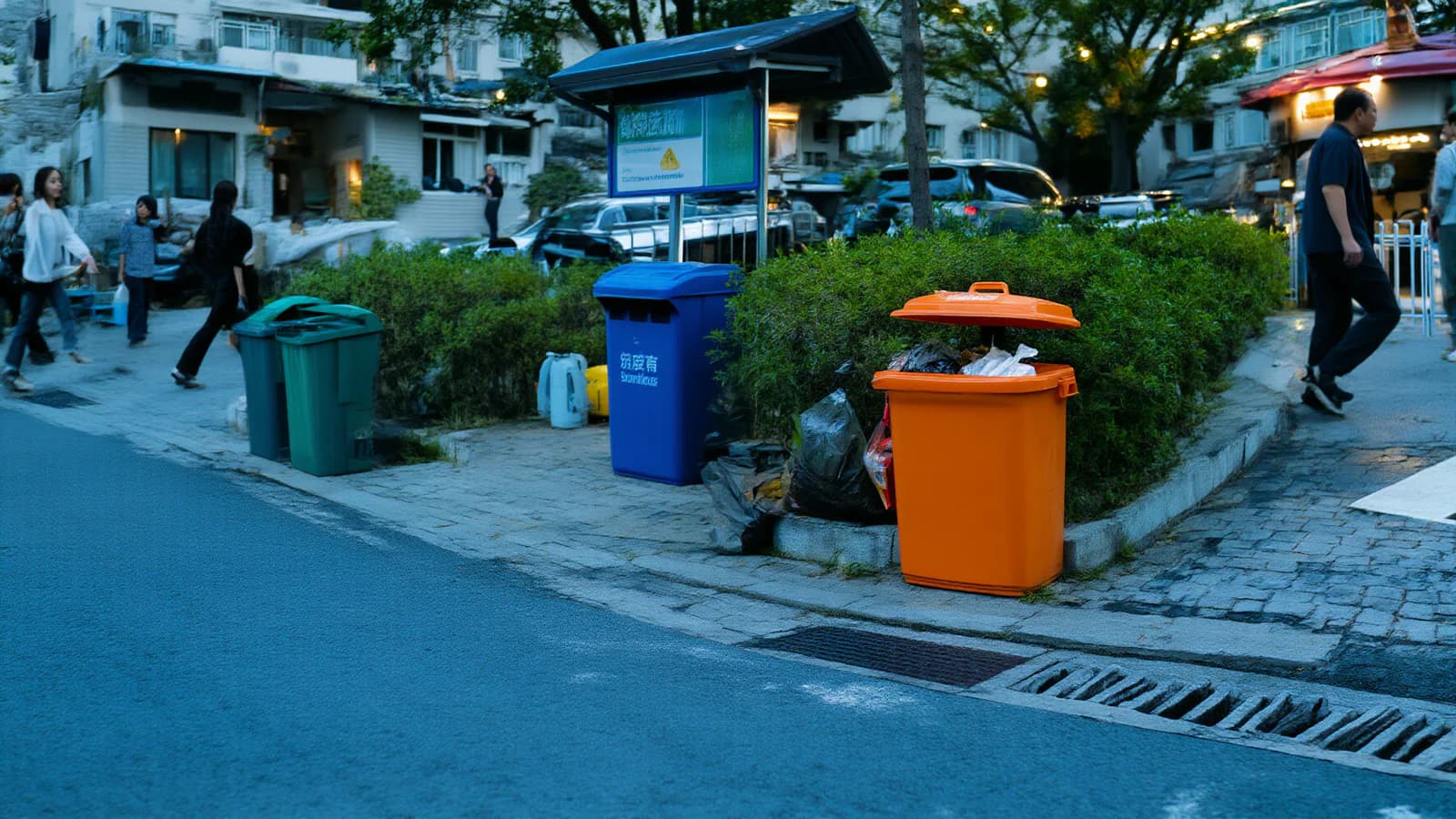
Why the Streets Are Nearly Bin-Free: Jongnyangje
The absence of street bins isn't an oversight — it's a direct result of jongnyangje (종량제), a pay-by-volume waste system. Households and businesses are billed for what they throw out, collected only when it's placed in a district-issued bag purchased specifically for that purpose. There's no flat fee that covers unlimited trash; the more you generate, the more you pay for the bags to dispose of it.
That structure is exactly why a public bin sitting on a street corner causes more problems than it solves: anyone can drop trash into a bin that isn't tied to a paid bag, so municipalities that installed them found dumping piling up around them rather than staying contained. Removing the free bin removed the incentive, which is the trade the city made — fewer bins, but a system that actually gets emptied and sorted rather than overflowing.
Where You Can Actually Throw Something Away
The street itself is the wrong place to look. Buildings, not sidewalks, are where sorted bins tend to live: just inside a subway station's ticket hall, right at a convenience store's entrance, or tucked inside a café near the counter or door. Parks are another reliable option, usually with a small cluster of sorted bins near a main gate rather than scattered along the paths.
Treating "building-attached" as your search term, rather than "street corner," cuts down the time spent looking considerably. If you're near a station or a row of shops, you're closer to a legitimate disposal point than the empty sidewalk in front of you suggests.
The Sorting Categories: General, Plastic, Cans and Glass, Paper, Clear PET, Food
Where a sorted set of bins does exist, expect somewhere between four and six labeled openings rather than one general slot. The common breakdown is general waste, plastic, cans and glass, paper, clear PET bottles, and food waste, each with its own opening or its own bag color.
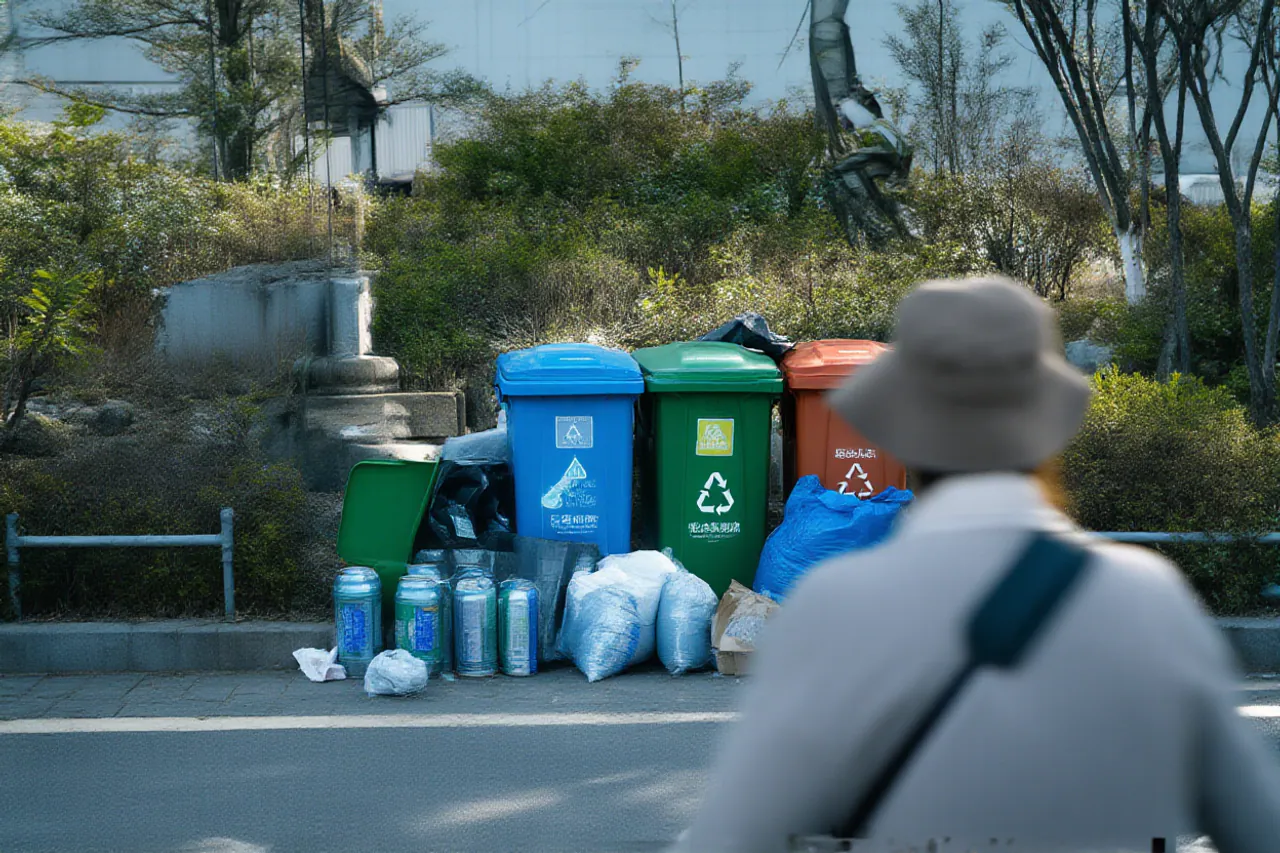
Clear PET bottles increasingly get their own separate slot rather than sharing one with general plastics — a distinction that's been expanding to more neighborhoods over the past several years. Mixing a clear bottle in with mixed plastics isn't a disaster, but it does mean someone downstream has to re-sort it by hand, which is exactly what the separate category is meant to avoid.
One category worth extra care: broken glass. Wrap it in newspaper or thick paper before it goes anywhere near the cans-and-glass bin rather than dropping it in loose — collection workers handle these bins by hand, and an unwrapped shard is a real hazard rather than a formality.
Food Waste Stays Separate, and Housing Type Changes How
Food scraps never go in with general trash — that line is drawn firmly, and it shows up everywhere from apartment basements to public parks. What varies is the mechanism: many residential buildings run a weight-based collection bin that requires tapping a card or fob, which weighs your deposit and bills the resident accordingly rather than charging a flat rate.
Short-term guests are the group most likely to hit a wall here, since a rented apartment or guesthouse may or may not have issued that card to you. Ask your host or front desk directly how food waste is handled at that specific address before assuming either that it's included with general trash or that you can simply use the shared bin without a card.
Buying a Jongnyangje Bag: Where, and Why It's District-Specific
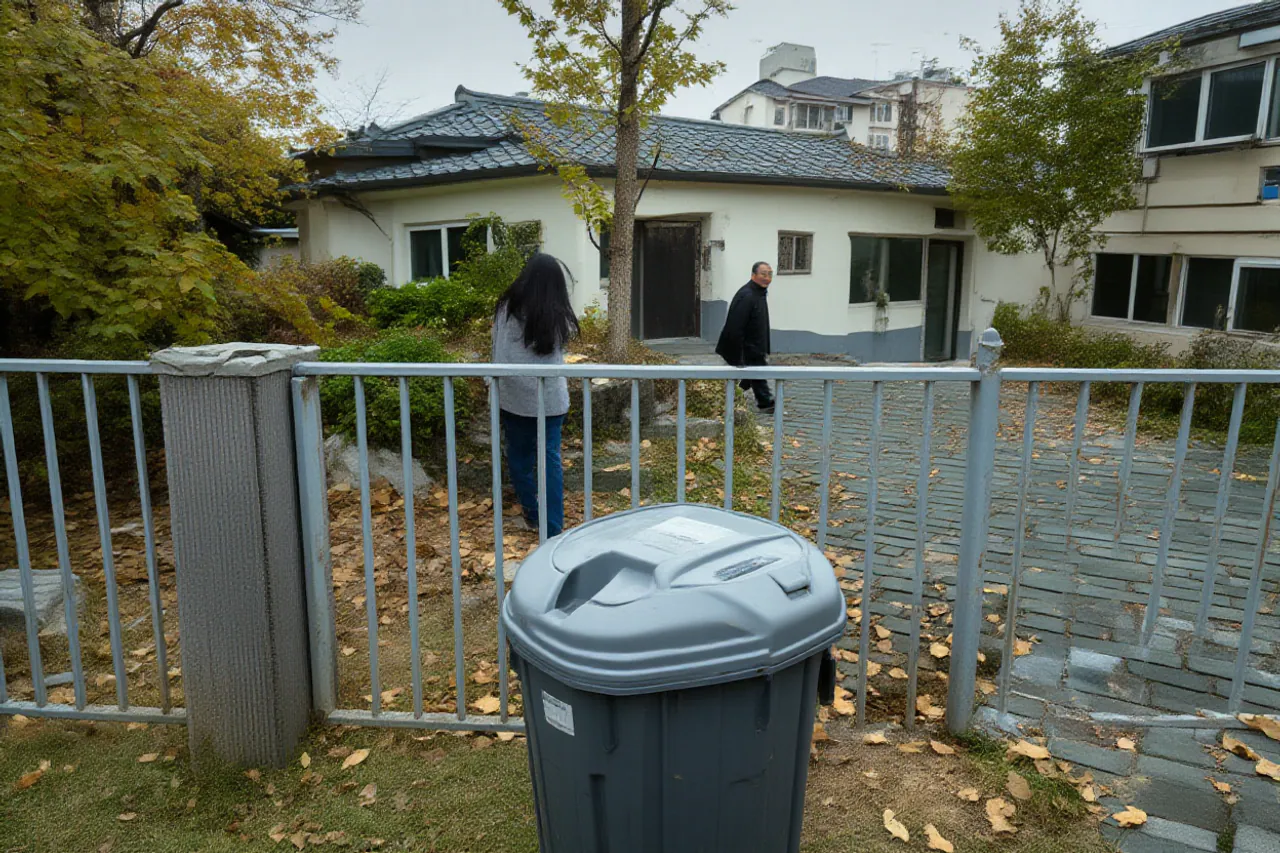
If you're staying somewhere long enough to generate a full bag of trash — a longer Airbnb stay or a short-term rental, rather than a hotel — you'll likely need to buy a jongnyangje bag yourself. Convenience stores and supermarkets carry them, usually kept near the register or in a dedicated rack.
The design and price are set by the district (gu or si), not standardized nationwide. A bag purchased in one neighborhood may look completely different from one sold a few kilometers away, and collection crews won't take a bag issued for a different district. Buy yours as close to your actual accommodation as possible rather than wherever happens to be convenient.
Bags come in a range of sizes, from a few liters up to well over 50 — a size meant for a single apartment's weekly output, not a family home's. If you're only clearing out a couple of days' worth of rubbish before checkout, the smallest size on the rack is almost always the right call, and staff at the store can point to it if the labeling isn't clear.
Hotels handle this step for you; short-term rentals and guesthouses usually don't, which is the real dividing line for whether this section applies to your trip at all.
Disposing of a Cup or Container You're Carrying
A used coffee cup or food container needs a short prep step before it counts as recyclable rather than general waste. Pour out any leftover liquid, and separate the lid, straw, and cardboard sleeve from the cup itself — most sorted bins expect these pieces apart, not bundled together as one unit.
Skipping that step doesn't get you turned away at a bin, but it does mean the whole thing is more likely to be swept into general waste rather than actually recycled, which somewhat defeats the purpose of sorting in the first place.
Where People Get Stuck: Delivery Containers, Wet Paper, Labeled Bottles
A handful of situations trip up even careful visitors. Delivery food containers need a rinse before they're accepted as recyclable — sauce or oil residue left inside disqualifies them, so a quick rinse under a tap makes the difference. Wet or soiled paper, including greasy takeout boxes, generally can't go in with clean paper recycling and belongs in general waste instead.
Plastic bottles with the label still attached are the third common snag — peeling the printed sleeve off before binning it is a small extra step that a lot of visitors skip simply because they don't know it's expected.
Illegal Dumping Fines Exist — Confirm the Number Locally
Notices warning about fines for illegal dumping are a common sight taped to walls and lamp posts in residential alleys, and they're not empty threats — enforcement does happen, particularly where dumping has been a recurring problem. What the notice won't always tell you is a consistent number, because the fine amount is set at the district level and differs from one area to the next.
Rather than repeating a figure picked up secondhand, check the posted notice at the specific location or the relevant municipal page linked below if the exact amount matters to your situation. Some known dumping spots also carry a small CCTV notice alongside the fine warning, which is worth reading as a sign that leaving a bag there specifically — rather than trash in general — is the actual issue.