
Korean Food for First-Timers: 24 Dishes to Try and What's in Them
Summary
Start with bibimbap, gimbap, samgyetang, naengmyeon, samgyeopsal, tteokbokki and pajeon. Most are not very spicy; kimchi-jjigae, dak-galbi, tteokbokki and bibim-naengmyeon are the hot ones. Meat, egg or seafood often hide in broths, kimchi and sauces, so ask. The English names here follow the Korean Food Promotion Institute's menu guide (778 entries listed on its portal, checked October 2026).
At a glance
- Dishes covered
- 24, in 6 groups
- Hottest
- Kimchi stew, dak-galbi, tteokbokki
- Mildest
- Samgyetang, gimbap, bulgogi
- Hidden animal products
- Broth, kimchi, sauces
- Name source
- Korean Food Promotion Institute
- Key question
- 이거 매워요? (Is this spicy?)
Details
Korean menus are short on English and long on dish names you have never seen. This guide gives you 24 common dishes in groups, with the Korean name as printed on the menu, what arrives at the table, how spicy it usually is, and what animal products to expect. It names no restaurants and gives no prices.
Before you start
- Names. English names and descriptions follow the Korean Food Promotion Institute's menu-name guide, which lists 778 dishes in English, Japanese and Chinese (Hansik Portal). The guide has no entry for a few street snacks, such as gyeran-ppang, so those use common names. Spelling on real menus varies in hyphens and spaces.
- Spice and contents. Both are typical for each dish, not a promise. Every kitchen cooks its own way, so ask when it matters.
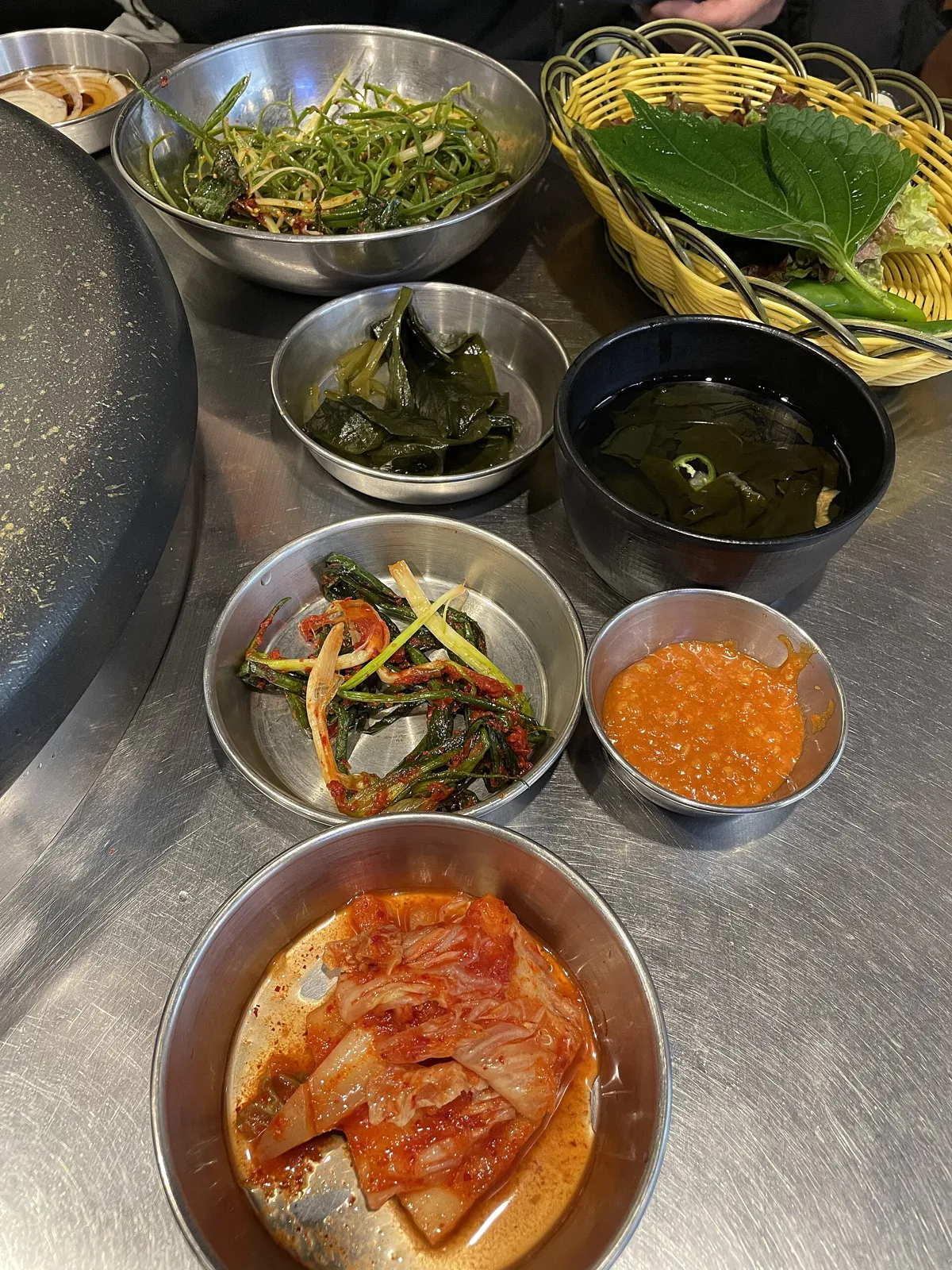
- The table. Rice, soup and a set of side dishes (반찬banchanSide dishes) come together, and kimchi is always there (VisitKorea). Asking for more water or side dishes does not cost extra at most places, per the same page. For ordering mechanics, see how to order at a restaurant.
Rice and bowls
- 비빔밥bibimbapMixed rice bowl: rice with seasoned vegetables and gochujang (red chili paste). Mix everything with the spoon before eating. A 돌솥비빔밥dolsotbibimbapHot stone pot bibimbap arrives in a sizzling pot, so wait a moment.
- 김밥gimbapSeaweed rice roll: rice and fillings rolled in seaweed and sliced. Eat it by hand or with chopsticks. Fillings vary: 김치김밥 (kimchi gimbap) or 참치김밥 (tuna gimbap).
Soups and stews
- 김치찌개kimchi-jjigaeKimchi stew: a boiling red stew of aged kimchi. It comes in the pot and is shared, with rice on the side.
- 된장찌개doenjang-jjigaeSoybean paste stew: a salty-savory stew of fermented soybean paste, tofu and vegetables. Common at the end of a barbecue meal.
- 삼계탕samgyetangGinseng chicken soup: a whole small chicken in clear broth with rice and ginseng. It is served boiling; pull the meat off the bone with spoon and chopsticks.
- 설렁탕seolleongtangOx bone soup: milky beef-bone soup with rice or noodles. Add salt and spring onion at the table.
- 갈비탕galbitangShort rib soup: clear beef-rib soup, mild and often a safe first soup.
Noodles
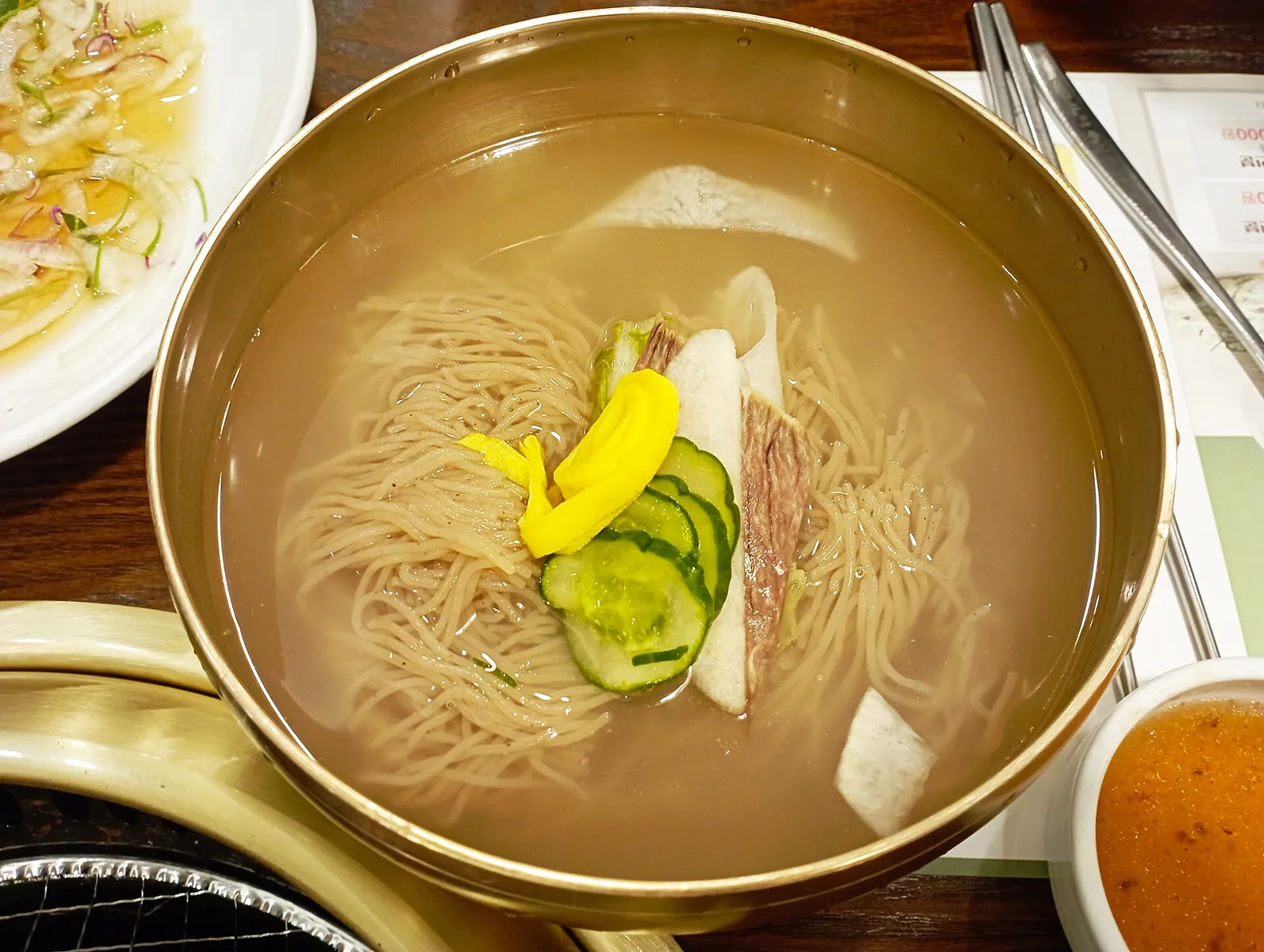
- 냉면naengmyeonCold buckwheat noodles: thin chewy noodles. 물냉면mul-naengmyeonCold buckwheat noodles in broth comes in icy broth; 비빔냉면bibim-naengmyeonSpicy mixed buckwheat noodles has a red chili sauce. Staff may offer to cut the noodles with scissors.
- 칼국수kalguksuKnife-cut noodle soup: wheat noodles in a hot broth. The English guide calls it simply "Noodle Soup"; versions with chicken, clams or mushrooms are listed.
- 잡채japchaeStir-fried glass noodles and vegetables: sweet-savory glass noodles with vegetables, served as a side or a main.
Grilled meat
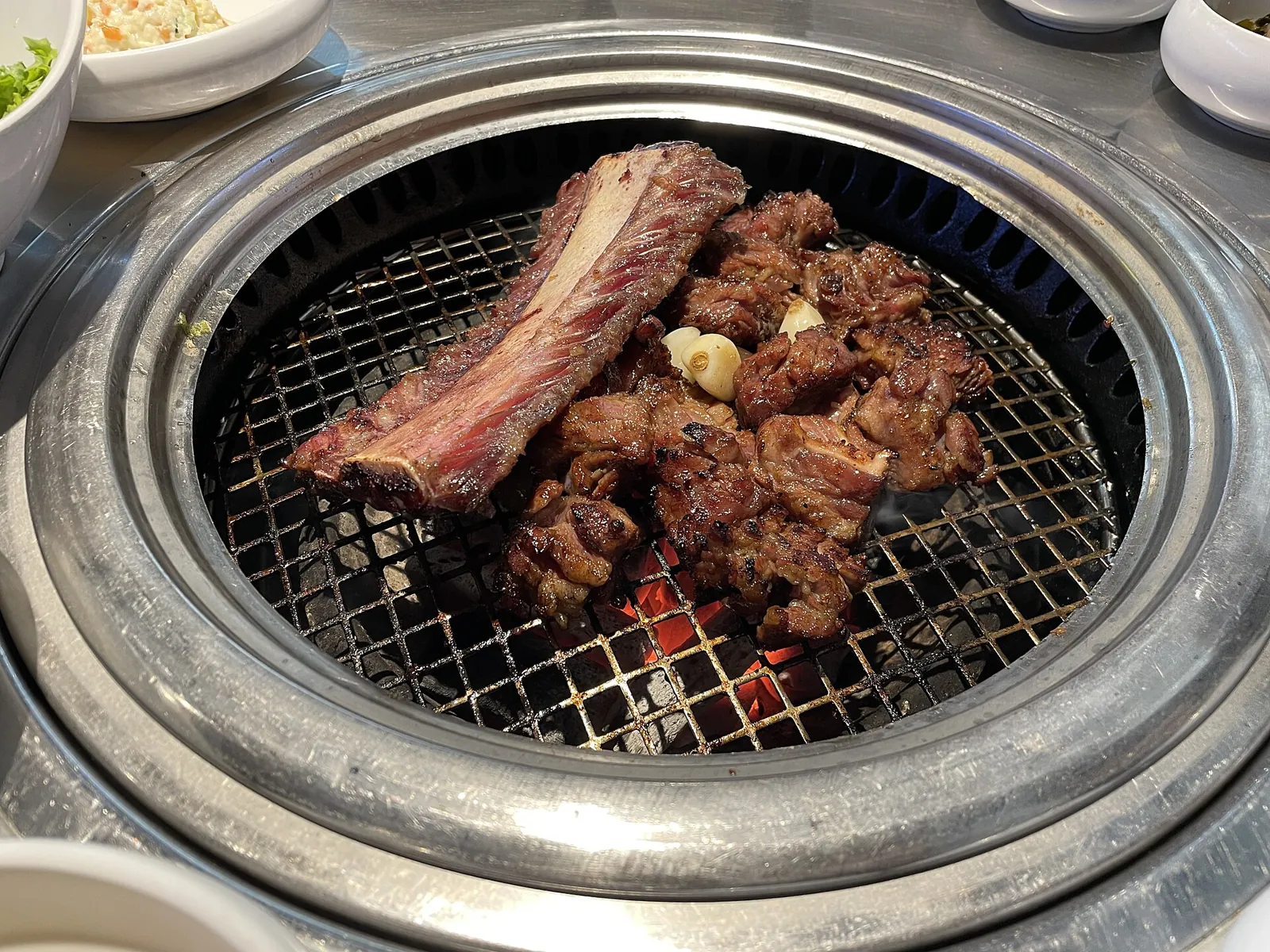
- 삼겹살samgyeopsalGrilled pork belly: thick pork belly grilled on the table. Wrap a piece in a lettuce or perilla leaf with ssamjang (soybean-chili dipping paste) and eat it in one bite (VisitKorea).
- 불고기bulgogiMarinated sliced beef: thin, sweet soy-marinated meat, grilled or cooked in a pan. The guide also lists duck and spicy red-chili versions.
- 갈비galbiGrilled ribs: marinated ribs. The guide lists 양념갈비 as "Marinated Grilled Beef Ribs" or pork ribs, so check which.
- 닭갈비dak-galbiSpicy stir-fried chicken: chicken, cabbage and rice cakes in chili sauce, cooked in a shared pan.
Some barbecue restaurants ask you to order more than one portion, and some may not seat a single diner, so ask before you sit down. In some places staff grill and cut the meat for you. See Korean etiquette for table manners.
Street snacks
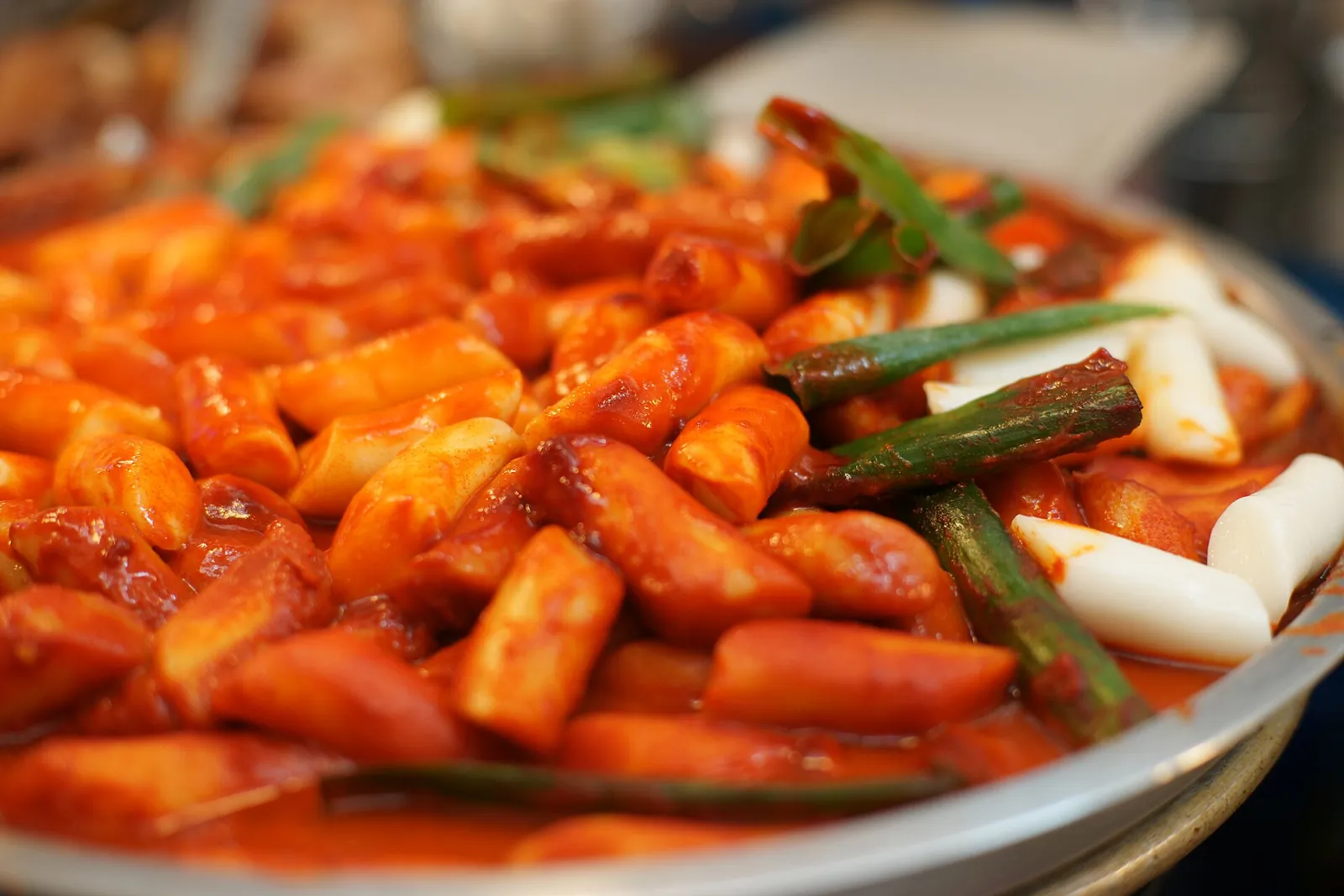
- 떡볶이tteokbokkiStir-fried rice cakes: chewy rice cakes in sweet-hot red sauce, usually with fish cake.
- 호떡hotteokSyrup-filled pancake: a fried dough pocket filled with brown sugar syrup. It is very hot inside.
- 어묵eomukFish cake: fish-paste skewers in broth. The portal lists 어묵국 as "Fishcake Soup".
- 튀김twigimDeep-fried snacks: fried vegetables, sweet potato, laver rolls, squid or shrimp. Often paired with tteokbokki sauce.
- 계란빵gyeran-ppangEgg bread: a small sweet bread loaf baked with a whole egg inside.
Pancakes, side dishes and sweets
- 파전pajeonGreen onion pancake: crisp pancake of spring onions with a soy dipping sauce. 해물파전haemulpajeonSeafood and green onion pancake adds seafood.
- 빈대떡bindaetteokMung bean pancake: thick fried pancake of ground mung beans. A kimchi version exists.
- 김치kimchiKimchi: fermented vegetables, usually cabbage, in chili seasoning. It is free and refillable at most places. Spice varies a lot.
- 팥빙수patbingsuShaved ice with red bean topping: a bowl of finely shaved ice, sweet red beans and toppings. Share it with spoons.
- 떡tteokRice cake: chewy rice-flour sweets, such as 송편 (half-moon rice cake) and 인절미 (bean-powder-coated rice cake).
At a glance
| Dish | Spicy? | Usually contains |
|---|---|---|
| Bibimbap | Mild to medium (gochujang) | Egg and often beef; vegetable only if you ask |
| Gimbap | No | Egg, ham, crab stick or tuna; varies |
| Kimchi-jjigae | Yes | Pork or fish, kimchi (often with salted seafood) |
| Doenjang-jjigae | Mild | Often seafood or beef; ask about the broth |
| Samgyetang | No | Chicken, ginseng, rice |
| Seolleongtang | No | Beef bone broth and beef |
| Galbitang | No | Beef ribs |
| Mul-naengmyeon | No | Buckwheat, beef broth, egg, beef slices |
| Bibim-naengmyeon | Yes | Buckwheat, chili sauce, egg |
| Kalguksu | Mild | Wheat; chicken, clam or other broth |
| Japchae | No | Sweet potato noodles, vegetables, often beef |
| Samgyeopsal | No (sauces vary) | Pork |
| Bulgogi | No | Beef; sometimes pork or duck |
| Galbi | No | Beef or pork ribs |
| Dak-galbi | Yes | Chicken, rice cakes |
| Tteokbokki | Yes | Rice cakes, usually fish cake |
| Hotteok | No | Wheat, sugar, sometimes nuts or seeds |
| Eomuk | Mild | Fish paste, fish-based broth |
| Twigim | No | Varies: vegetables, squid, shrimp; shared oil |
| Gyeran-ppang | No | Wheat, egg, milk |
| Pajeon | No | Egg-and-flour batter; seafood in 해물파전 |
| Bindaetteok | No | Mung beans; often pork or kimchi |
| Kimchi | Usually | Often salted seafood or fish sauce |
| Bingsu | No | Milk, ice, red beans |
| Tteok | No | Rice flour; beans, sesame, nuts |
How to ask about ingredients
Name the ingredient you avoid, not a category. VisitKorea warns that kimchi seasoning often contains salted seafood, fish sauce or meat broth, that bibimbap usually has meat and egg, and that tuna, cheese, ham or crab stick can be in gimbap (VisitKorea, last updated October 2023). It also says soft tofu stew (순두부찌개) and braised tofu usually include salted shrimp.
- 이거 매워요?igeo maewoyo?Is this spicy?
- 안 맵게 해 주세요an maepge hae juseyoPlease make it not spicy
- 이거 고기 들어가요?igeo gogi deureogayo?Does this have meat in it?
- 해산물 들어가요?haesanmul deureogayo?Does it have seafood?
- 고기 빼 주세요gogi ppae juseyoPlease leave out the meat
- 채식주의자예요chaesikjuuijayeyoI am a vegetarian
- 땅콩 알레르기가 있어요ttangkong allereugiga isseoyoI have a peanut allergy
- 뭐가 맛있어요?mwoga masisseoyo?What is good here?
More phrases are on the food phrase list.
Common problems
- "No meat" still gives you meat broth. Ask about the broth, not just the toppings. Written Korean on your phone helps.
- Halal. Pork is common in barbecue, stews and fillings. The Korea Tourism Organization keeps a Muslim-friendly travel page with classified restaurants.
- Too spicy. Order milder dishes first, and ask for 물mulWater. Rice and egg-based dishes calm the heat.
- Shared pots. Some stews and dak-galbi are served as one pot for the table, so tell staff how many you are.
Questions and answers
Is Korean food always spicy?
No. Samgyetang, gimbap, bulgogi, galbitang and mul-naengmyeon are mild. Kimchi-jjigae, dak-galbi, tteokbokki and bibim-naengmyeon are hot. Kimchi varies, so taste a little first.
What should I try first?
Bibimbap, gimbap and samgyetang are mild and easy to read. After that, try samgyeopsal and pajeon with a group.
Can vegetarians eat well in Korea?
With care. VisitKorea notes that temple-food restaurants serve no meat and that vegetarian restaurants and cafes are increasing. Many ordinary dishes use hidden meat or fish, so ask each time.
Are menu spellings the same everywhere?
No. The Korean Food Promotion Institute publishes standard names, but shops spell them their own way, such as "kimbap" or "gimbap". Match the Korean text when in doubt.
Official sources (5)
Last checked October 23, 2026Next check due April 21, 2027
- Korean Food Menu Foreign-Language Notation Guide, 800 items (한식메뉴 외국어표기법 길라잡이 800선), searchable list of 778 entries — Korean Food Promotion Institute (한식진흥원), Hansik Portalaccessed October 23, 2026
- Korean Food Menu Foreign-Language Notation Guide, 800 items (dataset, 2023-06-01) — Korean Food Promotion Institute via Public Data Portal (data.go.kr)accessed October 23, 2026
- About Korean Food — Korea Tourism Organization (VisitKorea)accessed October 23, 2026
- Tips for Vegetarians — Korea Tourism Organization (VisitKorea)accessed October 23, 2026
- Muslim-friendly Travel — Korea Tourism Organization (VisitKorea)accessed October 23, 2026
Rules can change. Confirm on the official site before you travel.
Related guides

How to Order at a Korean Restaurant: Kiosks, Bells and Paying (2026)
Read the Korean buttons on restaurant kiosks and table tablets, call staff with the bell, get your own water, and pay at the counter on the way out.
How to Use a Korean Convenience Store: Heating Food, 1+1 Deals (2026)
Pay first, then heat your food. How the microwave and hot-water station work, what 1+1 and 2+1 tags mean, and how to top up T-money at the counter.

Eating in Korea: Restaurants, Kiosks and Convenience Stores
How eating out works in Korea: ordering at kiosks and tables, paying at the counter, convenience-store meals, cash at markets, and dietary needs.

Korean Etiquette for Visitors: Shoes, Subway, Toilets and Trash
Where to take your shoes off, how to use priority seats, why you flush toilet paper, where to find a bin, and the few table manners that matter.