
How to Order at a Korean Restaurant: Kiosks, Bells and Paying (2026)
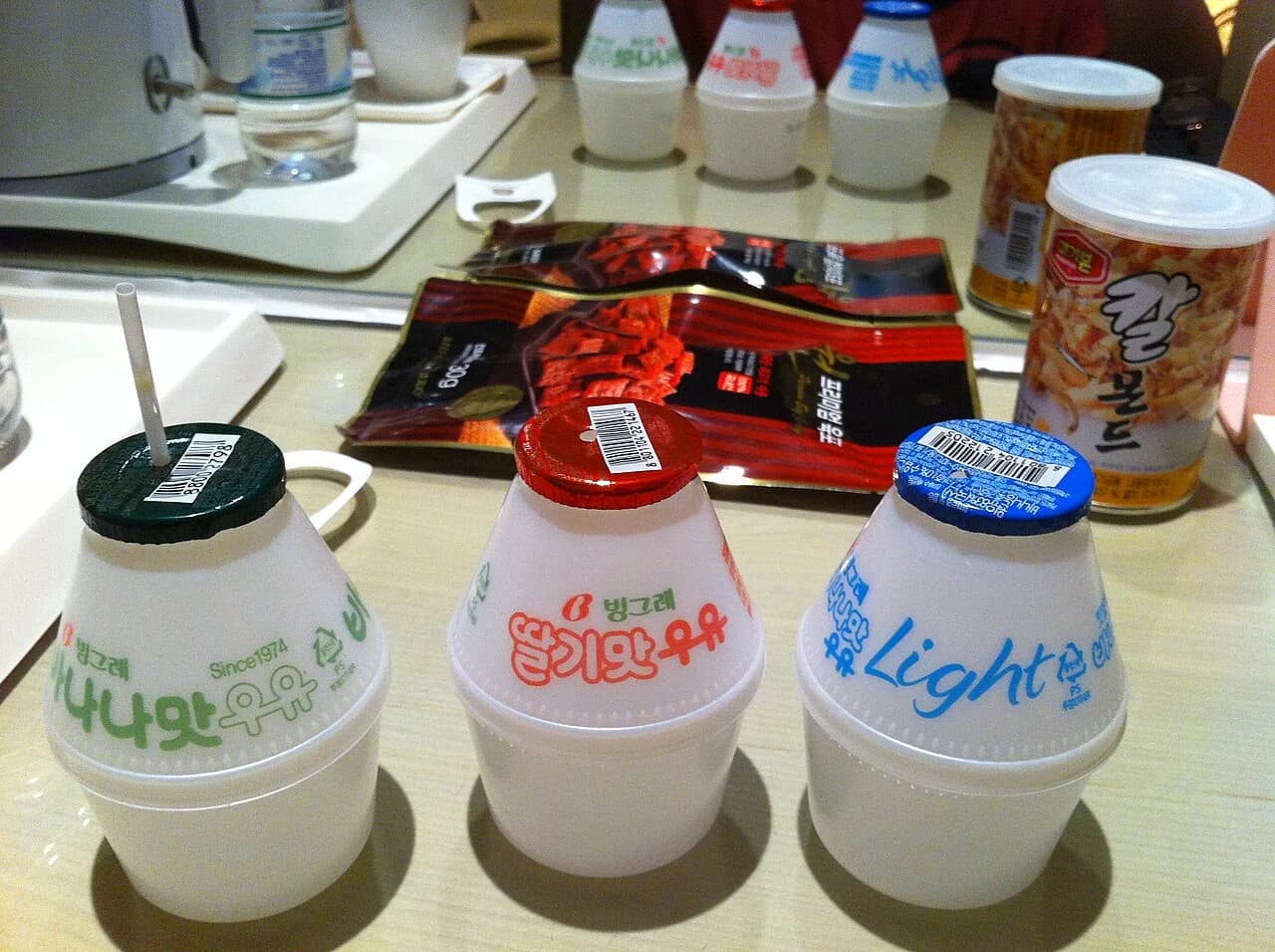
Photo: Unknown author, CC BY-SA 2.0 fr · Dongdaemon-korean-food-8.jpg

Summary
Many Korean restaurants take orders on a kiosk by the door or a tablet on the table: choose 매장 (eat in) or 포장 (takeaway), add dishes, then press 결제 (pay). Where staff take orders, press the call bell or say "jeogiyo", fetch your own water if you see 물은 셀프, and pay at the counter as you leave. Most shops accept international cards, but some market stalls take only cash (VisitKorea, October 2025). Labels vary by machine.
At a glance
- Kiosk
- Usually pay first, at the machine
- Table service
- Pay at the counter when leaving
- Call staff
- Press call bell or say jeogiyo
- Water
- Often self-service
- Cards
- Most shops take international cards
- Tipping
- Not expected
Korean for this
저기요
jeogiyo
Excuse me
이거 주세요
igeo juseyo
This one, please
두 명이에요
du myeongieyo
Two people
이거 매워요?
igeo maewoyo?
Is this spicy?
계산해 주세요
gyesanhae juseyo
The bill, please
Details
Korean restaurants use three ordering systems: a kiosk by the door, a tablet on the table, or a server who comes when you call. The words on the screens are the hard part, so this guide lists the Korean labels you will actually see. Exact wording differs between kiosk makers, so match the shape of the word, not every letter.
Before you start
- A payment card. Most stores in Korea accept major international cards, but traditional markets and street stalls may take only cash (VisitKorea, updated October 2025). Carry some won. See money, cash and cards.
- A camera translation app. It reads paper menus and kiosk screens. See useful apps.
- Your dietary needs written in Korean. Name the ingredient, not a category. "Vegetarian" alone is often not enough, because many broths use meat or seafood.
- Your party size. Staff will ask how many people. Holding up fingers works.
Step by step
Step 1 — Work out how this place takes orders
Look at the entrance and the table before you sit down.
- A screen standing near the door means kiosk ordering. A sign may say 주문은 키오스크에서jumuneun kioseukeueseoOrder at the kiosk. You usually pay first, which is called 선불seonbulPay first.
- A tablet fixed to the table means you order there and usually pay at the counter at the end.
- No screen at all means a server takes your order. You pay after the meal, called 후불hubulPay later.
Step 2 — Use a kiosk
Tap the screen to start. If you see "English" or a globe icon, tap it. Some screens show 언어eoneoLanguage instead. Many kiosks have no English, so the labels below help.
- Start. Press 주문하기jumunhagiOrder.
- Eat in or take away. Choose 매장maejangEat in or 포장pojangTakeaway. Some machines say 매장 식사 or 먹고 가기 for eating in.
- Pick dishes. Tap a photo. A pop-up may offer 추가chugaAdd extra options such as extra cheese or noodles. Press 담기damgiAdd to order.
- Check the order. Open 장바구니jangbaguniCart. Change 수량suryangQuantity with the + and − buttons. 취소chwisoCancel removes an item. 처음으로cheoeumeuroStart over clears everything.
- Skip the points screen. If the machine asks for a phone number for 포인트 적립pointeu jeongnipCollect points, press 건너뛰기geonneottwigiSkip.
- Pay. Press 결제하기gyeoljehagiPay, then 카드 결제kadeu gyeoljePay by card. Insert or tap your card as the screen shows. Some kiosks also offer 간편결제ganpyeon gyeoljeMobile payment. If you want to pay cash, look for 현금hyeongeumCash; many kiosks send cash payers to the counter.
- Keep the receipt. Press 영수증 출력yeongsujeung chullyeokPrint receipt. It shows your 주문번호jumun beonhoOrder number.
- Wait for your number. Watch the screen above the counter, or carry the 진동벨jindongbelVibrating pager if you were given one. Collect food at 픽업pigeopPick-up.
In fast-food places and food courts, return your tray to 퇴식구toesikguTray return when you finish.
Step 3 — Use a table tablet
Tablets work like kiosks, but you keep adding dishes during the meal.
- 주문하기jumunhagiOrder sends the order to the kitchen.
- 주문내역jumun naeyeokOrder history shows what you have ordered so far.
- 직원호출jigwon hochulCall staff calls a server. Some tablets let you choose a reason, such as water or extra side dishes.
Most tablets do not take payment. You pay at the counter when you leave, with the table number or the receipt.
Step 4 — Order from a server
Press the call button on the table, often marked 호출hochulCall. If there is no button, say 저기요jeogiyoExcuse me clearly toward the kitchen. Waiting quietly for eye contact rarely works.
Point at the menu and say 이거 주세요igeo juseyoThis one, please. Meat and stew menus are often priced per portion: 1인분irinbunOne serving. Some dishes are sold only for 2인분 이상i-inbun isangTwo servings or more, so check before you sit down if you are eating alone. Plain rice is often a separate item called 공기밥gonggibapBowl of rice.
To ask for food without chili, say 안 맵게 해 주세요an maepge hae juseyoNot spicy, please. Some dishes cannot be made mild because the sauce is prepared in advance.
Step 5 — Get water, cutlery and side dishes
Korean meals come with several small side dishes, called 반찬banchanSide dishes, served with the main dish (VisitKorea). To ask for more, say 반찬 더 주세요banchan deo juseyoMore side dishes, please.
If nobody brings water, look for a sign saying 물은 셀프mureun selpeuWater is self-service. The water cooler and cups are usually near the entrance or a wall. A 셀프바selpeubaSelf-service bar may hold side dishes, sauces and aprons. Spoons and chopsticks are often in a drawer at the table edge or in a box on the table.
Step 6 — Pay at the counter
In table-service restaurants, nobody brings the bill. Walk to the counter by the door and say 계산할게요gyesanhalgeyoI'd like to pay. Staff may ask 영수증 드릴까요?yeongsujeung deurilkkayo?Do you want the receipt?. To split the bill, ask for 따로 계산ttaro gyesanPay separately; it is easier outside the busy lunch hour.
There is no tip line on the card machine, and you do not leave money on the table.
When and where you pay
| Ordering system | When you pay | Where | Payment |
|---|---|---|---|
| Kiosk (선불seonbulPay first) | Before you eat | At the machine | Card or mobile pay; cash often at the counter |
| Table tablet | After the meal, in most places | Counter by the door | Card or cash |
| Server (후불hubulPay later) | After the meal | Counter by the door | Card or cash; some small places cash only |
| Market stall | When you order or when you finish | At the stall | Cash is safest |
Common problems
- The kiosk will not read your card. Try inserting the chip instead of tapping, or try another card. If it still fails, go to the counter. Staff can usually take the order there.
- No English on the screen. Point your translation app at the screen. Photos of each dish help too.
- You missed your number. Show your receipt at the pick-up counter.
- The restaurant is closed in mid-afternoon. A sign saying 브레이크 타임beureikeu taimBreak time means the kitchen closes between lunch and dinner. The hours are usually written under it.
- A two-serving minimum when you are alone. Ask if a single portion is possible, or choose a one-person dish such as a rice bowl or noodles.
- You need halal food. The Korea Tourism Organization classifies Muslim-friendly restaurants and maps them, along with prayer rooms, on its Muslim-friendly travel page.
Questions and answers
Do I need to tip in a Korean restaurant?
No. The price on the menu is what you pay at the counter. There is no tip line, and money left on the table may confuse staff.
Can I pay with a foreign card?
Usually. Most stores accept international cards such as Visa, Mastercard, JCB, AMEX and UnionPay (VisitKorea). Very small shops and market stalls may take only cash.
Is it rude to eat alone?
No. Solo diners are common, especially at lunch. The only limit is dishes sold for two or more people.
What does 매장 mean on a kiosk?
매장maejangEat in means you eat in the restaurant. 포장pojangTakeaway means you take the food away. Choose before you add dishes, because some places price takeaway differently.
Do I clear my own table?
At kiosk restaurants, fast-food places and food courts, yes: take your tray to 퇴식구toesikguTray return. At table-service restaurants, staff clear the table.
Next, learn how to heat food and read deal tags in a Korean convenience store.
Official sources (3)
Last checked October 20, 2026Next check due April 18, 2027
- Shopping in Korea (payments and tax refunds) — Korea Tourism Organization (VisitKorea)accessed October 20, 2026
- Money-saving Tips — Korea Tourism Organization (VisitKorea)accessed October 20, 2026
- Muslim-friendly Travel — Korea Tourism Organization (VisitKorea)accessed October 20, 2026
Rules can change. Confirm on the official site before you travel.
Related guides
How to Use a Korean Convenience Store: Heating Food, 1+1 Deals (2026)
Pay first, then heat your food. How the microwave and hot-water station work, what 1+1 and 2+1 tags mean, and how to top up T-money at the counter.

Korean Etiquette for Visitors: Shoes, Subway, Toilets and Trash
Where to take your shoes off, how to use priority seats, why you flush toilet paper, where to find a bin, and the few table manners that matter.

Cash, Cards and Mobile Payments in Korea (2026)
Where foreign cards work in Korea, when you still need cash, how to use Global ATMs, why to pay in won, and which mobile wallets work (October 2026).