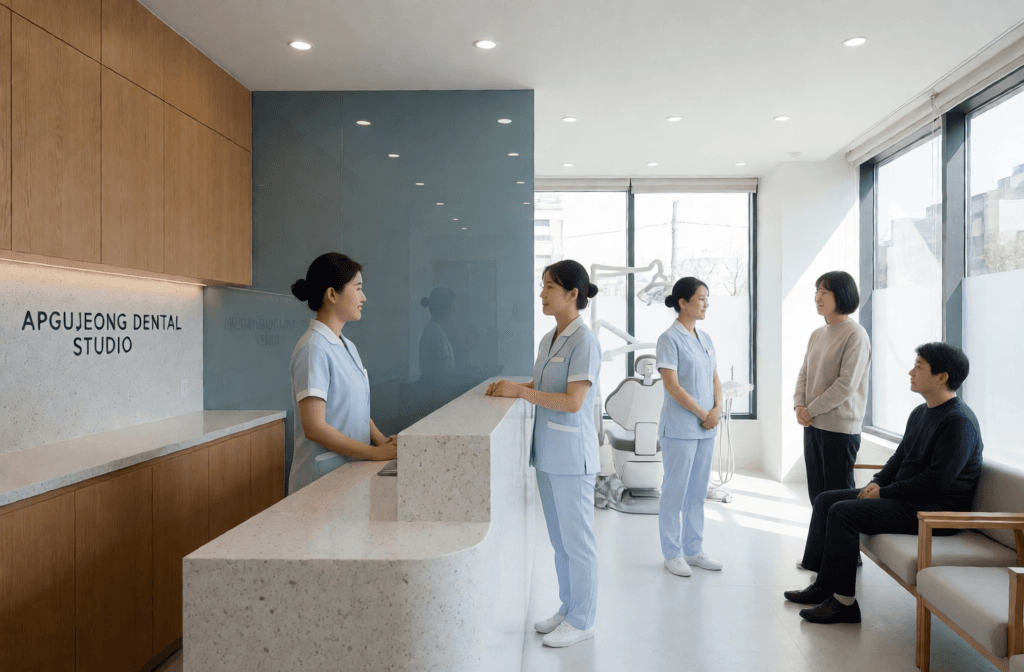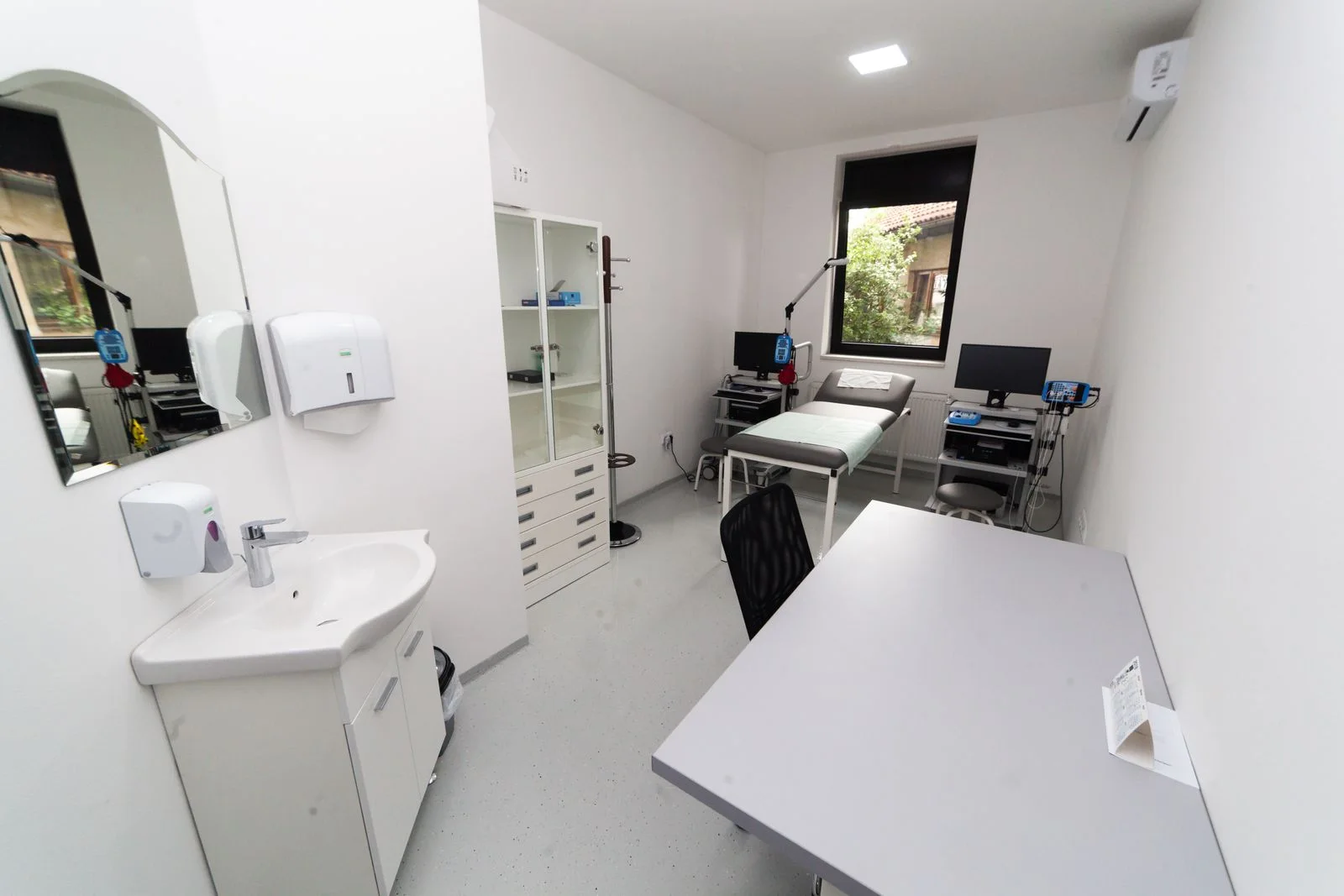
Every question on this checklist assumes one thing: you're no longer able to walk back to the front desk and ask in person. Once the flight home has landed, a five-minute conversation at the clinic turns into an email that might take a day to cross a time difference — which is exactly why the order here matters.
Why this list exists: physical contact with the clinic ends at the airport
While you're still in Korea, an unanswered question has an easy fix: go back, or call the front desk and ask someone to walk through it again in person. That option disappears the moment your flight leaves. From here, everything runs on documentation you already hold and messages that travel across a time zone.
This checklist follows that shift. The earlier sections cover what to lock down before boarding, while your access to the clinic is still immediate. The later ones cover what to do once you're home and that access is gone — a specific order of operations, not a general worry list.
Before you board: what to have in hand
Four items are worth requesting before you leave the building, and all four are far easier to get at the clinic than by emailing for them after you've landed. An English-language treatment summary describing exactly what was done. The name and model or brand of any implant, lens, or device used, where one applies. Any prescriptions, written with generic drug names alongside the brand name your Korean pharmacy used. And the clinic's specific aftercare contact channel, plus how long a response usually takes — confirmed outright, not assumed from a business card.
Ask for all of this in writing at the clinic, before you leave. A verbal "we'll email it to you" is easy to lose track of once you're moving through an airport with a dozen other things on your mind.
The device or implant detail is the one people most often skip, and it's the one that matters most later. If a lens, plate, or implant was placed and you don't have its brand and model written down, a doctor back home has almost no way to know precisely what they're looking at — and asking the Korean clinic to look it up weeks later is a far slower process than getting it in writing on the day.
Taking prescribed medication out of Korea
The general shape of the rule is this: carrying a reasonable quantity of your own prescribed medication out of Korea for personal use is generally workable, but medications classified as controlled or narcotic substances require separate prior approval and documentation. Confirm the current procedure against the Ministry of Food and Drug Safety's own guidance rather than a clinic's verbal summary, since this is exactly the kind of rule that gets updated.
Treat this as two separate checks, not one. What Korea allows you to carry out is one question; what your destination country allows you to bring in is a different question entirely, governed by rules that don't automatically line up. A medication cleared for export from Korea can still be restricted, or require declaration, on the other end.
Keep everything in its original labeled packaging together with the prescription itself, not transferred into a pill organizer or an unlabeled bag. Customs and pharmacy staff on either end are reading labels, not relying on your memory of what's inside.
How remote follow-up actually works
Before you leave, ask the clinic three specific things: which channel they use for follow-up — email, a messaging app, a patient portal — what photo angle and lighting they need to actually assess a remote check, and their typical response time once you've sent something.
Photo quality changes how useful a remote check actually is. A blurry photo taken under yellow bedroom lighting tells a doctor far less than one taken in daylight from the angle they specifically asked for, so ask what they want to see rather than guessing and sending whatever's easiest to take.
Confirm the language point too. Some clinics handle English follow-up messages directly; others route them through an interpreter, which can add a day or two to a response. Knowing which situation applies before you need an answer saves you from wondering, mid-message, whether anyone on the other end understood what you sent.
Handing off to a doctor back home
If you see a doctor near home for any reason connected to the procedure, bring the English treatment summary, any imaging or scans you were given, device or implant documentation, and your current medication list. This is exactly what a local doctor asks for, and there's no way to request it retroactively without contacting the Korean clinic again from a different time zone.
A local doctor may still want to examine and assess your case independently rather than rely entirely on the Korean clinic's notes. That's a normal part of one doctor picking up where another left off, not a sign that something went wrong or that the original work is being second-guessed.
Warning signs that need local, immediate medical attention
Some signs mean seeing a local doctor now, not waiting for your next scheduled check-in with the Korean clinic: fever, redness that's spreading rather than fading, pain that's getting worse instead of gradually easing, unexpected bleeding or discharge, or a sudden change in vision, hearing, or sensation where relevant to what was done.
Recovery pace varies by individual and by procedure, and this list isn't a day-by-day timeline — it's about signs that sit outside whatever range you were told to expect. "I figured it was just part of healing" is the explanation people give most often for waiting too long, and it's exactly the assumption this section exists to interrupt. When in doubt, a local doctor examining you in person beats a message sent across a time difference.

If home-country treatment is needed, who pays?
Ask the Korean clinic in writing, before you leave, what it covers if home-country treatment becomes necessary for a complication connected to the procedure. That's a separate question from what your travel insurance covers — its own topic, addressed in insurance, refunds, and paying from abroad rather than repeated here.
Get this answer before you need it. Raising the question after a problem has already appeared puts you in a weaker position than asking calmly, in writing, while you're still a paying patient the clinic is trying to keep satisfied.
If a second visit is needed
Ask directly what the process is for scheduling a return visit: whether the clinic can accommodate a shifted travel window, and what happens if you can't make it back within whatever period was originally suggested. This varies by procedure and belongs to a conversation with your treating doctor, not an assumption drawn from a general checklist like this one.
Getting a clear answer here matters more than it seems while you're still mid-trip and focused on the flight home. Discovering weeks later that a return visit is expected, with no flexibility discussed in advance, turns a straightforward follow-up into a scramble to rearrange flights on short notice.
Sources
- Ministry of Food and Drug Safety (MFDS, English)
- Korea Medical Dispute Mediation and Arbitration Agency (English)
- Medical Korea (KHIDI) — official medical tourism portal
This checklist covers documentation and remote contact; it isn't a substitute for a doctor examining you in person when a warning sign applies. From here, the clinic directory is where a future visit would start again. Reviewed 28 July 2026.