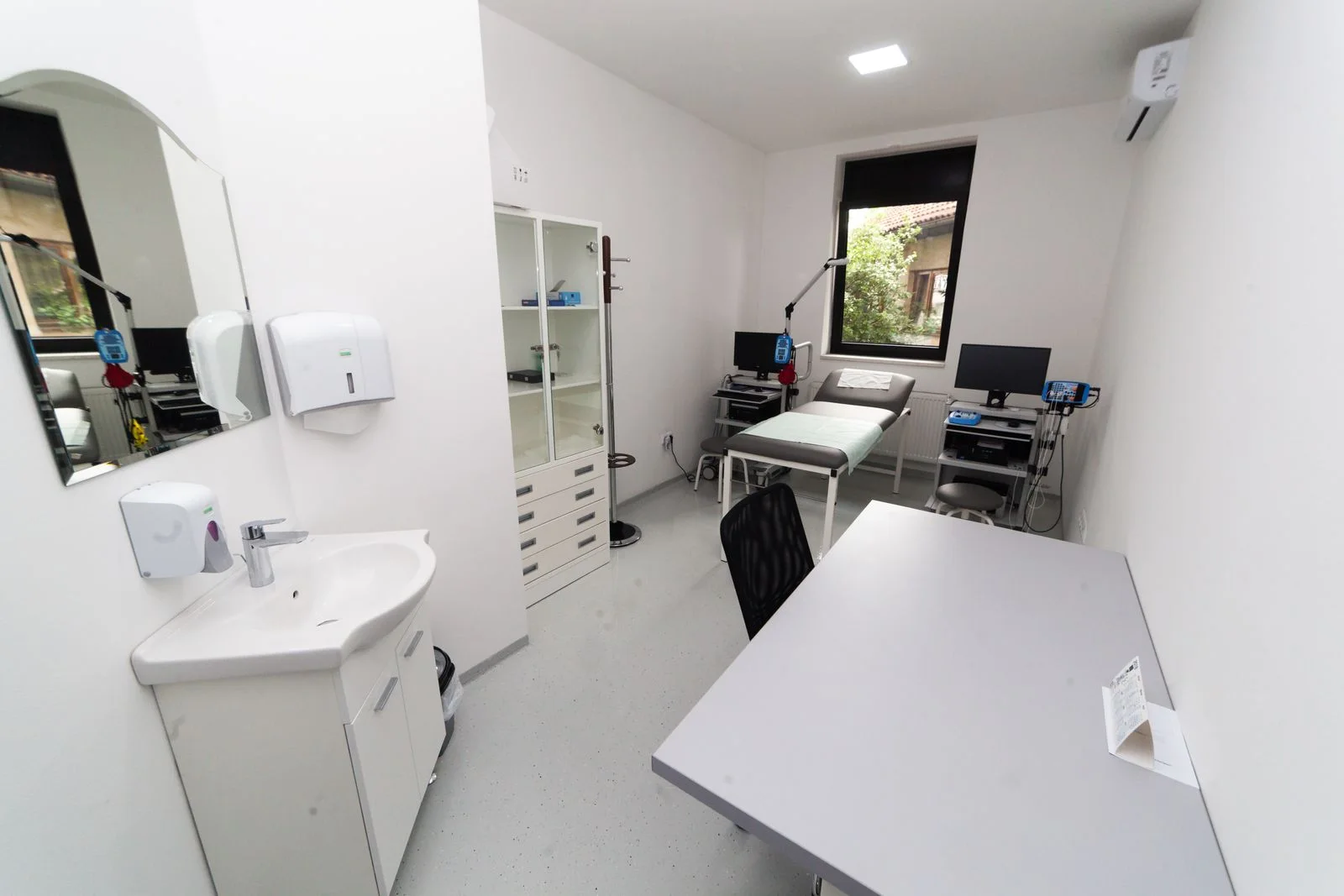
Most people picture the first visit as one conversation with the doctor. In practice it's a relay of separate stops — a desk, a form, a conversation about goals, and only then a clinical exam — each doing a different job, and mixing them up is exactly how a friendly options chat gets mistaken for a medical decision. This article starts once you've already booked and paid the reservation deposit online — see booking a Korean clinic and paying the deposit if you haven't reached that step — and covers only what happens once you walk through the clinic door.
What to bring to the first visit
Pack for this visit as though you're handing someone your medical history in a language they may not read fluently, because that's close to what's actually happening. Bring your passport, the booking confirmation email, a written list of current medications and known allergies, and a short summary of relevant past procedures or surgeries — not every visit you've ever had, just anything connected to what you're there to discuss.
If a prior consultation elsewhere already produced test results, scans, or photos relevant to the procedure, bring copies rather than relying on memory. A documented history speeds up the consultation and means you're not reconstructing the same answers twice — once in a waiting room, and again later from a hospital half a world away.
Skipping the medication and allergy list is the detail people regret most. Recalling drug names accurately mid-conversation, in a second language, under mild nerves, is exactly where details get dropped. A photo of the pill bottles themselves, taken before you leave home, holds up better than memory does.
Step by step: reception, intake form, coordinator, doctor, quote
A first visit at most Korean clinics moves through five stops in a fairly consistent order. Reception checks your passport and confirms which service you booked. Next comes a written intake form — a questionnaire on medical history, current medications, and your reason for visiting — completed before you speak with anyone clinical.
After the form, you'll usually sit with a coordinator, sometimes introduced as the 상담 실장, or consultation manager. This conversation covers your goals, may include initial photos or measurements, and walks through general options — useful groundwork, but not a clinical decision. That decision belongs to a separate step: the doctor's own consultation, where candidacy and the specific plan actually get assessed.
The visit closes with a written quote and, if you're moving forward, scheduling. Confusing the coordinator conversation with the doctor's exam is a common mix-up worth watching for — treat them as two stops with two different jobs, not one long conversation that happens to change speakers partway through.
Coordinator vs. doctor: who decides what
A coordinator explains pricing, walks through package options, and manages scheduling — real, useful work, but not a medical judgment. Whether a procedure actually suits you is a question only the doctor's own in-person assessment can answer, however detailed or reassuring the coordinator's explanation sounded.
If a visit is wrapping up and you haven't met the doctor at all, raise that directly rather than assuming it happened somewhere inside the conversation you already had. One question covers it: will the doctor personally assess me before I decide anything? Ask it early enough that the answer can still change your plans.
Photos, measurements, and what happens to them
Photos and measurements are typically taken during the coordinator or doctor stage, and they serve a real purpose — documenting your starting condition and planning the procedure. That part is standard and expected.
What isn't automatic is permission to use those same photos anywhere beyond your own file. Ask directly whether they'll appear in marketing materials or a before-and-after gallery, and treat that as its own question requiring its own clear yes, not something folded into the consent you already gave for planning photos. Declining marketing use doesn't change your treatment either way, so there's no cost to asking plainly, and no reason to assume silence means agreement.
Where this gets stuck: no interpreter, same-day pressure, no written quote
Three things derail an otherwise fine first visit, and each has a direct response. An interpreter you were told would be there sometimes isn't actually assigned that day — confirm interpretation before the appointment, not the morning you arrive, since "arranged in general" and "confirmed for this slot" aren't always the same thing. The fuller rules on interpreter placement and consent-form language live in interpreters and consent forms: what to check first; here it's flagged as a warning sign to watch for on the day.
Being pushed toward same-day treatment before you've had real time to think it over is the second. Nothing requires a consultation and a procedure to land on the same calendar day, and asking to sleep on a quote is a normal request, not an awkward one.
The third is leaving with only a spoken number instead of a written one. A verbal quote is easy to misremember and impossible to hold anyone to later. Ask explicitly for the quote in writing before you leave the building.
Consultation fees: is there one, and does it get deducted?
Whether the consultation itself costs anything, and what happens to that fee if you go ahead with treatment, is worth settling before the appointment rather than guessing. Some clinics fold the consultation fee into the procedure cost if you proceed; others charge it as a flat fee regardless of your decision. Ask directly which applies, and also ask what the fee is if you decide not to move forward.
This detail causes trouble in both directions. Some visitors assume consultations are free and are caught off guard at payment. Others assume a fee applies and delay booking a visit they'd otherwise have made. One question, asked before the appointment, resolves either worry.
Leaving without deciding: how to take the paperwork and think it over
Nothing about a first consultation requires a decision in the room. Ask for the written quote, the specific procedure plan discussed, and any printed information the clinic has on hand — all of it is meant to leave with you, not stay behind on someone's desk.
Confirm how long the quote stays valid, particularly if you're weighing a later travel date or comparing more than one clinic before booking. A quote with no stated expiry is worth asking about directly, since prices and availability both shift over time.
That's the practical close of the visit: paperwork in hand, nothing signed under pressure, and a real window to think it over once you're back at your hotel rather than sitting across from someone waiting on an answer.

Confirmation questions before you leave
Three questions are worth repeating on your way out, even if pieces of the answer surfaced earlier. Who will actually perform the procedure, and is that the person you just met — the full method for checking this is covered in confirming who actually performs your surgery, worth reading before your next visit rather than after.
Ask what the general recovery timeline looks like for your specific plan, understanding that the honest answer is "it varies by individual, confirmed by the treating doctor" rather than a fixed day count anyone can promise from a single meeting. And ask under what conditions the quoted price could still change — added tests, a different anesthesia plan, or a scope adjustment once the doctor examines you more closely are common reasons a number moves.
None of these questions are confrontational. They're the difference between a quote you understood and one you're simply hoping turns out to be complete.
Sources
- Medical Korea (KHIDI) — official medical tourism portal
- Medical Korea — registration system for foreign-patient institutions
- Korea Ministry of Health and Welfare (English)
This article describes the process and the questions to bring; it doesn't recommend a specific treatment for you. Once you've got a plan you're comfortable with, aftercare once you're home is worth reading before you fly, not after. Reviewed 28 July 2026.