Screened out of LASIK doesn't have to mean screened out of vision correction altogether. A different category of procedure exists for people whose cornea rules out laser treatment — and it works on a completely different part of the eye.
What ICL is: a lens placed inside the eye, not a corneal cut
ICL stands for implantable collamer lens. Instead of reshaping corneal tissue with a laser, a surgeon places a small, custom lens inside the eye itself, positioned in front of or behind the iris, leaving the cornea untouched. LASIK, LASEK, and SMILE all work by reshaping the cornea; ICL doesn't touch it at all.
That distinction is why ICL can stay on the table for someone whose cornea is too thin, or otherwise unsuitable, for laser correction. This article doesn't re-run the LASIK-versus-SMILE comparison — see LASIK and SMILE in Korea if that's the decision in front of you instead.
Who ends up here: candidacy and disqualifying factors
A surgeon evaluating ICL candidacy typically checks the degree of myopia, whether corneal thickness is sufficient for laser methods in the first place, anterior chamber depth, the count of corneal endothelial cells, and dry eye status. Every one of these is measured, not estimated by eye.
Here's the assumption worth correcting early: being turned down for LASIK doesn't mean ICL is automatically yours instead. Anterior chamber depth that's too shallow, or an endothelial cell count below what the surgeon needs to see, can rule ICL out on its own separate terms. Treat candidacy as its own open question, decided at its own exam — not a consolation prize that's guaranteed once one door closes.
How ICL differs in practice: removability, thickness limits, and night vision
A few practical differences are worth naming without ranking one method above the other. The lens itself can generally be exchanged or removed later if needed — corneal tissue removed during laser correction cannot. ICL's suitability doesn't hinge on corneal thickness the way laser methods do, since nothing about the cornea is being reshaped. Night-time glare or halo patterns can present differently with ICL than with laser correction, which is worth raising directly with your surgeon rather than assuming either method is automatically better on that front.
These are categories to discuss against your own eye exam results, not a verdict about which procedure suits you specifically.
Stopping contact lenses before the precision exam
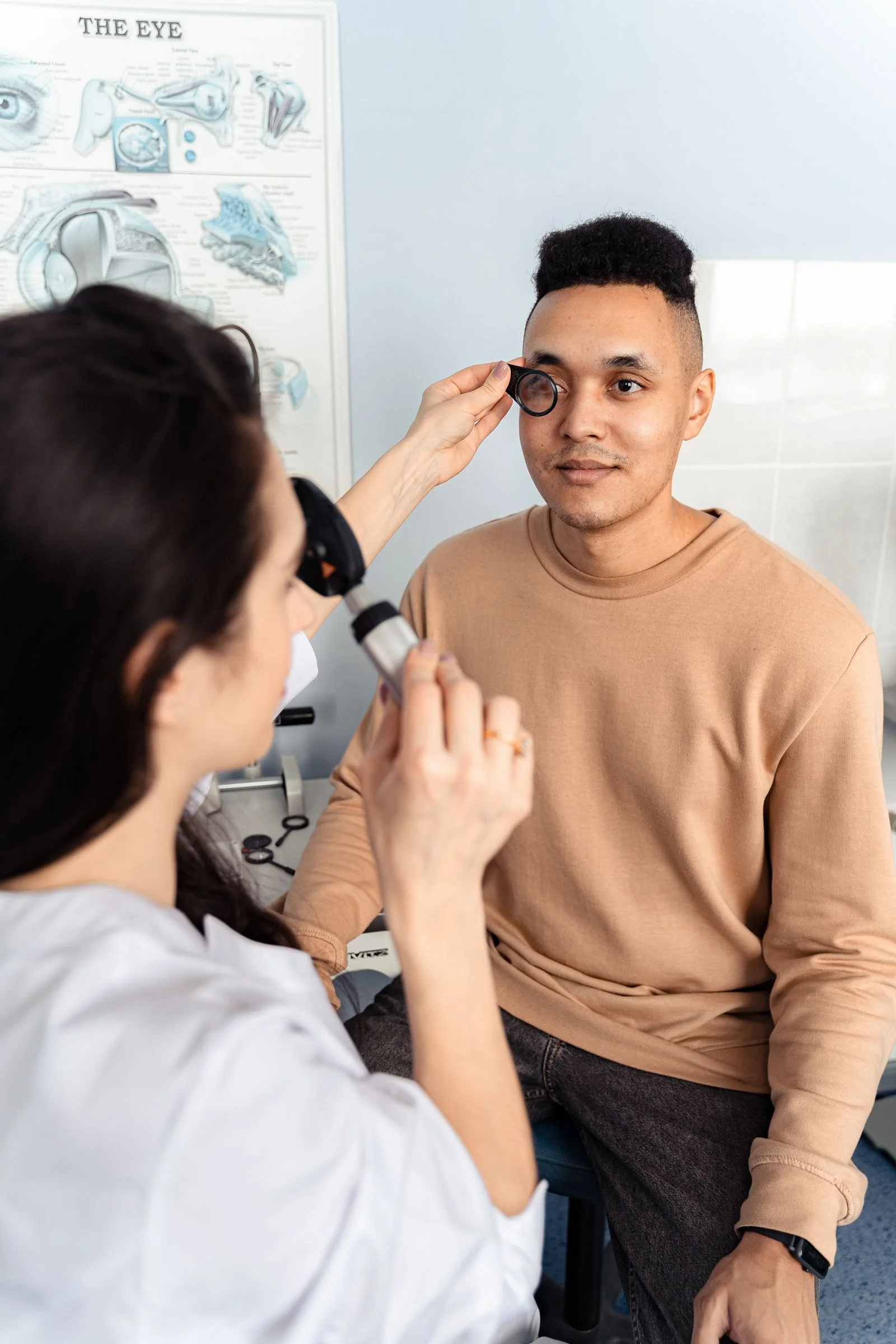
Contact lenses temporarily reshape your cornea while you're wearing them, which can throw off the precision exam's measurements if you haven't stopped in time — the risk is a genuinely inaccurate reading feeding into how your lens gets sized, not a minor inconvenience. How many days you need to go lens-free isn't a number this article will invent; it depends on your lens type, so ask your clinic for the exact figure when you book the exam.
Soft lenses and rigid or hard lenses commonly need different stop periods from each other. Bring this up specifically for the type you actually wear, rather than assuming a single rule covers every kind of lens.
The lens order: why sizing and manufacturing take time
Once your exam measurements are in, the ICL lens itself gets custom-ordered to your eye's specific power and size — it isn't a stock item pulled off a shelf. Manufacturing and shipping that lens takes real time, which is exactly why the exam and the surgery are usually two separate visits rather than one continuous appointment.
Ask your clinic for its current typical lead time between exam and surgery, and build your trip length around that gap rather than assuming surgery can follow the same week you're measured. Arriving expecting a same-week procedure, only to learn the lens hasn't been made yet, is an avoidable planning mistake with one phone call beforehand.
Surgery day: what to expect
Surgery duration is best treated as a general range per eye rather than a fixed number, and whether both eyes are done in the same session or staged across separate days is a detail that varies by clinic — ask directly rather than assuming either pattern. Bring a companion or arrange transport in advance; your vision won't be reliable enough that same day to get yourself home safely on foot or behind the wheel.
Expect protective eyewear to be provided on-site as standard aftercare, nothing you need to track down or purchase yourself beforehand.
Recovery and the follow-up visit before you fly
How quickly your vision stabilizes, and whether glare or halos settle in the weeks after, isn't the same story from one patient to the next — put that question directly to your surgeon rather than expecting a fixed timeline from an article. What is fairly consistent is the structure around it: a follow-up appointment gets scheduled to check that healing is progressing as expected, and it's that appointment, more than the surgery date printed on your calendar, that should determine when it's actually reasonable to get on a plane.
For how ICL's stay length compares against other eye procedures, how many days to stay in Korea covers that comparison rather than repeating it here. Locking in a flight home for the day after surgery, before that follow-up exists on the schedule, is the single most common way this goes wrong.
What ICL costs in Korea, and why revision cases price differently
ICL carries a heavier price tag than laser correction for a simple mechanical reason: the lens itself is a manufactured device ordered to your own measurements, not a course of sessions billed by the laser's clock. As of July 2026, both-eye ICL surgery commonly lands in a range of roughly ₩3,000,000 to ₩6,000,000 in Korea — a spread wide enough on its own that knowing which end applies to your case matters more than the number itself.
Two things account for most of that spread. A toric lens, built to correct astigmatism at the same time it corrects refractive error, generally costs more than a non-toric lens addressing only near- or farsightedness. A case that's a revision — exchanging or removing a lens placed during an earlier procedure — typically involves more surgical planning than a first-time implantation and prices accordingly; ask directly which category your quote is actually built around.
Neither figure above is a number to act on by itself. Ask for a written, itemized quote stating the lens type and whether your case is primary or revision, and how many days that quote stays honored before you'd need a new one. HIRA's non-covered (비급여) treatment cost information portal, linked in the sources below, is where a specific clinic has itself published its own declared prices — a tool worth searching directly rather than a figure this article can hand you secondhand.
Questions to ask before you commit to a lens order
Get the lens manufacturer and model in writing before anything is ordered to your measurements — this single detail is what lets an eye doctor back home understand exactly what's sitting inside your eye if a question ever comes up later. Ask whether the precision exam fee and any medication are already folded into the surgery quote or billed on top of it, and what the process and cost look like if the lens ever needs to be exchanged or removed. Confirm that the surgeon performing the surgery is the same person who ran your exam consultation, not a different clinician you're meeting for the first time on the day.
Whatever total comes up in conversation, get it in writing before the lens order goes in — a figure mentioned out loud isn't the one to plan a trip around.
This page sits among KMediBook's procedure guides. If your case turns out to be about presbyopia or a clouded lens rather than corneal thickness, cataract and lens-replacement surgery covers that different age group and different decision.
Sources
- Korean Ophthalmological Society
- Ministry of Food and Drug Safety (MFDS, English)
- Medical Korea (KHIDI) — official medical tourism portal
- HIRA — non-covered (비급여) treatment cost information portal
Once you're clear on the exam-to-surgery gap, how many days to stay in Korea helps you plan flight dates around it. Reviewed 28 July 2026.