
The Short Answer: Same City Favors a Locker, Changing Cities Favors Delivery
If you're staying in one city and just need somewhere to put your bags for a stretch of hours — checkout done, flight or train still hours away — a coin locker or staffed storage counter is almost always faster and cheaper than arranging delivery. If you're leaving one city for another and would rather not drag a suitcase through the transition, luggage delivery carries your bags ahead of you instead.
Mixing the two up is where people lose time or money. Booking a delivery for a same-city gap of a few hours means paying for a service built around a full day's lead time, when a locker two minutes away would have done the job. Relying on a locker for a cross-city move means showing up at your next hotel with nowhere to have stashed your bags in the meantime, since the locker back in the first city won't help you a few hundred kilometers away.
Comparing by the Criteria That Actually Matter
| Coin locker | Staffed counter | Delivery | |
|---|---|---|---|
| Fee basis | By size and duration | By bag, flat rate per period | By bag, per trip |
| Available hours | Tied to the building's own hours (station, mall) | Fixed staffed hours, generally shorter than a locker's | Bound by a drop-off/pickup cutoff, not open-ended |
| Max size | Limited by the largest locker compartment on site | Effectively unlimited — staff handle oversized items | Limited by the carrier's declared weight/size policy |
| Reservation | Not needed, but a full bank means walking to another one | Rarely needed | Needed, with enough lead time to hit the cutoff |
| Loss/damage coverage | Minimal to none on an unmanned locker | A written compensation policy, since staff handle the bag | A tracked, insured policy is standard for a paid delivery service |
If anything genuinely valuable is inside — camera gear, medication that isn't life-critical but is expensive to replace, anything you'd be upset to lose — the staffed counter's accountability is worth more than a locker's convenience, even at a higher price.
Subway Station Lockers: Sized Pricing Tied to the Subway's Own Hours
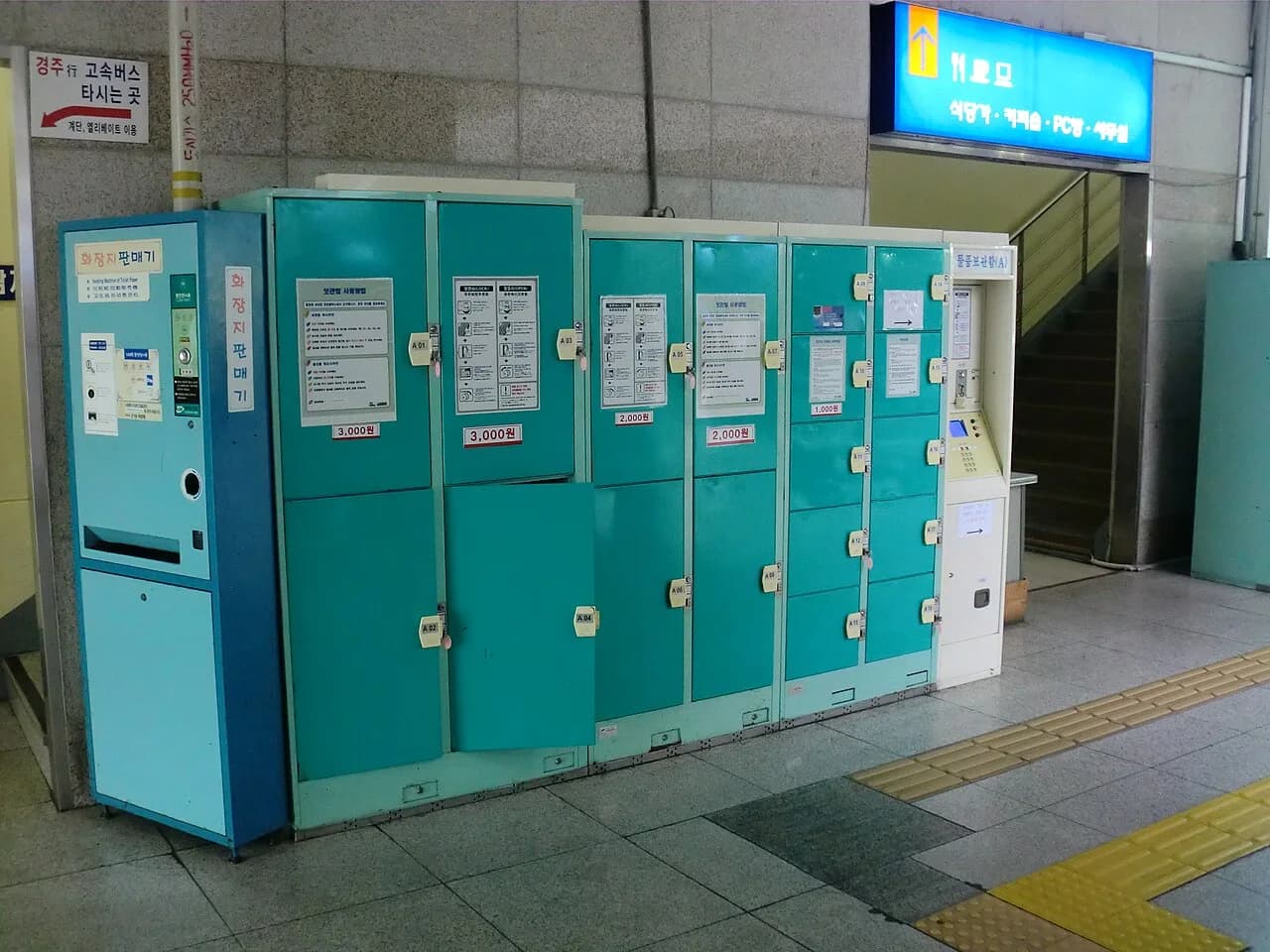
Most Seoul subway stations, and major KTX stations, offer coin-operated or app-based lockers in a few sizes — small, medium, and large are the usual tiers, priced by both size and how long you keep the bag inside. Rates commonly land somewhere in the low thousands of won for the smallest size over a short block of hours, rising with each size tier; exact pricing is set per station and per operator, so check the machine's posted rate or the locker app before assuming a number.
The constraint that catches people off guard: these lockers are only accessible while the station itself is open. A locker inside the paid area or concourse locks up with the rest of the station once the last train on that line has run, which means a plan to grab your bag on the way to a late-night flight can fail if the station's already closed by the time you arrive.
Finding an Open Locker, and the Suitcases That Don't Fit
Several locker networks now offer an app that shows real-time availability by station and by size, which saves a wasted walk to a bank of lockers that turns out to be full. Checking availability by size specifically matters as much as checking whether a slot is open at all — a station showing "lockers available" can still mean nothing but small compartments are actually free.
Large, full-size checked suitcases don't always fit even the biggest locker at a given station, particularly at smaller or older stations with fewer oversized compartments. If you're traveling with a large bag, check the largest size's dimensions against your suitcase before counting on a locker at all — a staffed counter or a mall's larger storage service is the fallback when nothing on-site is big enough.
Staffed Storage Counters: Set Hours, Priced Per Bag
Staffed luggage counters — found at some department stores, tourist information centers, and larger stations — charge per bag rather than by locker size, which means splitting one suitcase and one small daypack into two separate items gets billed as two, not one. Combining everything into a single larger bag before drop-off, where practical, is the cheaper move.
These counters run on fixed staffed hours, generally shorter than the building or station's own operating hours, so a locker that's technically still reachable might outlast a staffed counter that closed for the day. Check the specific counter's hours rather than assuming it matches the building's.
Airport-to-Hotel and Hotel-to-Hotel Delivery: Cutoffs and Same-Day Windows
Luggage delivery services at Incheon Airport move bags between the airport and hotels around Seoul, and separately between hotels themselves, without you carrying them in between. Same-day delivery generally requires dropping your bag off within a set morning-to-early-afternoon window; miss that cutoff and the delivery typically shifts to the next day rather than arriving later the same evening. Exact cutoff times vary by counter and provider, so confirm the current schedule at booking rather than assuming a fixed hour.
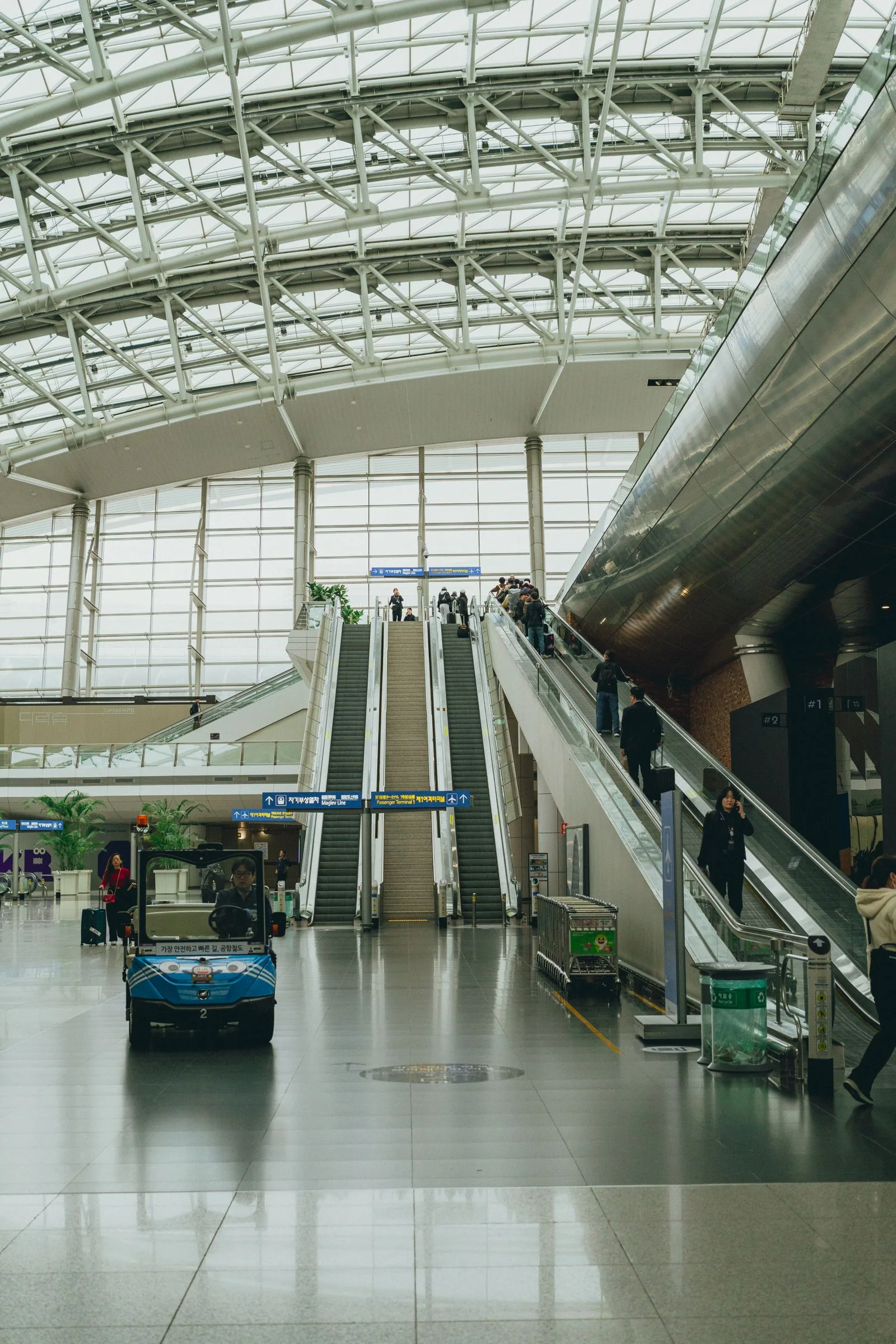
If your flight lands in the morning and your hotel check-in isn't until the afternoon, dropping bags at the airport delivery counter early enough to make the cutoff means you can spend the day without them, picking them up already waiting at your hotel rather than carrying them sightseeing.
Sending Luggage Ahead to Your Next City
Sending a bag ahead to a different city — Seoul to Busan, for instance — works through station-based delivery counters at major KTX stations, run by delivery operators rather than Korail itself, and it isn't a same-day service. Budget at least a full day of lead time between drop-off and expected arrival at your next stop.
That gap matters most when you're also traveling that same day. If you send a bag ahead in the morning and take a KTX to the next city that afternoon, don't expect the bag to already be at your new hotel when you check in — time the hand-off so the bag's arrival window lines up with when you'll actually be there to receive it, not with your own travel day.
What Not to Pack Into Storage or Delivery, and Missing the Cutoff
Passports, medication you might need during the gap, and loose lithium batteries or power banks are commonly excluded from both lockers and delivery services, either by explicit policy or simple common sense — keep these with you regardless of what else goes into storage. Fragile or pressure-sensitive items, including some cosmetics and toiletries, are also worth double-checking against a delivery provider's restricted-items list before sealing a bag you won't see again for a day.
Save a photo of your locker receipt or delivery tracking slip the moment you get it — a lost QR code or paper stub is one of the most common reasons people can't retrieve a bag they otherwise stored correctly. And if you do miss a cutoff, whether a locker's closing time or a delivery's same-day window, most services default to the next available slot rather than refusing you outright — it's a delay, not usually a dead end, but one worth planning around rather than discovering at the counter.