

Buying the haul is the easy part. What actually determines whether it makes it home in one piece, and whether it clears the border without a hitch, happens on a completely different day than the shopping did.
Why this is a departure-day problem, not a shopping-day problem
Airport security's liquid rules and a destination country's customs rules both get checked at departure and arrival, not at the register where a product was bought. A bottle that was perfectly fine to purchase can still get restricted once it's carried through a security checkpoint or across a border, for reasons that have nothing to do with the store it came from.
A rule that didn't apply in week one at an Olive Young checkout can still apply to that same bottle at Incheon security on the day of departure — buying and flying sit under two entirely separate sets of checkpoints. Rules can also differ by airline and by destination country, so what applied on the way to Korea isn't guaranteed to match what applies on the way home.
Carry-on checklist: the 100ml rule, the 1-liter bag, and what doesn't count as liquid
Each liquid, gel, or cream container needs to be 100ml or less and fit, together with everything else liquid, inside a single 1-liter clear resealable bag at Incheon Airport security. That limit is based on the container's printed capacity, not on how much product is actually left inside it — a half-empty 150ml bottle still gets pulled at screening even though what's remaining is well under 100ml.
Sheet masks and solid or pressed products — a pressed powder compact, a solid cleansing bar, a lipstick — are generally not treated as liquids under this rule at all, which makes them an easy way to pad out a haul without eating into the 1-liter allowance. Ampoule boxes and cushion refills, by contrast, do count, since the cushion itself holds liquid foundation even when the compact looks solid from the outside.
Checked bag or carry-on: sorting bottles by breakage and heat risk
Checked luggage carries no equivalent 100ml container limit, which makes it the default choice for any full-size bottle bought to bring home rather than to use during the trip. The trade-off is breakage risk: fragile glass items can crack or shatter in checked luggage without deliberate padding, something a carry-on bag never has to worry about.
Anything that could leak under cabin pressure changes is generally safer checked than carried close to clothing and electronics, and the reverse holds for anything irreplaceable, needed in-flight, or too fragile to trust to baggage handling. A glass ampoule box wrapped only in the paper shopping bag it came in is the single most common item that doesn't survive a checked bag — the outer box alone isn't the padding it looks like.
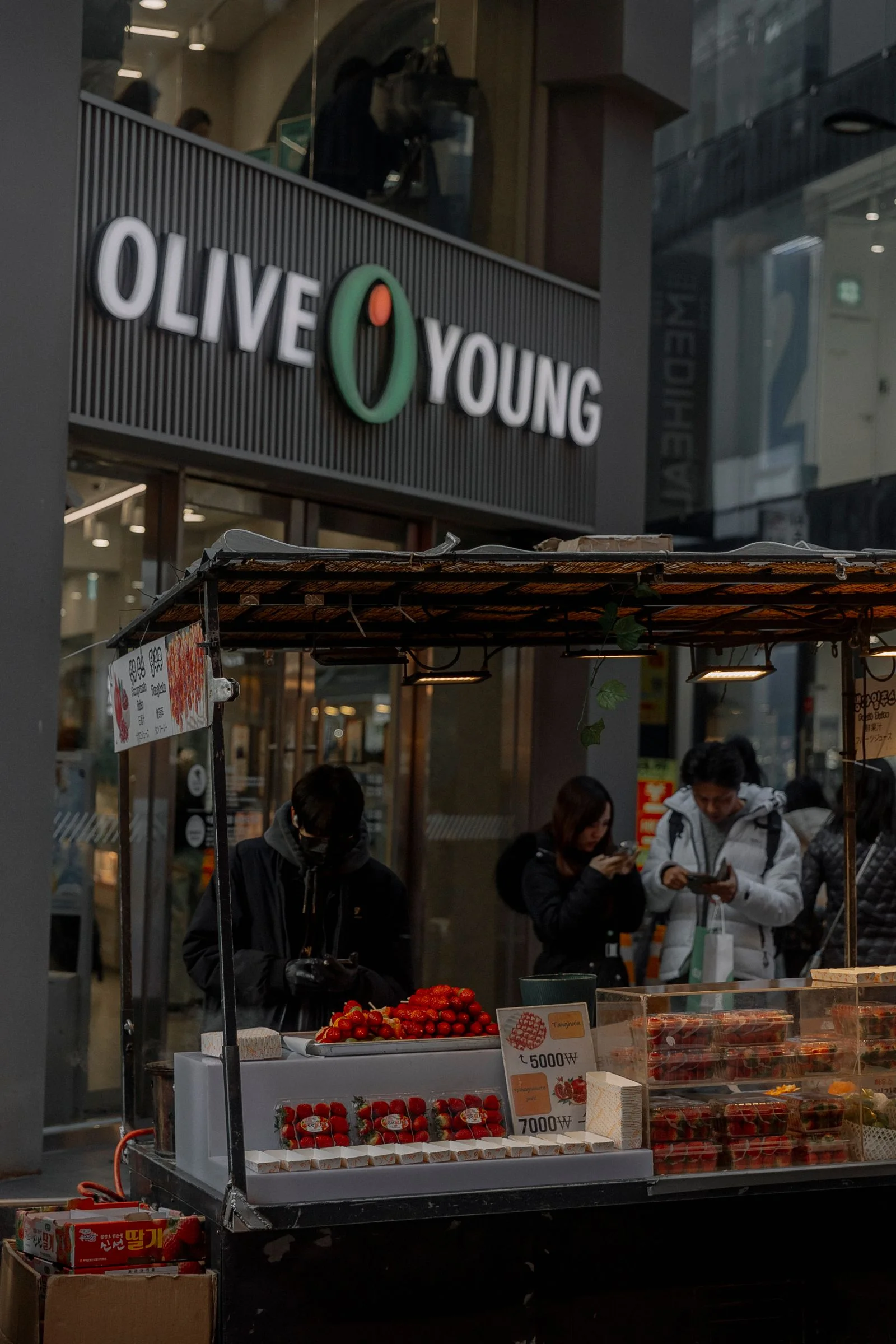
Packing glass bottles and ampoules without breaking them
Wrap each glass bottle or ampoule individually — bubble wrap, a rolled t-shirt, or a sock all work — rather than relying on the outer gift box the set came in as the only protection. Pack the wrapped glass items toward the center of the suitcase, surrounded on all sides by clothing, rather than along an outer edge where impact is more likely.
Avoid leaving glass skincare sitting in a parked car trunk in hot weather at any point before the flight, since heat can degrade a formula well before the glass itself is ever at risk of breaking. A few minutes of extra wrapping at the hotel before packing is a small trade against opening a suitcase at home to find a shattered ampoule and a stained set of clothes around it.
Customs on the other end: personal-use limits and what reads as commercial
Your home country sets its own personal-use duty-free threshold, a figure that has nothing to do with what Korea allows a traveler to buy or export. Buying many identical, unopened units of the same product — six full-size bottles of one serum, still shrink-wrapped — is one of the clearest signals customs officers commonly treat as commercial import rather than personal use, even when the total value sits well under the personal limit.
Declaring goods honestly when asked, rather than assuming a small purchase is automatically exempt from mention, avoids a larger penalty than the one a straightforward declaration would have triggered. A varied haul of different products in reasonable quantities reads very differently at a customs desk than a suitcase full of one item bought to resell.
If you used the tax refund: keeping the item sealed until you clear departure
Some tax-refund methods require presenting the purchased item, still sealed, at an airport refund counter or kiosk before the flight departs — a downtown refund stamp doesn't always mean that step is finished. Opening or using the product before that final check can affect refund eligibility, depending on exactly which method was used at the time of purchase.
Keep the receipt and any refund paperwork somewhere reachable, not packed away in checked luggage, since a counter or kiosk agent may ask to see both the item and the documentation together at the same time.
Warning signs to catch before you even leave the store, and what to do if you're stopped
No printed ingredient list, no batch number, and no country of origin on a repackaged or decanted product are all red flags worth catching before checkout, not after landing back home. Buying from an informal stall or an unlicensed reseller rather than a licensed retail counter carries the same risk, since there's no manufacturer record backing up what's actually in the container.
If flagged at security or customs, cooperate with the officer and have the receipt ready to show. Keeping proof of purchase on hand, rather than assuming a bottle explains itself, is what makes any follow-up question quick to resolve rather than a delay that eats into time before boarding.