

A "facial" covers a wide range of actual services, and the gap between the cheapest version and the most thorough one usually comes down to a handful of add-ons decided mid-appointment. Knowing the standard shape of a session in advance makes those decisions easier to make on your own terms.
Before you book: makeup, timing, and what to disclose
Arrive with light or no makeup, or budget extra time at the start for removal before the session can begin. Either works, but showing up in a full face and expecting the treatment time to stay the same usually isn't realistic.
Avoid booking a session right before sun-heavy or photo-heavy plans. A session that includes extraction can leave visible redness for hours afterward, and booking it the morning of an outdoor event or a photo shoot is a common regret. Disclose allergies, recent procedures, and any medications on the intake form rather than mentioning them partway through, since that information can change which products or steps are appropriate for you that day.
The intake form itself is usually short — a page or two, sometimes translated into English at larger studios, sometimes not. If a translated version isn't offered and the form matters to you, a translation app pointed at the paper is faster than trying to mime the question to a receptionist, and it gets a more accurate answer into the therapist's hands before the session starts.
What's actually in a standard session, in order
A typical sequence runs cleansing, exfoliation, an optional extraction, massage, a mask, and a soothing finish, in roughly that order. Total session time is commonly in the range of 60 to 90 minutes depending on inclusions — confirm the exact runtime when you book, since a basic version and an add-on-heavy one can differ substantially.
Extraction is usually opted into during the consultation rather than applied automatically. Say upfront if it's not something you want, since it's the step most likely to leave visible marks, and a therapist working from a stated preference is easier than one guessing at it partway through.
The massage step tends to run longer than visitors expect relative to the rest of the session — a facial massage in this context often extends down to the neck and shoulders, not just the face itself. The mask that follows is usually chosen based on what the earlier steps revealed about your skin that day, so it isn't always the same mask from one visit to the next even at the same studio.
Booking the appointment: phone, app, or walk-in
Booking channels vary by studio — phone, a dedicated app, a general reservation platform, or straightforward walk-in availability. Check what language support exists before you go rather than assuming English will be available, since it isn't guaranteed even at studios in tourist-heavy neighborhoods.
Deposit and no-show policies differ by studio too, and it's worth asking about both at the time of booking. Popular locations, especially on weekends, can need meaningfully more lead time than a weekday walk-in would.
If a deposit is requested, ask how it's applied to the final bill, what happens if you're a few minutes late, and how far ahead of the appointment a cancellation needs to happen to get it back. A studio that can answer all three clearly and immediately is generally a good sign about how the rest of the booking will go.
The upsell moment, and what to decide before you're on the table
Package or membership pitches typically come after the session, while you're relaxed and the appointment already feels like a success. These pitches are optional add-ons, not part of what you already booked and paid for, no matter how the conversation is framed.
Deciding a spending limit out loud, to yourself, before the appointment starts is the most effective defense against a relaxed, post-massage "yes" to a multi-session package that wasn't part of the original plan. If a package is genuinely appealing, it will still be appealing the next day, once the massage-induced goodwill has worn off.
What this session cannot legally include
Non-medical estheticians cannot perform laser treatments, cannot administer injections, and cannot dispense prescription medication. If any of these are offered inside a beauty-salon setting, that's a warning sign, not a bonus service worth taking advantage of.
A "facial" that includes a needle or a laser device has moved into medical territory being performed outside a licensed clinic. That boundary, not the price on the menu, is the detail worth remembering before agreeing to anything that sounds more advanced than a standard esthetic session should be.
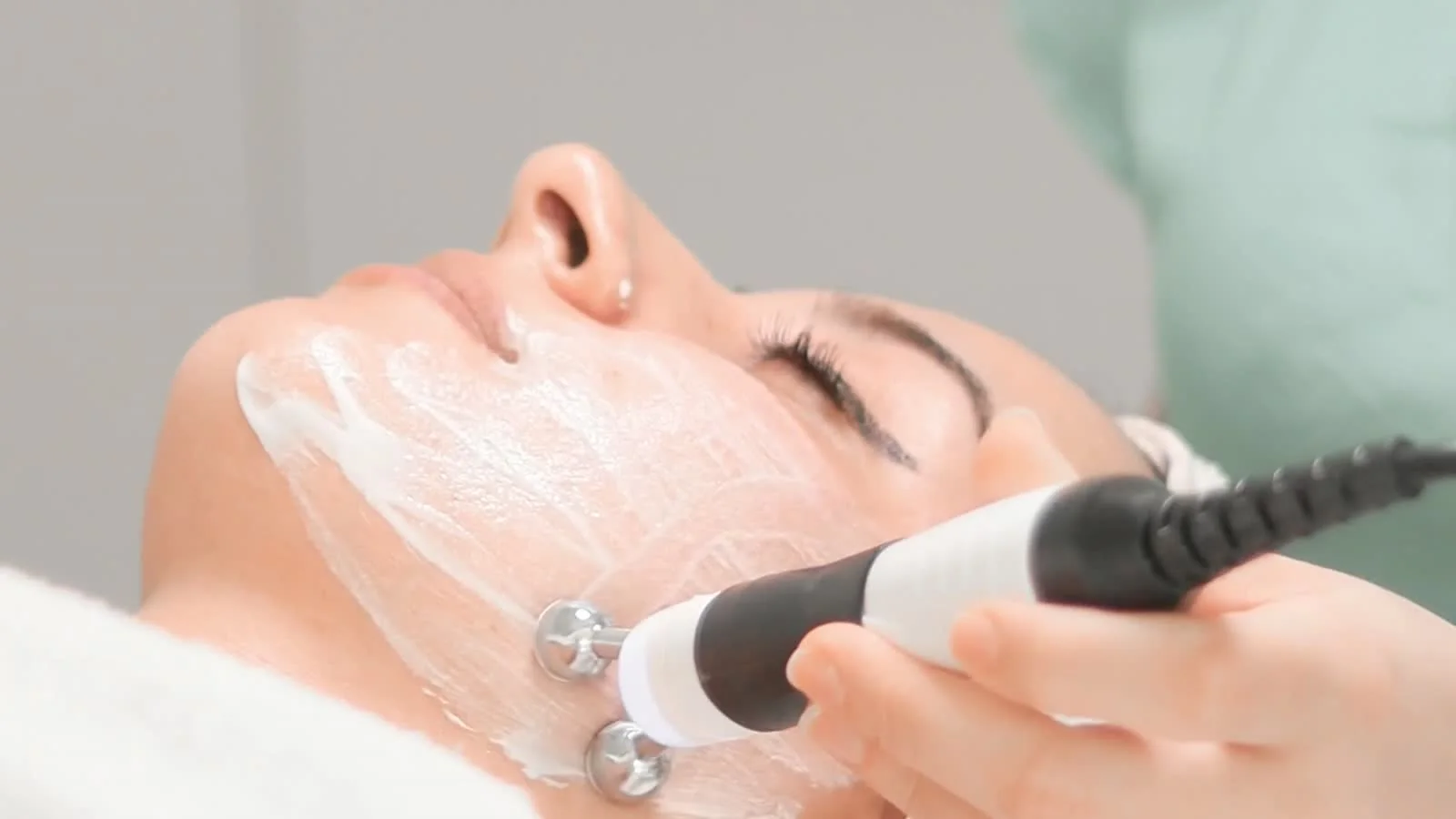
Surface-level tools are a different matter and are within a non-medical salon's normal scope: hand-held LED panels, gentle ultrasonic cleansing tools, and steamers are standard equipment in an esthetic room and don't cross into medical territory on their own. The distinction isn't whether a device is plugged in — it's whether it penetrates the skin or delivers a prescription substance underneath it.
Price ranges and what changes them
The headline "facial" price advertised on a storefront sign is often the shortest, most basic version available. As of July 2026, a standard session in Seoul typically falls somewhere in the ₩60,000–150,000 range depending on length and studio tier, and the version with visible, noticeable results usually sits toward the top of that band once genuine add-ons are itemized separately from the entry price.
LED therapy, extraction, and premium mask upgrades are the usual line items that raise the total beyond the advertised starting figure. Ask for the full price with your specific add-ons included before the session starts — the range above is a general guide, not a quote, so confirm it directly with the specific studio rather than discovering the final total only at checkout.
If your skin is sensitive, freshly treated, or sunburned
Certain conditions call for postponing or modifying a standard session: a recent medical procedure, an active breakout, or a sunburn are all reasons a therapist may want to adjust or skip specific steps. A facial booked right after a medical peel or laser session elsewhere can aggravate skin that's still healing.
Mention any of this when booking, not once you're already seated in the treatment room. A studio that knows in advance can plan the session around it; one that finds out mid-treatment has far fewer good options.
A reasonable general guideline is to leave a few days of buffer between a medical procedure elsewhere and a standard esthetic session, longer if the procedure involved any kind of resurfacing or injection. If you're unsure whether enough time has passed, ask the studio directly rather than assuming a facial is always the gentler, lower-risk option by default.
Payment and the no-tipping rule
Cash and card are both generally accepted at most studios, and payment happens at the front desk after the session rather than mid-treatment. Tipping is not expected and isn't added onto the bill as a separate line.
Any price agreed to mid-session for an add-on should show up itemized on the final receipt. Check it against what was discussed before paying, not after you've already left and the treatment room is a memory rather than something you can point back to.
Receipts are usually printed automatically and worth keeping for the length of the trip, particularly if a package was purchased and you'd want documentation for a follow-up visit or a dispute. A studio that hesitates to itemize a receipt on request is a smaller version of the same warning sign as an unclear verbal quote.