
Visiting Korean Temples and Templestay: Etiquette and Tips (2026)
Summary
Most Korean temples are open to visitors during the day. Walk quietly, dress modestly, take your shoes off before entering a hall, and do not sit in the central spot. Since 4 May 2023, 65 temples with national-designated heritage, including Bulguksa and Haeinsa, charge no admission (korea.kr). Templestay programs are booked on the official site, templestay.com, as of October 2026.
At a glance
- Admission
- Free at 65 temples since 2023
- Shoes
- Off before entering a hall
- Templestay types
- Day, experience and rest
- Dawn ceremony
- About 4 AM on a 1-night stay
- Booking
- eng.templestay.com
- Buddha's Birthday
- 24 May 2026; 13 May 2027
Details
Korean Buddhist temples are active places of worship as well as heritage sites. Visitors are welcome in the grounds, and some temples let you sleep over and join the monks' routine. This guide explains what you will see, how to behave, which temples are easy to reach, and how a Templestay works.
What you see at a temple
Most mountain temples follow a similar layout. You walk uphill through a series of gates, and each one marks a step further into the sacred ground.
- One-pillar gate. The first gate, 일주문iljumunOne-pillar gate, stands on a single row of pillars. It is the formal entrance.
- Four Heavenly Kings gate. At the 천왕문cheonwangmunFour Heavenly Kings gate, four fierce guardian figures stand on either side of the path.
- Main hall. The 대웅전daeungjeonMain hall holds the principal Buddha. Other halls are named for the figure inside, such as 극락전geungnakjeonHall of Paradise.
- Pagodas and lanterns. Stone pagodas and stone lanterns stand in courtyards, usually in front of the main hall.
At Bulguksa in Gyeongju, the main hall sits in a wide courtyard with two stone pagodas, Seokgatap and Dabotap, in front of it.
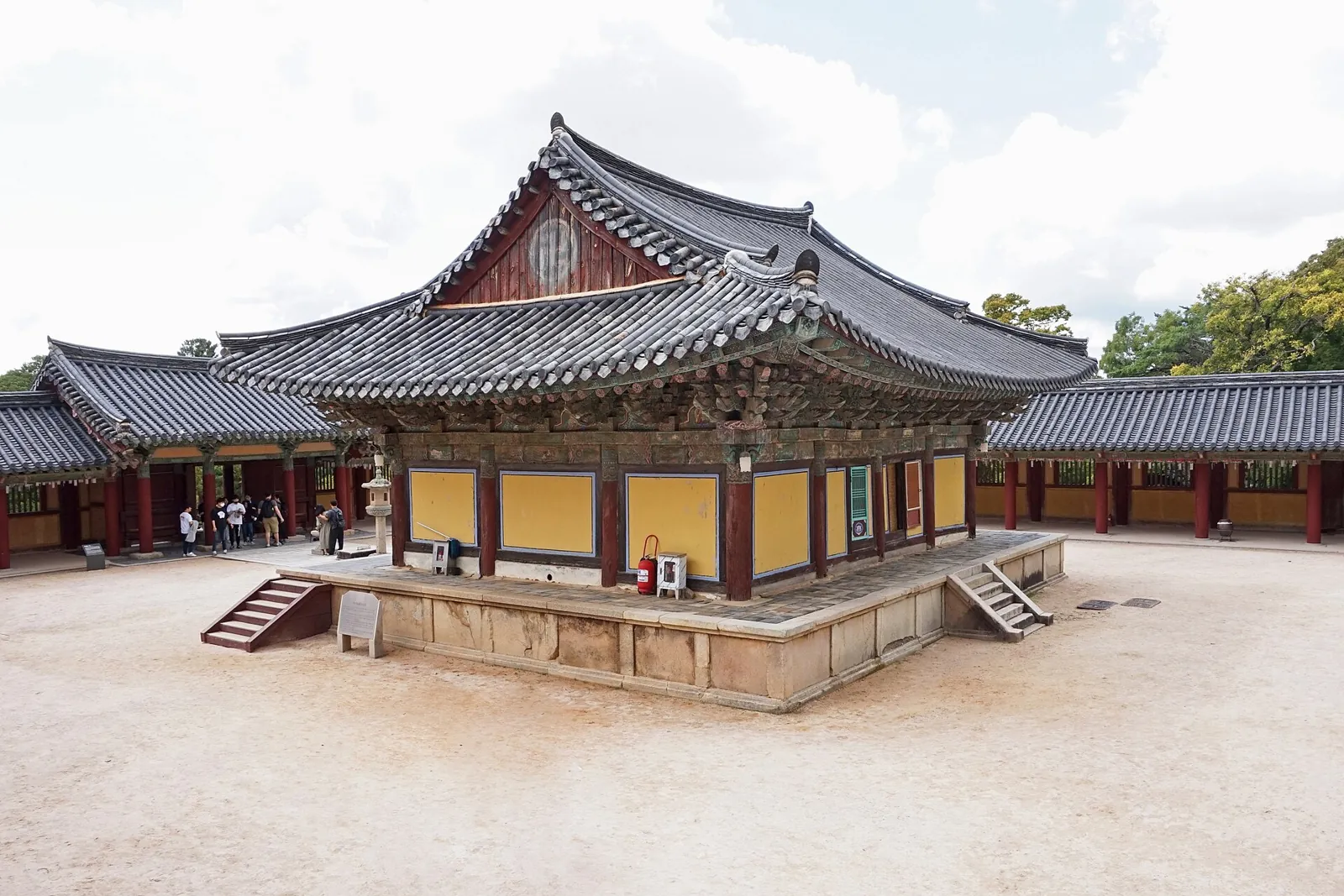
The painted colours on beams and eaves are called 단청dancheongPainted decoration. At some temples, a large bronze bell, drum and wooden fish hang in a bell pavilion, and monks strike them at set times.
Etiquette
A temple is a place for prayer, so the basic rule is to be quiet and respectful. For habits that apply everywhere in Korea, see the etiquette guide.
- Be quiet. Keep your voice low and silence your phone.
- Dress modestly. Cover your shoulders and knees. Temples do not publish one dress code, so check the temple's own page if you are unsure.
- Take your shoes off before entering a hall, and leave them on the rack or neatly by the door.
- Use the side doors. The templestay site says the central door is reserved for monks. Enter and leave a hall through a side door.
- Do not sit in the center of the hall, and walk behind anyone who is praying or bowing.
- Greet with 합장hapjangPalms together. Press your palms together in front of your chest and give a small bow. You do not need to pray or bow to a statue yourself.
- Photos. Ask before photographing monks or a service. Some halls do not allow photos inside, so follow the signs.
Visitors are never required to join a ceremony. You can watch quietly from the back.
Do you have to pay?
Mostly no. A cultural-heritage fee, 문화재관람료munhwajae gwallamnyoCultural heritage admission fee, used to be charged at many temples, because their grounds hold designated heritage.
On 4 May 2023, admission fees for temples holding national-designated heritage were abolished. Korea Policy Briefing says 65 temples are covered, mostly inside national parks, among them Haeinsa, Beomeosa, Bulguksa and Songgwangsa (korea.kr). The ticket booths were renamed Buddhist Cultural Heritage Information Centers.
The change does not cover every temple in Korea, and it covers only the entrance. Other charges, such as parking, a separate museum or a Templestay program, are not part of it. News coverage in 2023 said a few temples with city- or province-designated heritage kept their fee, so check the temple's own page for current terms. Older guidebooks that list a ticket price for Bulguksa or Haeinsa are out of date.
Temples worth visiting
These are well-known temples with public information. Hours and rules change, so check each temple's website before you go.
Jogyesa, Seoul
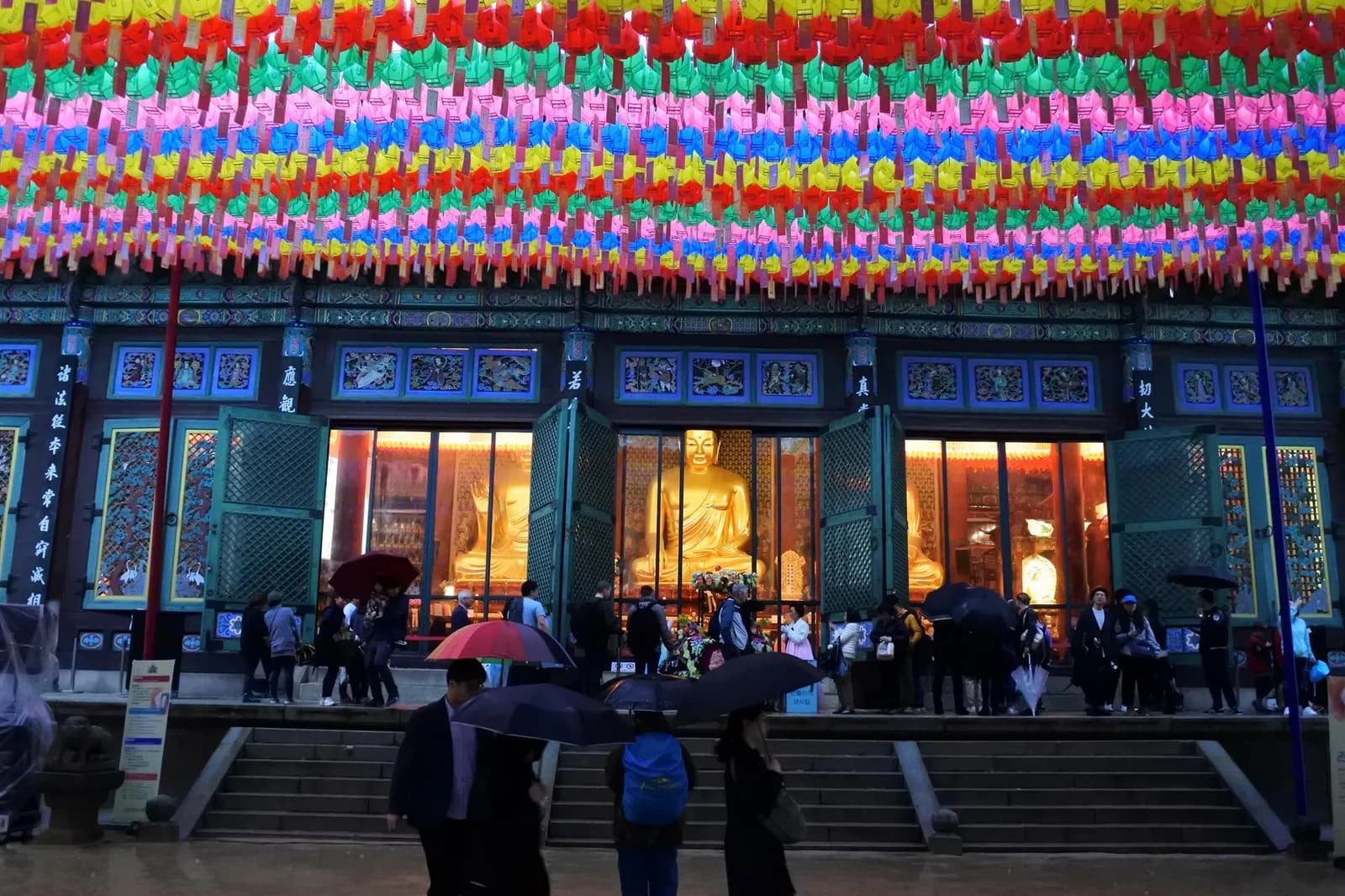
조계사JogyesaJogyesa Temple is the head temple of the Jogye Order, the largest Buddhist order in Korea. VisitKorea says it is at 55 Ujeongguk-ro, Jongno-gu, and that the annual Buddha's Birthday lantern festival is held there (VisitKorea). It is in the old centre of Seoul, so it is easy to add to a palace day. See the Seoul guide.
Bongeunsa, Seoul
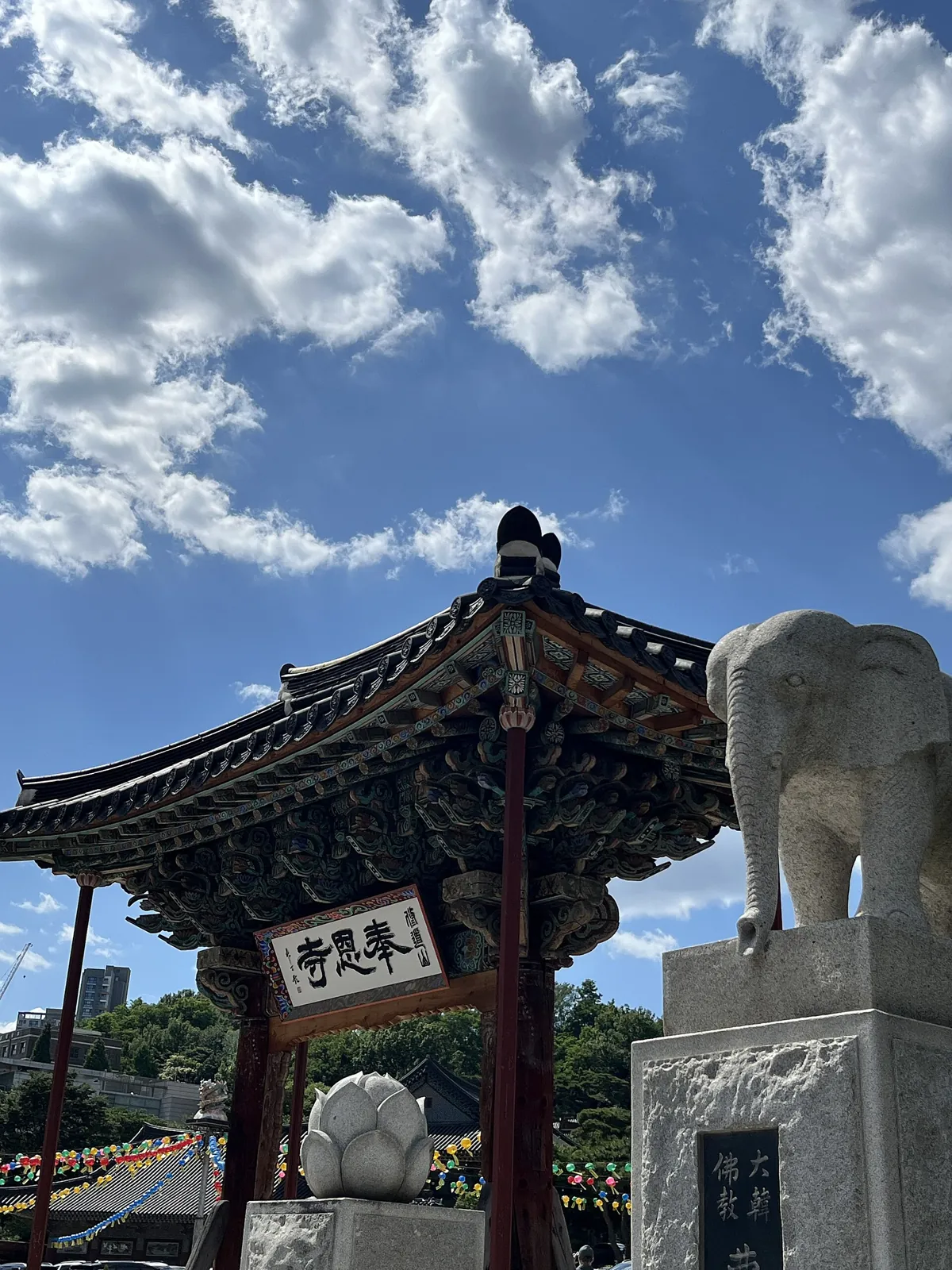
봉은사BongeunsaBongeunsa Temple sits among the high-rise towers of Gangnam, across from the COEX complex. It is a working temple with a large standing Buddha statue on the hillside. Check bongeunsa.org for its hours and programs.
Bulguksa, Gyeongju
불국사BulguksaBulguksa Temple is one of the best-known temples in Korea and a UNESCO World Heritage site, listed together with Seokguram Grotto. The Gyeongju guide has the entry hours and bus information. Admission is free.
Haeinsa, near Hapcheon
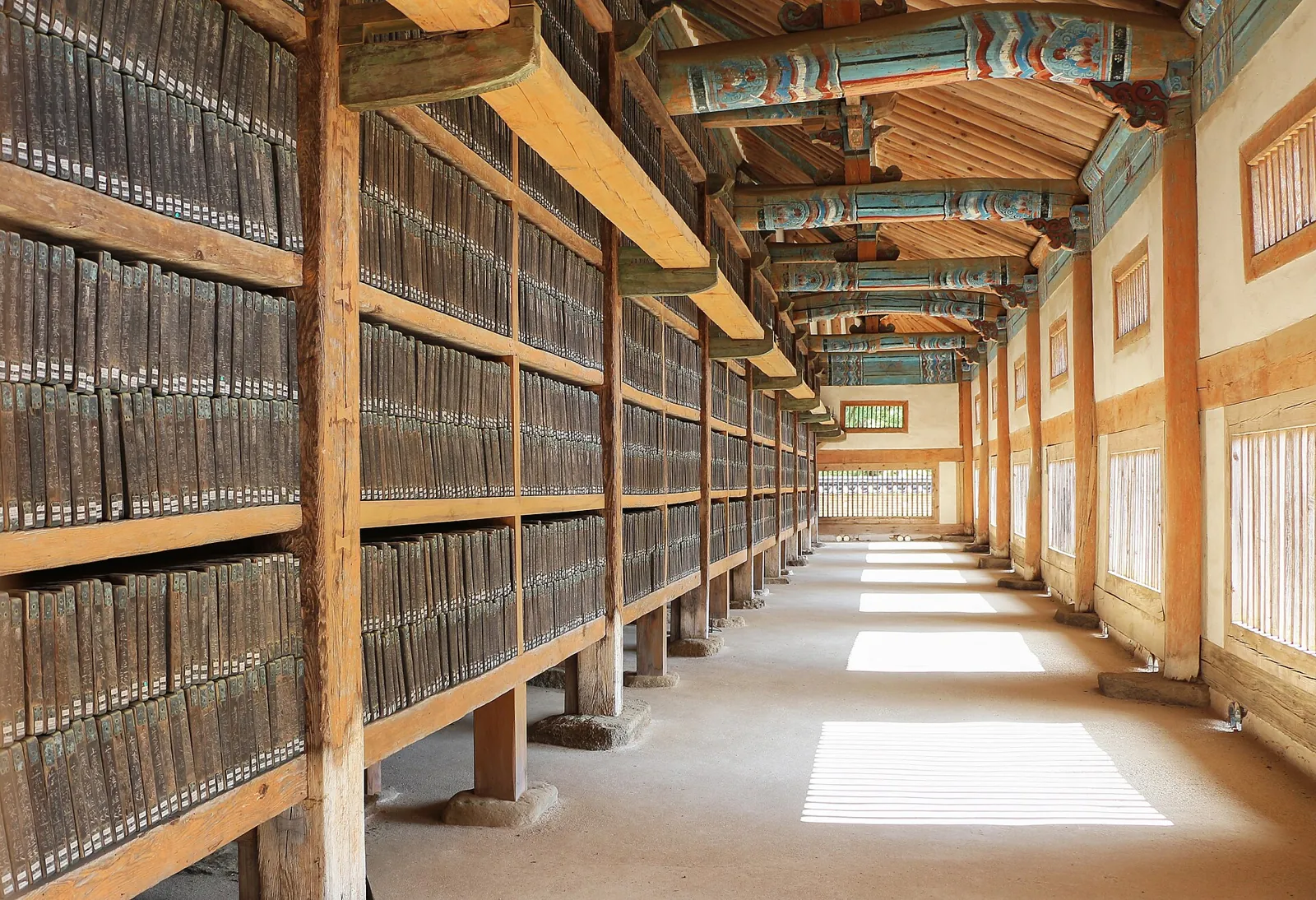
해인사HaeinsaHaeinsa Temple holds the 팔만대장경Palman DaejanggyeongTripitaka Koreana, a set of Buddhist scripture woodblocks. UNESCO lists the depositories, 장경판전Janggyeong PanjeonWoodblock depositories, as a World Heritage site. It says the woodblocks were carved in the 13th century, between 1237 and 1248, and that the carving is about 80,000 blocks (UNESCO). Other sources give slightly different counts, so treat 80,000 as approximate. The temple is in the mountains, so allow a full day from Seoul.
Haedong Yonggungsa, Busan
해동용궁사Haedong YonggungsaHaedong Yonggungsa Temple stands on rocks above the sea in Gijang. Visit Busan lists it as free, open 04:30 to 19:20, with last entry at 18:50. See the Busan guide for how to get there.
Buddha's Birthday lanterns
부처님오신날BucheonimosinnalBuddha's Birthday follows the lunar calendar and is a public holiday. It fell on 24 May in 2026 and falls on 13 May in 2027 (see the Korea in May guide). Temples hang rows of paper lanterns, called 연등yeondeungLotus lantern, in the weeks before the day. Jogyesa and the streets leading to it are the center of the Seoul celebration.
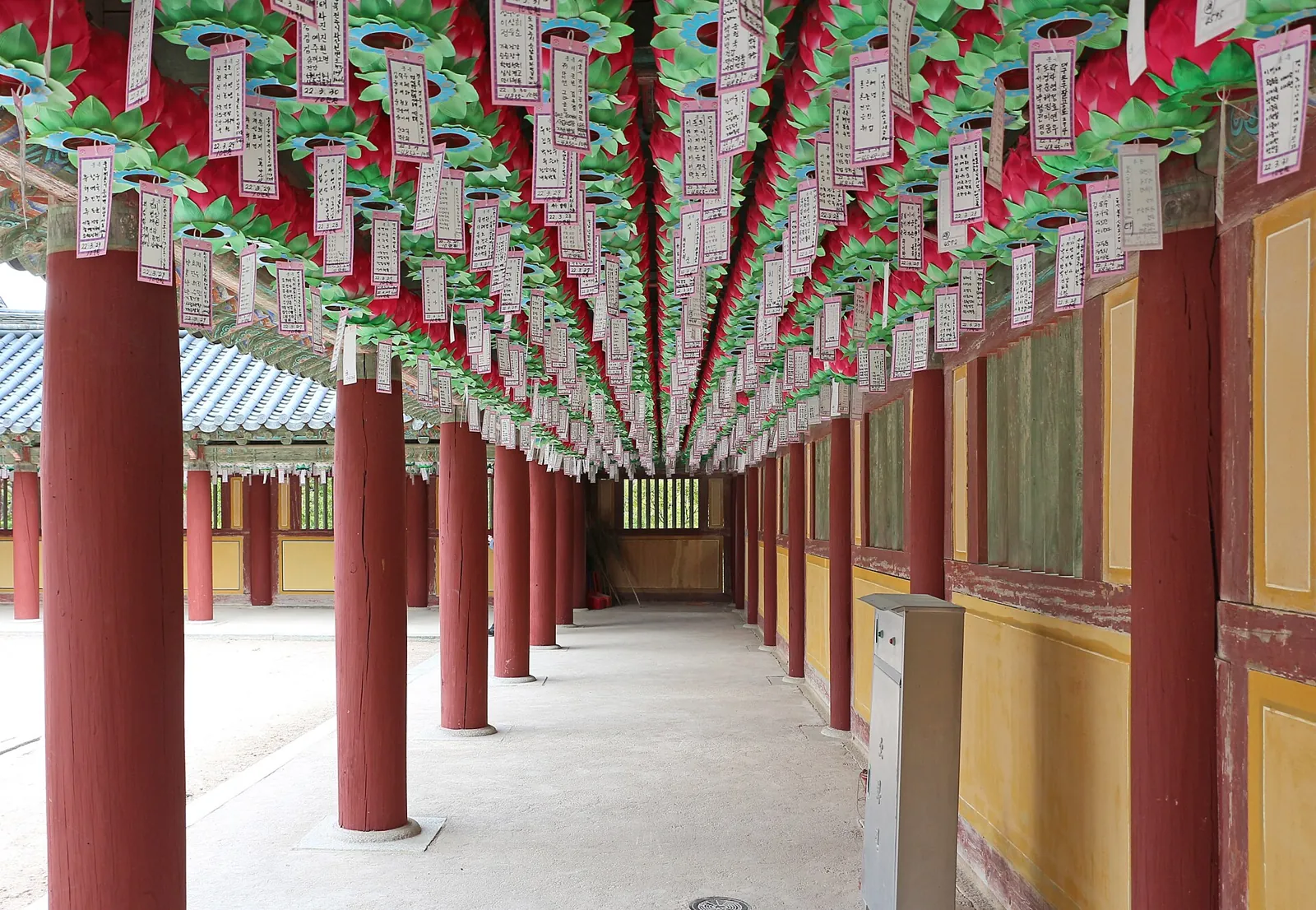
Lantern displays are crowded, so go early in the day or on a weekday. Planning a May trip? The Korea in May guide has the festival dates.
Templestay
템플스테이TemplestayTemplestay lets you live a short stretch of the monks' routine. It began in 2002, and the official site says about two million people have taken part. Programs are run by the Cultural Corps of Korean Buddhism.
Program types
The official site lists three kinds of program.
- Day type, 당일형dangilhyeongDay type. No overnight stay. It runs at 10 AM or 1 PM for at least two hours and may include a temple tour, Seon meditation, tea, or crafts such as lantern or prayer-bead making.
- Experience type, 체험형cheheomhyeongExperience type. Overnight, with a set schedule that varies by temple and season.
- Rest type, 휴식형hyusikhyeongRest type. Overnight, with ceremonies, meals and etiquette classes, and free time otherwise.
How to book
Book on the official English site, eng.templestay.com. Use the reservation menu to browse programs by temple and date. The site accepts a login or a non-member reservation. Choose the program, check the price and rules on that program's page, then follow the steps to reserve. Group requests go through a separate consultation form.
Prices and available dates differ by temple. This guide does not list them. A temple's own page and the official site are the only reliable source.
Typical schedule
The official site gives this pattern for a one-night experience program. Each temple sets its own times.
| Time | What happens |
|---|---|
| About 2–3 PM | Check-in, room assignment, temple tour, etiquette briefing |
| Evening | Dinner, evening ceremony, 108 bows, meditation |
| About 4 AM | Dawn ceremony, breakfast, group work, tea with a monk, reflection |
| 12–1 PM | Lunch; activities end |
The 108배baekpalbae108 bows are a series of prostrations. The communal meal, 발우공양barugongyangMonastic bowl meal, is eaten in silence with set bowls, and you finish everything you take. Rules differ a little by temple, so read the program page.
What to bring
The official site lists shampoo, toothbrush, towel, a hair dryer and a change of clothes. Bring a cardigan or jacket, because mornings and evenings are cold except in midsummer. Toilets usually have soap and toothpaste. You receive a vest and trousers on arrival.
Rules on a stay
No loud noise, drinking or smoking. Participation is voluntary. Rooms lock from the inside and need a key to enter, and visitors from outside are not allowed after 10 PM.
Common problems
- The hall is closed. Some halls open only for services. Look at the grounds and return later.
- You arrive late for a program. Check-in times are fixed. Contact the temple through the booking page.
- You wore shorts. Some temples will not let you into a hall. Keep a light scarf or trousers in your bag.
- A temple is far away. Mountain temples often need a bus plus a walk. Check a map app first; see map apps.
Questions and answers
Is it free to enter Korean temples?
As of October 2026, 65 temples with national-designated heritage, including Bulguksa and Haeinsa, charge no admission, since 4 May 2023. Some temples still charge for parking, museums or programs.
Can I take photos?
Outside, usually yes. Ask before photographing people, and follow signs inside halls.
Do I have to be Buddhist to stay at a temple?
No. Templestay is a cultural experience, and the official site states that participation in all activities is voluntary.
How do I book a Templestay?
Use the official site, eng.templestay.com, and read the program page for the price, schedule and rules.
Official sources (8)
Last checked October 23, 2026Next check due April 21, 2027
- Templestay: what it is, program types, schedule, what to bring, etiquette — Cultural Corps of Korean Buddhism (eng.templestay.com)accessed October 23, 2026
- Templestay reservation and group consultation menu — Cultural Corps of Korean Buddhism (eng.templestay.com)accessed October 23, 2026
- Admission fees at 65 temples abolished — Korea Policy Briefing (korea.kr)accessed October 23, 2026
- Cultural heritage admission fee waiver for Jogye Order temples — Korea Policy Briefing (korea.kr)accessed October 23, 2026
- Jogyesa Temple — Korea Tourism Organization (VisitKorea)accessed October 23, 2026
- Haedong Yonggungsa Temple in Gijang — Busan Metropolitan City (Visit Busan)accessed October 23, 2026
- Haeinsa Temple Janggyeong Panjeon, the Depositories for the Tripitaka Koreana Woodblocks — UNESCO World Heritage Centreaccessed October 23, 2026
- Korean Temple Monasteries (Sansa) Route — Korea Heritage Service (kh.or.kr)accessed October 23, 2026
Rules can change. Confirm on the official site before you travel.
Related guides

Korean Etiquette for Visitors: Shoes, Subway, Toilets and Trash
Where to take your shoes off, how to use priority seats, why you flush toilet paper, where to find a bin, and the few table manners that matter.

Gyeongju Travel Guide: KTX, Bulguksa and Night Sights (2026)
Gyeongju for first-timers: KTX from Seoul, buses and bikes, Bulguksa and Seokguram hours, royal tombs, Wolji Pond at night, and where to stay.

Busan Travel Guide for First-Time Visitors (2026)
Busan for first-timers: which district to stay in, KTX and airport arrival, the subway, and the main sights with stations, exits and closing days.
Korea in May 2027: Weather, Holidays and Lotus Lanterns
May in Korea: official Seoul, Busan and Jeju averages, four public holiday days, the Lotus Lantern Festival and what to pack. 2027 dates flagged.

Seoul Travel Guide for First-Time Visitors (2026)
Seoul for first-timers: which area to stay in, how to get in and around, and the main sights with nearest station, exit number, hours and closing days.