
Korea Weather by Month: Seoul, Busan and Jeju Averages (2026)
Photo: Republic of Korea, CC BY-SA 2.0 · Seoul Aerial Shot 04.jpg

Summary
Seoul's coldest month is January, averaging -1.9°C with lows near -5.5°C; the warmest is August at 26.1°C. July is the wettest month at 414.4 mm, and winter is dry. Busan and Jeju are milder in winter. These are KMA climate normals for 1991–2020. Pack layers for spring and autumn, light clothes and an umbrella for summer, and a warm coat for December to February.
At a glance
- Coldest
- January: -1.9°C average (Seoul)
- Warmest
- August: 26.1°C average (Seoul)
- Wettest
- July: 414.4 mm (Seoul)
- Rainy season
- Starts around 25 June (Seoul)
- Best months
- April–May, September–October
- Source
- KMA normals 1991–2020
Details
Korea has four clear seasons. Spring and autumn are mostly clear and dry, summer is hot and humid, and winter is cold and dry (KMA). The tables below use the Korea Meteorological Administration's official climate normals, so you can see what a typical month looks like before you pack.
How to read these numbers
A climate normal is a 30-year average. All figures here are KMA normals for 1991–2020, from the stations in Seoul (108), Busan (159) and Jeju City (184), published in the Climatological Normals of Korea.
- Average high and low are the mean daily maximum and minimum for the month.
- Rain is the average monthly total precipitation, including snow measured as water.
A normal is not a forecast. Any single year can be warmer, colder, wetter or drier. Check the KMA forecast in the week before you travel.
Seoul, month by month
| Month | Average (°C) | Average high (°C) | Average low (°C) | Rain (mm) | What to wear |
|---|---|---|---|---|---|
| January | -1.9 | 2.1 | -5.5 | 16.8 | Warm coat, hat, gloves |
| February | 0.7 | 5.1 | -3.2 | 28.2 | Warm coat, layers |
| March | 6.1 | 11.0 | 1.9 | 36.9 | Coat or thick jacket |
| April | 12.6 | 17.9 | 8.0 | 72.9 | Light jacket, layers |
| May | 18.2 | 23.6 | 13.5 | 103.6 | Light layers |
| June | 22.7 | 27.6 | 18.7 | 129.5 | Light clothes, umbrella |
| July | 25.3 | 29.0 | 22.3 | 414.4 | Light clothes, rain gear |
| August | 26.1 | 30.0 | 22.9 | 348.2 | Light clothes, rain gear |
| September | 21.6 | 26.2 | 17.7 | 141.5 | Light clothes, thin layer |
| October | 15.0 | 20.2 | 10.6 | 52.2 | Light jacket |
| November | 7.5 | 11.9 | 3.5 | 51.1 | Coat or warm jacket |
| December | 0.2 | 4.2 | -3.4 | 22.6 | Warm coat, hat, gloves |
| Year | 12.8 | 1,417.9 |
Source: KMA climate normals 1991–2020, station 108 (Seoul).
Seoul gets about 63% of its yearly rain in June to August and only about 5% in December to February (KMA). In a typical year, Seoul's first frost comes around 28 October, first ice around 3 November and first snow around 20 November.
Busan and Jeju
Busan and Jeju sit on the south coast and are milder than Seoul in winter. Busan's annual average is 15.0°C and Jeju City's is 16.2°C.
| Month | Busan high / low (°C) | Busan rain (mm) | Jeju high / low (°C) | Jeju rain (mm) |
|---|---|---|---|---|
| January | 8.2 / -0.1 | 34.5 | 8.6 / 3.7 | 67.5 |
| February | 10.2 / 1.5 | 49.6 | 9.9 / 4.0 | 57.2 |
| March | 13.8 / 5.3 | 89.7 | 13.3 / 6.6 | 90.6 |
| April | 18.2 / 10.1 | 140.9 | 18.0 / 10.8 | 89.7 |
| May | 22.0 / 14.6 | 155.9 | 22.1 / 15.0 | 95.6 |
| June | 24.6 / 18.3 | 188.4 | 24.9 / 19.1 | 171.2 |
| July | 27.5 / 22.1 | 326.8 | 29.3 / 23.7 | 210.2 |
| August | 29.5 / 23.7 | 266.5 | 30.1 / 24.8 | 272.3 |
| September | 26.4 / 19.8 | 160.6 | 26.1 / 20.9 | 227.8 |
| October | 22.5 / 14.5 | 79.6 | 21.6 / 15.7 | 95.1 |
| November | 16.6 / 8.3 | 50.4 | 16.4 / 10.4 | 69.5 |
| December | 10.4 / 2.0 | 33.8 | 11.0 / 5.6 | 55.6 |
| Year rain | 1,576.7 | 1,502.3 |
Source: KMA climate normals 1991–2020, stations 159 (Busan) and 184 (Jeju).
Jeju's figures are for Jeju City on the north coast. Weather changes quickly with height on Hallasan, and the mountain is much colder than the coast in winter.
Rainy season and typhoons
The summer rainy season, 장마jangmaRainy season, normally starts around 19 June in Jeju, 23 June in the south and 25 June in the central region, including Seoul. It lasts about 31 days on the mainland and about 32 days in Jeju (KMA).
Of the roughly 25 typhoons that form in the North Pacific each year, about 3.4 affect Korea directly or indirectly (KMA). If a typhoon is forecast, flights, ferries to islands and outdoor events can be cancelled.
Humidity is highest in July and August and lowest in February and March.
What to wear by season
Indoor heating and air conditioning are strong, so dress in layers you can take off.
- Spring (March to May). Mornings are cool and afternoons warm. A light jacket over a T-shirt works for most of April and May. March can still be cold, especially in the evening.
- Summer (June to August). Hot and humid, with heavy rain during the rainy season. Wear breathable clothes and carry a compact umbrella. Bring a thin layer for air-conditioned subways and cafés.
- Autumn (September to November). Clear and dry. September is still warm. By November you need a coat in Seoul.
- Winter (December to February). Cold and dry, often below freezing in Seoul. Wear a warm coat, hat, gloves and shoes with grip for icy pavements. The Korea Tourism Organization advises warm jackets, gloves, scarves and non-slip shoes for snow (VisitKorea).
Public holidays
Banks, government offices and some small businesses close on public holidays. Big holidays also fill trains and roads.
| Date | Holiday |
|---|---|
| 25 December 2026 (Fri) | Christmas |
| 1 January 2027 (Fri) | New Year's Day |
| 6–9 February 2027 (Sat–Tue) | Seollal (Lunar New Year), including substitute holiday on 9 February |
| 1 March 2027 (Mon) | Independence Movement Day |
| 1 May 2027 (Sat), substitute 3 May (Mon) | Labor Day |
| 5 May 2027 (Wed) | Children's Day |
| 13 May 2027 (Thu) | Buddha's Birthday |
| 6 June 2027 (Sun) | Memorial Day |
| 17 July 2027 (Sat), substitute 19 July (Mon) | Constitution Day |
| 15 August 2027 (Sun), substitute 16 August (Mon) | Liberation Day |
| 14–16 September 2027 (Tue–Thu) | Chuseok |
| 3 October 2027 (Sun), substitute 4 October (Mon) | National Foundation Day |
| 9 October 2027 (Sat), substitute 11 October (Mon) | Hangul Day |
| 25 December 2027 (Sat), substitute 27 December (Mon) | Christmas |
Source: KASI calendar data 2027 and 2026, checked October 2026.
Crowds and prices
The Korea Tourism Organization names July to August and December to January as peak seasons, when flight prices rise (VisitKorea). Many stores hold sales from June to August and from December to February (VisitKorea).
Seollal and Chuseok are the busiest travel days of the year inside Korea. If your dates overlap, book trains early; see KTX and trains.
Common problems
- Packing for the average, not the range. In spring and autumn, the daily range is wide. Pack for both the high and the low.
- Rain in July. Plan indoor options, such as museums and markets, for rainy days.
- Ice in January. Pavements and stairs can be slippery. Wear shoes with grip.
Questions and answers
What is the best month to visit Korea for weather?
For mild, dry weather, April to May and September to October. The KTO also recommends spring and autumn for walking trips.
Does it snow in Seoul?
Yes, but winter is dry. Seoul gets only 67.6 mm of precipitation from December to February in a normal year, so snowfall amounts are usually modest. Expect a few snowy days rather than deep snow.
Is Jeju warm in winter?
Milder than Seoul, with January lows around 3.7°C in Jeju City, but often windy. Bring a warm jacket.
Next, read the month guide for Korea in December.
Official sources (8)
Last checked October 20, 2026Next check due April 18, 2027
- Climatological Normals of Korea 1991–2020 (한국기후표), station pages 108 Seoul, 159 Busan, 184 Jeju — Korea Meteorological Administrationaccessed October 20, 2026
- Regional climate: normals 1991–2020 (한국 지역별 기후) — Korea Meteorological Administrationaccessed October 20, 2026
- Climate characteristics of Korea (한국 기후특성) — Korea Meteorological Administrationaccessed October 20, 2026
- Calendar data 2027 (달력자료·월력요항) — Korea Astronomy and Space Science Institute (KASI)accessed October 20, 2026
- Calendar data 2026 (달력자료·월력요항) — Korea Astronomy and Space Science Institute (KASI)accessed October 20, 2026
- Climate & Seasons: A Year-Round Travel Guide — Korea Tourism Organization (VisitKorea)accessed October 20, 2026
- Money-saving Tips — Korea Tourism Organization (VisitKorea)accessed October 20, 2026
- Shopping in Korea (payments and tax refunds) — Korea Tourism Organization (VisitKorea)accessed October 20, 2026
Rules can change. Confirm on the official site before you travel.
Related guides

Korea in December 2026: Weather, Christmas and What to Pack
December in Korea: official average temperatures for Seoul, Busan and Jeju, what to wear, Christmas and New Year closures, daylight hours and crowds.
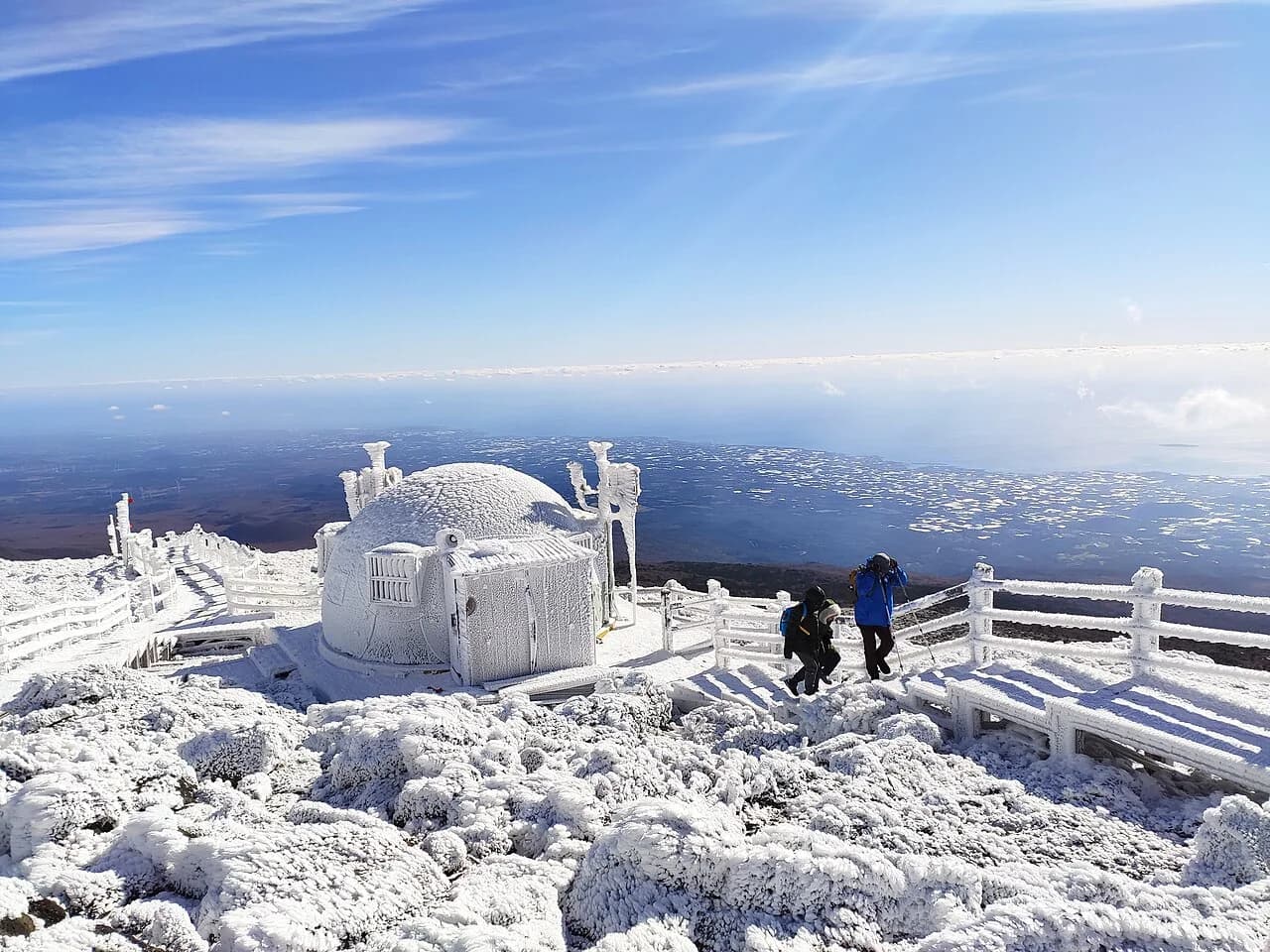
Korea in January 2027: Weather, Ice Festivals and What to Wear
January in Korea: the coldest month's official averages for Seoul, Busan and Jeju, what to wear, the Hwacheon ice festival dates, daylight and crowds.
Korea in February 2027: Seollal Dates, Closures and Weather
February in Korea: Seollal 2027 runs 6–9 February with a substitute holiday. What closes, how travel is affected, official weather averages and daylight.